

Pro Sports
Sponsorship Activation
Technology
Beyond the Sales Center: How Pro Sports Teams Can Use The Immersive Cube® for Fan Experience, Sponsorship and Recruiting
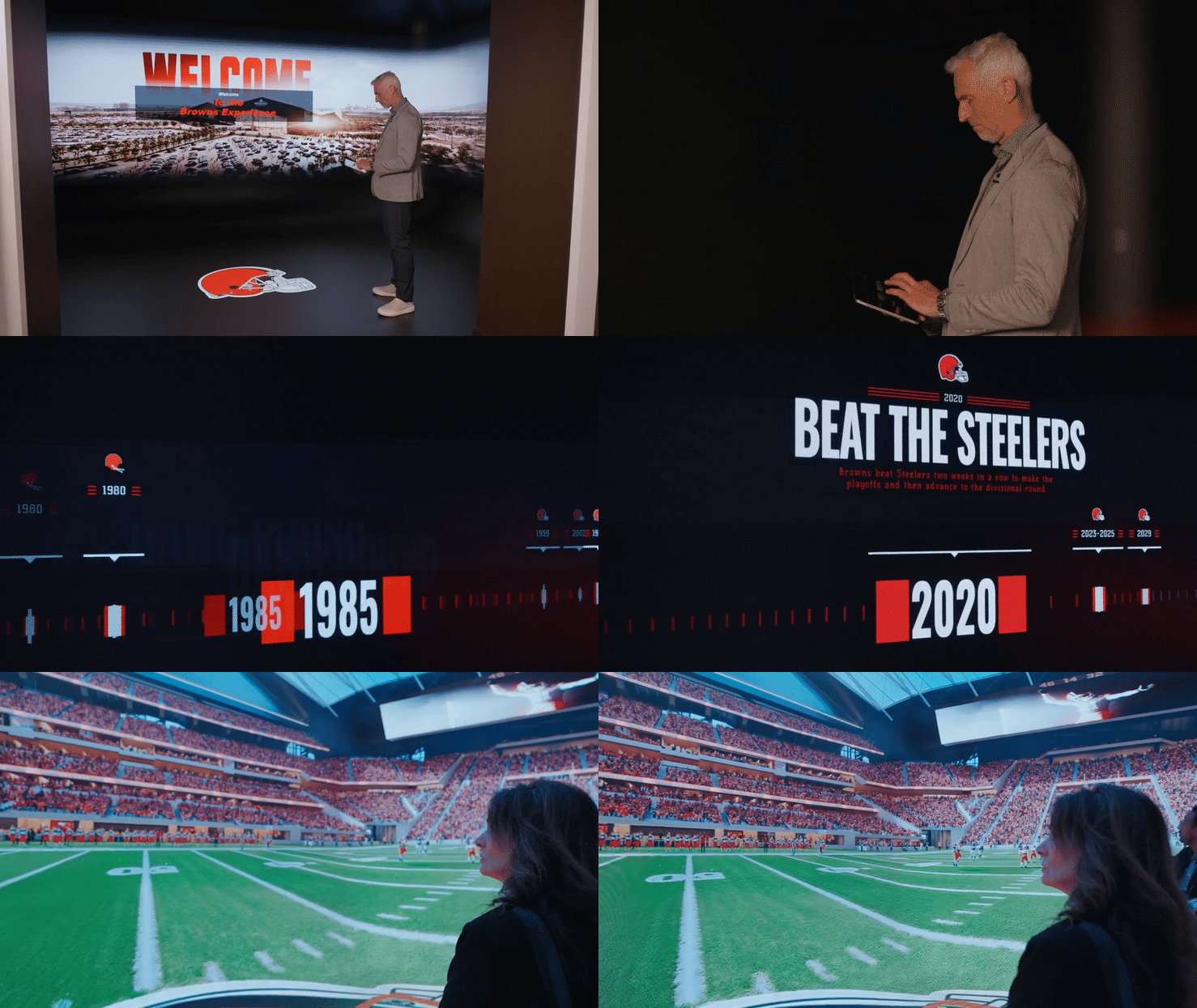
At Advent, we’ve talked a lot about The Immersive Cube® as a pro sports sales engine. With $22.4 billion in pro stadium and arena projects set to open between 2027 and 2032, according to a recent tally by Sports Business Journal’s Bret McCormick, it’s no great mystery why. Every one of those teams has to ask fans, partners and premium buyers to commit to a building that doesn’t exist yet, and our patent-pending Immersive Cube® lets them step inside the finished project years ahead of its completion.
That’s exactly how four teams are using the patent-pending technology today. The A’s Ballpark Experience Center in Las Vegas, the Carolina Panthers and Charlotte FC, the Cleveland Browns and the Jacksonville Jaguars all built their sales centers around one, and all four of their venue projects appear on SBJ’s list.
But every sales center has a finish line. Once the stadium opens and the last suite sells, selling stops being the priority. The Cube doesn’t have to retire with it.
Every Cube runs on the Advent Operating System™ (AOS), so changing what it does doesn’t take new hardware. It takes new content. Today, we’re digging into three of the most promising second acts for the Cube: fan experience, sponsor activation and recruiting.
1. Fan Experience: Put Every Fan Where Only Players Have Been
The most natural second act for the Cube is a fan experience destination. The Athletics already plan to bring their Cube into the new ballpark once it opens, where it can keep working for fans, partners and the community.
That’s the first thing to know about the Cube: it isn’t bolted to the sales center. A team can relocate it to the concourse or a premium club, or leave it where it is and change what plays inside. Either way, the room that sold the stadium now becomes another great reason to visit it.
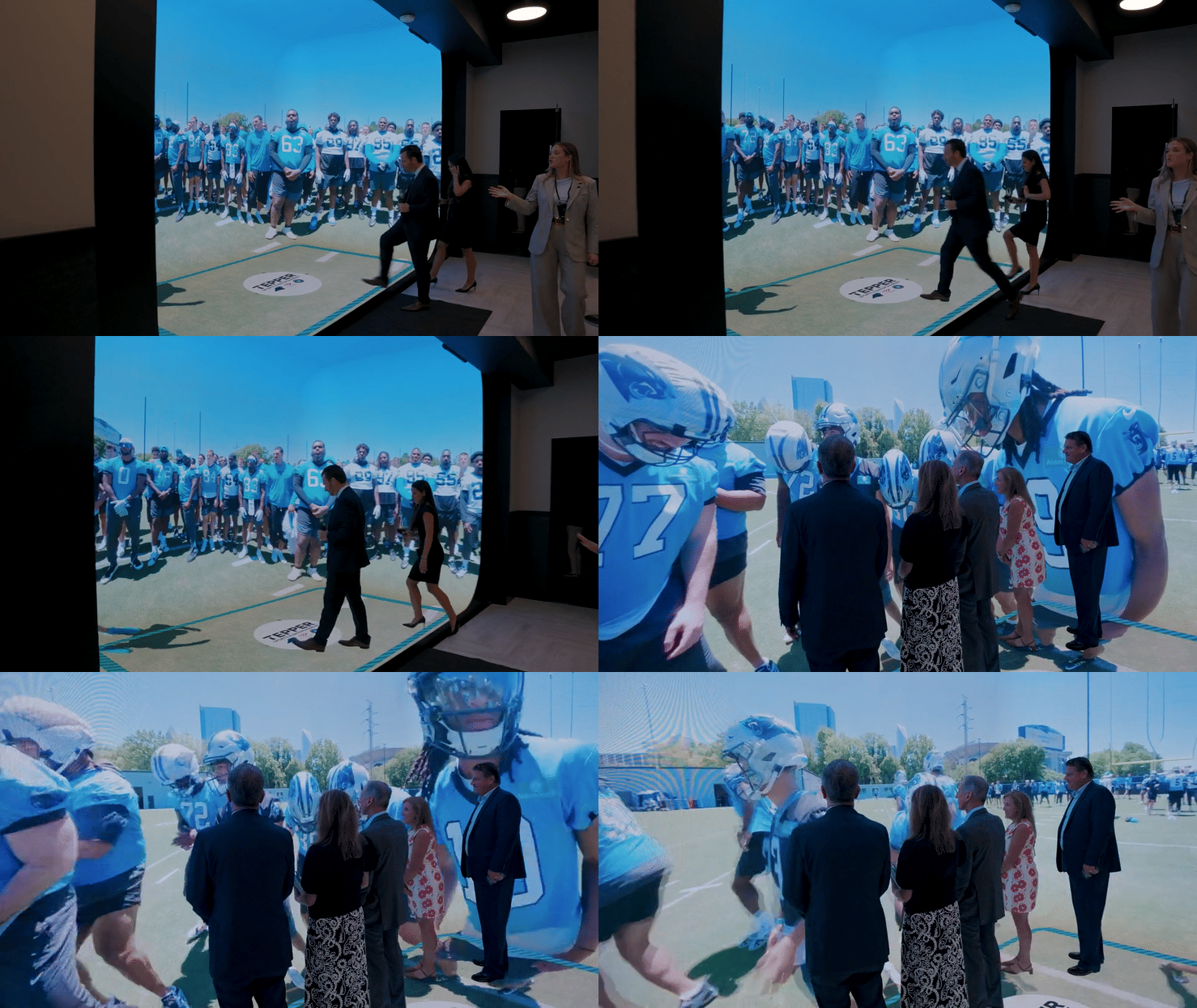
What goes inside is wide open. In Charlotte, our official content partner, Magic Trick Media, went to Carolina Panthers practices and Charlotte FC match days to capture something no Cube had shown before: real-time, full-motion, 360-degree live-action footage. Every previous Cube had run on computer-generated animation. At Tepper Sports & Entertainment’s MoMINTum sales experience center, a fan can stand inside the huddle, run a route at practice or play keeper during a match at Bank of America Stadium.
Panthers great Thomas Davis Sr., retired since 2021, said the Cube was the closest he’d come to the real thing since he stopped playing. If it does that for a linebacker who lived it, imagine what it does for a fan who has only ever watched from the stands.
Here are a few ways teams can leverage the Cube for fan experience:
– Put fans in the middle of the action: live-action footage from inside the huddle, the tunnel, the bench or the goal line lets fans stand where only players have stood
– Give fans an unbeatable photo op with their favorite player: footage captured on media day lets a fan tap an iPad, pick a favorite player and pose next to them on the field, the court or the ice, and because AOS is that simple to run, teams can park the iPad outside the Cube and let fans run the entire experience themselves
– Reward your most dedicated followers: season ticket member nights and exclusive content give loyal fans a perk no one else can get
– Turn team history into a living place: championship moments, legends and iconic plays become scenes fans can step inside of, not highlights they scroll past
– Make it playable: AOS already powers interactive fan games, so the Cube can host skills challenges and trivia built around your team
– Keep content fresh all season: new footage after big wins, rivalry week content or a playoff edition keeps fans coming back
– Make every theme night a one-night-only event: a custom hype video produced for each theme night drops fans into something they can only experience that night, which gives them a real reason not to miss it
– Open it on non-game days: tours, youth camps and community events turn the Cube into a year-round attraction
The ideas built around live action, like putting fans in the huddle or getting players to pose for photo-ops, need footage shot and edited specifically for a wraparound room. That’s something we’ve learned how to execute flawlessly with our official content partner, Magic Trick Media. The Emmy and Peabody Award-winning production team knows our people, our technology and exactly how to shoot and edit for the Cube. That means your in-house content staff can stay focused on covering the team instead of learning a new shooting and editing format through trial and error.
2. Sponsor Activation: Give a Partner the Best Room in the Building
Once the Cube becomes a fan destination, it also becomes some of the most valuable sponsor inventory a team has. Fans choose to go in, give it their full attention and walk out talking about it. That’s a very different exchange than a logo on a concourse wall provides.
The key is fit. Every great activation sits at what we call the value intersection: the sweet spot where team culture, the sponsor’s brand story and genuine fan behavior overlap. We saw it work at Milliken Plaza at Fluor Field, where a sponsored pitching experience became something Greenville Drive fans chose to interact with, game after game. The Cube is the same idea at a much bigger scale.
Picture it in Charlotte. A fan steps into the Cube and stands in net as Charlotte FC’s keeper while a shot comes in. That moment belongs to the team, it’s the one the fan wanted, and the partner whose name is on it gets an unbelievable value.
The Cube is also a blank canvas, so a sponsor’s presence can be as big or as subtle as the fit calls for:
– Name the experience: a presenting partner for the Cube itself, or for a signature experience inside it
– Own the opening scene: a branded intro that plays as each group steps inside, before the action starts
– Write the brand into the moment: sponsor-presented scenes like the keeper’s-eye view or the walk out of the tunnel
– Brand the floor: the footprint markers that show guests where to stand can carry a partner’s mark
– Build scenes around the partner’s story: in Charlotte, the Memory Vault was designed around a private bank vault, a subtle nod to naming rights partner Bank of America, and the same thinking applies inside the Cube, the ultimate blank canvas
– Host partner nights: private sessions let a sponsor bring its own clients, employees or customers into the experience
– Swap partners without rebuilding: because content runs through AOS, the Cube can feature different partners for different events or seasons
The one thing to avoid is turning the Cube into a commercial. Fans came for the huddle, the photo-op or to see the big play up close. The partner earns its place by making that moment possible, not by interrupting it.
3. Recruiting: Win the Visit in a Free Agency World
The third use case is where the Cube may matter most next, and that space is college athletics. In just a few years, college sports have moved much closer to the pro model.
Since 2021, athletes have been able to earn money from endorsements through name, image and likeness (NIL) deals. Transfer rules loosened the same year, and by 2024 athletes could transfer multiple times with few penalties. Then the House v. NCAA settlement cleared the way for schools to pay athletes directly. College athletes can now get paid and change teams every year. In other words, they’re a lot like professional free agents.
The NCAA’s own numbers show how fast rosters are changing:
– More transfers, fast: according to the NCAA’s Division I transfer data (as of January 2026), about 18,400 Division I portal entrants found a new NCAA school in the 2025 cycle, up from about 14,200 in 2023, an increase of roughly 30% in two years
– Rosters look different now: in 2015, about 12% of Division I athletes had transferred into their current school, and by 2024 it was about 21%, roughly one in five, based on the NCAA’s Division I transfer composition dashboard
– Once they’re in, they’re usually gone: of the athletes who entered the portal in the 2025 cycle, 64% transferred, 29% were still active and only 7% withdrew and returned to their team
That last number is the one that should keep athletic directors up at night. Recruiting used to be about landing a class. Now it’s about landing a class and keeping it.
The Cube won’t outbid anyone. A recruit choosing between programs still weighs playing time, coaching, a chance to win and the offer itself. But when those factors are neck-and-neck, the experience a program delivers to its prospective student athletes can decide it.
That’s the exact problem the Cube was built for. Pro teams use it to make people feel a future that doesn’t exist yet so they’ll commit to it. A recruiting visit asks for the same leap. Here’s how a university athletic program could put the Cube to work:
– Put recruits in the moment: live-action footage like Charlotte’s lets a recruit stand in the huddle, run out of the tunnel or hear a sold-out home crowd chanting their name before they’ve ever committed
– Build the visit around one athlete: AOS can personalize what plays for each guest, so a recruit can see their name, number and position in the program’s colors
– Show the future, not just the past: a program building or renovating a facility can walk recruits through spaces that don’t exist yet, the same way pro teams sell their new stadiums
– Give current players something to protect: content that celebrates the athletes already on the roster tells them they’re part of the program’s story, not a stop on the way to the next one
– Make it the moment every visit builds toward: the strongest recruiting tours end somewhere memorable, and few rooms are more memorable than this one
College programs don’t need sales centers. They need persuasion and storytelling. A Cube can live in an athletics facility, a hall of fame or a recruiting lounge and serve three different key groups all from the same room.
The Advent Takeaway
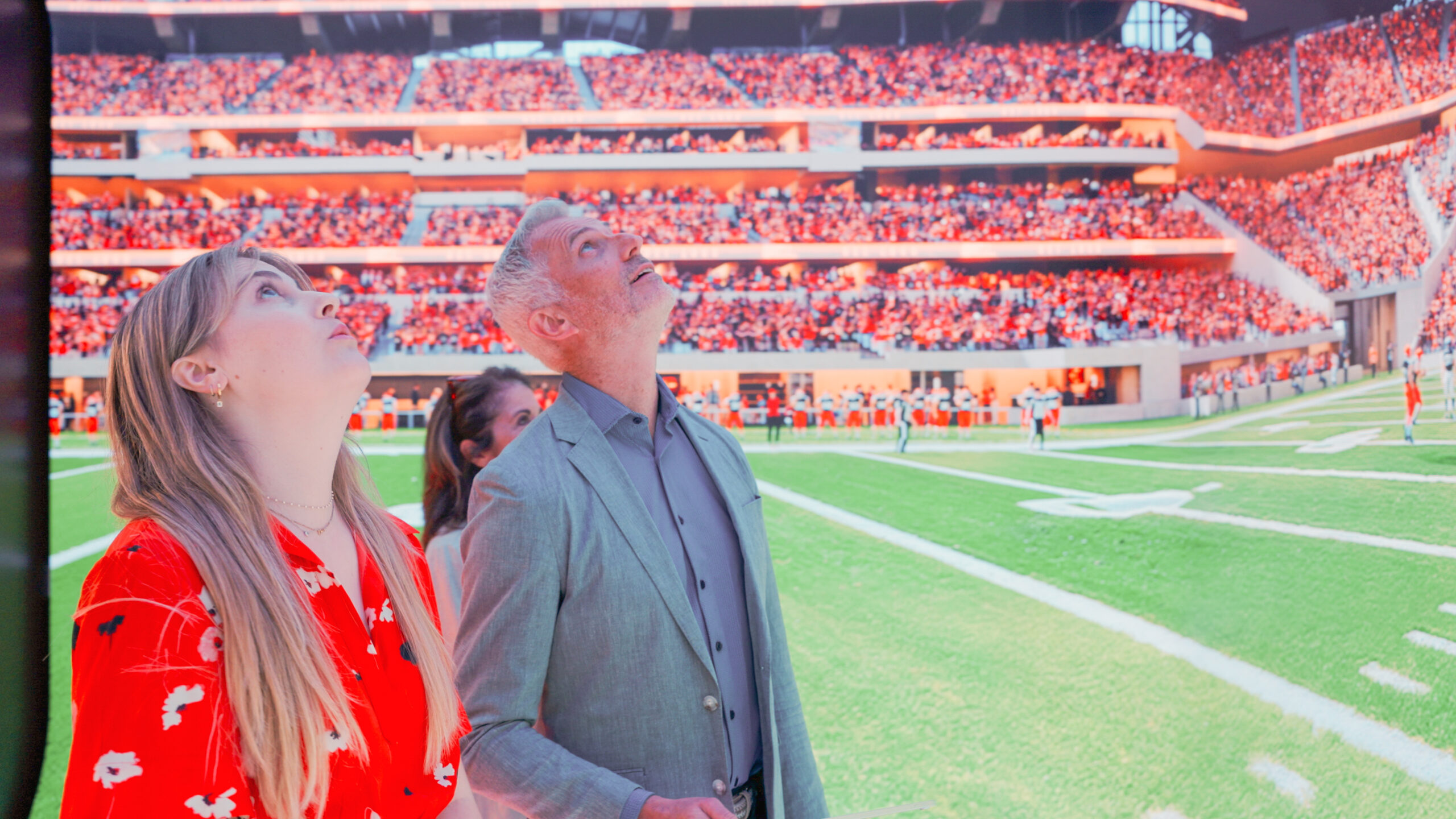
The Cube was never just a sales tool with a shelf life. It’s a platform, and the content inside it decides what it does next. Today it’s selling stadiums. Tomorrow it can put a fan in the huddle, give a partner the best room in the building or help a coach win the visit that matters most.
If your organization is looking to revamp the fan experience, bring exciting new partners to the table or win the recruiting battle, we’ve got the perfect tool for the job. Let’s talk.
Sources
–SBJ Facilities: The $22 billion venue project list, Sports Business Journal, Oct. 15, 2026
–Division I Student-Athlete Transfer Trends, NCAA, data as of Jan. 5, 2026
– Composition of NCAA Division I Academic Cohorts by Transfer Status, NCAA Research
– The NCAA House Settlement One Year Later, Akerman
Frequently Asked Questions
What is The Immersive Cube®?
The Immersive Cube® is a room of seamless LED walls, floor and, in some installations, ceiling that surrounds guests with one continuous image. Guests step inside a stadium, a suite or a moment on the field without a headset, and the whole group sees it together. Each Cube is sized to fit the space a team has, and it runs on the Advent Operating System™ (AOS).
What happens to the Cube after my venue project is completed?
It gets a new job. Because everything inside the Cube runs through AOS, a team can swap sales content for fan experience, sponsor activations or recruiting content without new hardware. The tech stays the same. The function changes.
Can we move the Cube out of the sales center once we've hit our goals?
Yes. A team can relocate the Cube into the new venue, onto a concourse or into a premium space – or keep it where it is and change what plays inside. The Athletics have already shared plans to bring their Cube into their new ballpark on the Vegas Strip and turn it into a fan experience destination.
Can I use the Cube for sponsor activation?
Of course. Sponsors can present the Cube experience, own a branded “boot-up” scene, appear inside sponsor-presented moments, brand the floor markers or host private sessions for their own clients and employees. Keep in mind, the strongest activations fit the team, the partner and the fan at the same time, which we call the value intersection.
Can college athletics programs use the Cube for recruiting?
Yes. The same technology pro teams use to sell stadiums can put a recruit in the huddle, show them a facility that’s still under construction or personalize a visit with their name and number. With the transfer portal and direct athlete payments reshaping college rosters, the experience a program offers matters more than ever, both for winning recruits and keeping current players.
Who creates the content for the Cube?
Advent’s digital experience team builds the Cube’s digital content within AOS, then passes the controls to you. For live-action, immersive footage, we work with our official content partner, Magic Trick Media, an Emmy and Peabody Award-winning production team that shoots and edits specifically for the Cube to truly immerse the viewer.
Does our team need technical expertise to run the Cube?
No. Sales reps inside your experience center can run the Cube from an iPad utilizing the incredibly user-friendly Advent Operating System, and the Advent DX team provides hands-on training and ongoing support. If you can use a phone or tablet, you can run the Cube.

Written by Kat Fincher, Senior Client Engagement Manager
For over 25 years, Advent has been creating emotionally resonant experiences for leading brands including AT&T, Fanatics, the Dallas Cowboys, and Stanford University. Our proprietary StoryMining methodology ensures that every project starts with the story, not the technology.