

Experience Design
Higher Education
Pro Sports
Technology
Digital Display Technology Made Simple: Run Every Screen in Your Space From One iPad
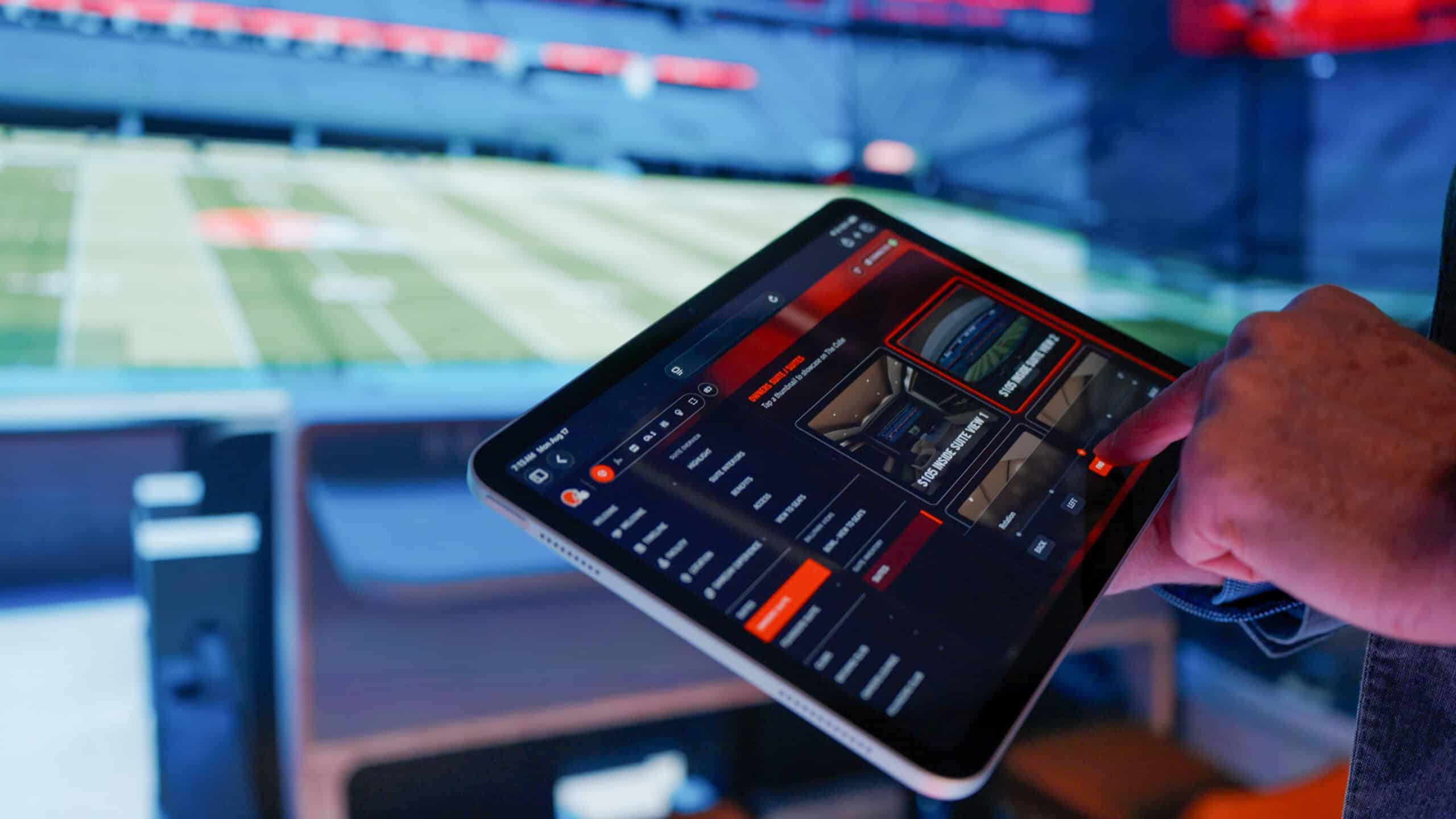
If you know how to use your phone, you should be able to run every piece of technology in your sales experience center. That’s the idea behind the Advent Operating System™ (AOS): lightning fast, simple to operate, and easy to update with fresh content.
In this blog post, we’ll talk about how it works, and how it solves the most common problems with technology-heavy spaces. But first, we’re going to talk about the elephant in the room:
Why Is My Facility’s Technology So Hard to Manage?
Whether we’re talking about an experience center, a sales environment, a corporate headquarters, a collegiate welcome center or a professional locker room, each can be built with many different technologies present at once: immersive rooms, LED walls, touch tables, interactive displays, sometimes even holograms. Too often, each one comes with its own controls, its own software, and its own learning curve. Staff get nervous about touching anything, then maybe content starts to go stale, and a space that cost millions to build starts to feel like a monument to the day it opened.
The fix is one system that runs everything, that’s simple enough for anyone on your team to use. That’s AOS.
Think of it like your Apple account. Your photos, messages, and files show up on your iPhone, iPad, and MacBook, and every device interface looks and works the same way. AOS does the same thing for physical spaces: one content library, one engine, and one user-friendly interface across every screen and installation.
What is an Experience Management System?
An experience management system is the software that controls the content and technology inside a physical space: every screen, projector, touch display, and immersive room. AOS is Advent’s proprietary experience management system.
AOS was first introduced more than a decade ago and has been refined with every installation since. We built it ourselves because off-the-shelf solutions couldn’t deliver what storytelling spaces actually need: instant scene changes, many types of content ready to pull up quickly, and granular control over the narrative journey of the space. Since then, client feedback, real-world use cases, and hundreds of deployments have shaped it from a tool for managing projection and LED displays into the engine behind dynamic, interactive ecosystems that evolve in real time.
Just as important is the team behind it. Advent’s DX team has consisted of the same group of people for more than a decade. They’ve encountered the same challenges together, solved them together, and learned from every project along the way. They speak the same language. Think of them as one giant digital and technology brain, and AOS as everything that brain has learned. It’s a rarity in the tech field, and it’s proven completely invaluable to our clients and the challenges they ask us to solve.
How Do You Control Multiple Displays From One iPad?
You connect every display, room, and interactive element in the space to one operating system, then run it all from a tablet app. With AOS, a host can launch a scene, switch a room, or take over every screen at once with a single tap, while the same system handles media, content, and functional management behind the scenes.
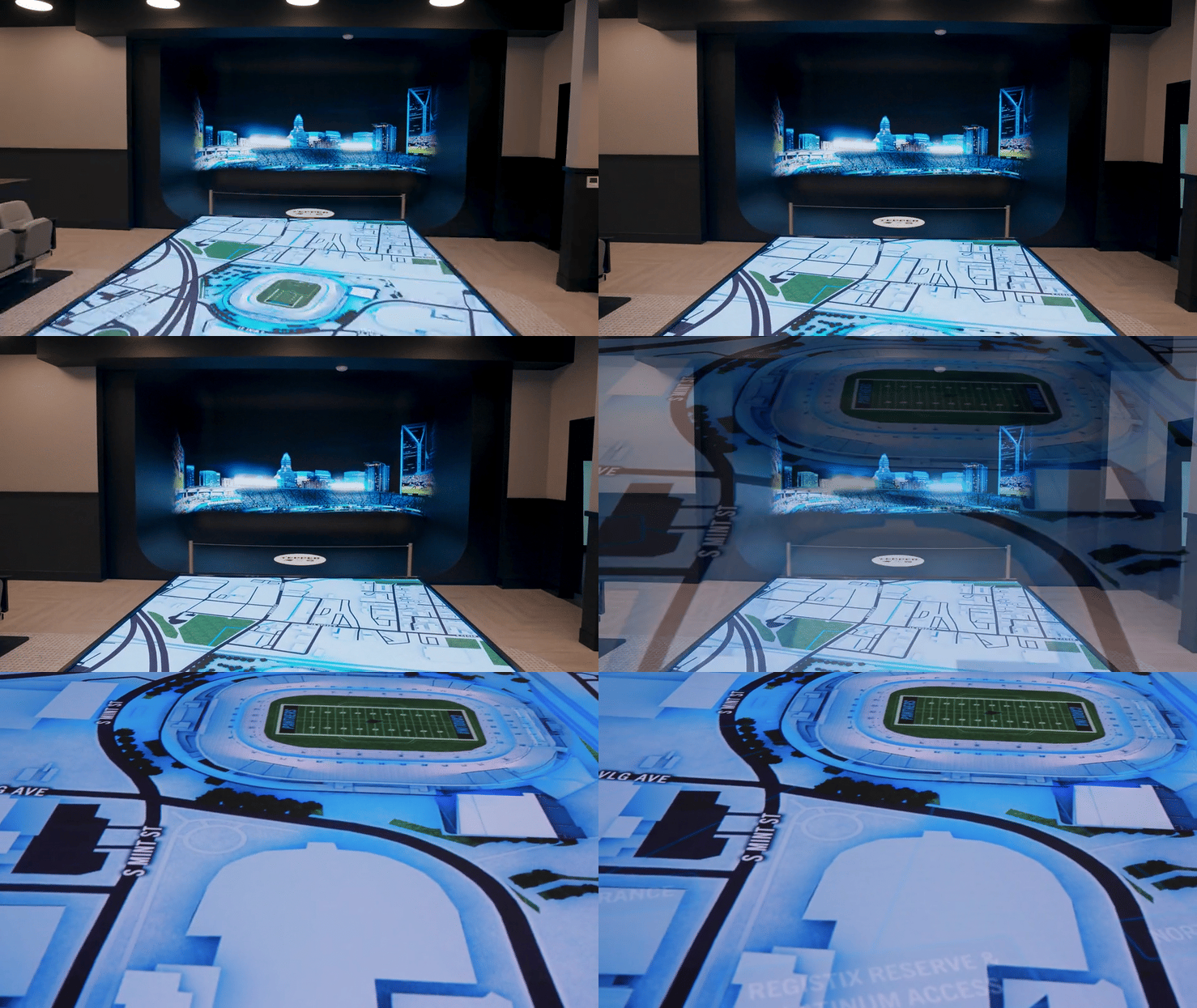
The MoMINTum Experience Center at Bank of America Stadium is the most technologically advanced experience center Advent has ever built. Guests move from a personalized vault experience to a 290-square-foot hype theater, a holographic room where 80-plus community voices share why the stadium matters, an interactive digital table, and The Immersive Cube®. Every one of those surfaces, plus the passive LED boards throughout, is controlled by the sales team from a single iPad. And when the space needs to serve a different audience, it changes completely: MoMINTum can switch between Carolina Panthers, Charlotte FC, and special event themes with one click.
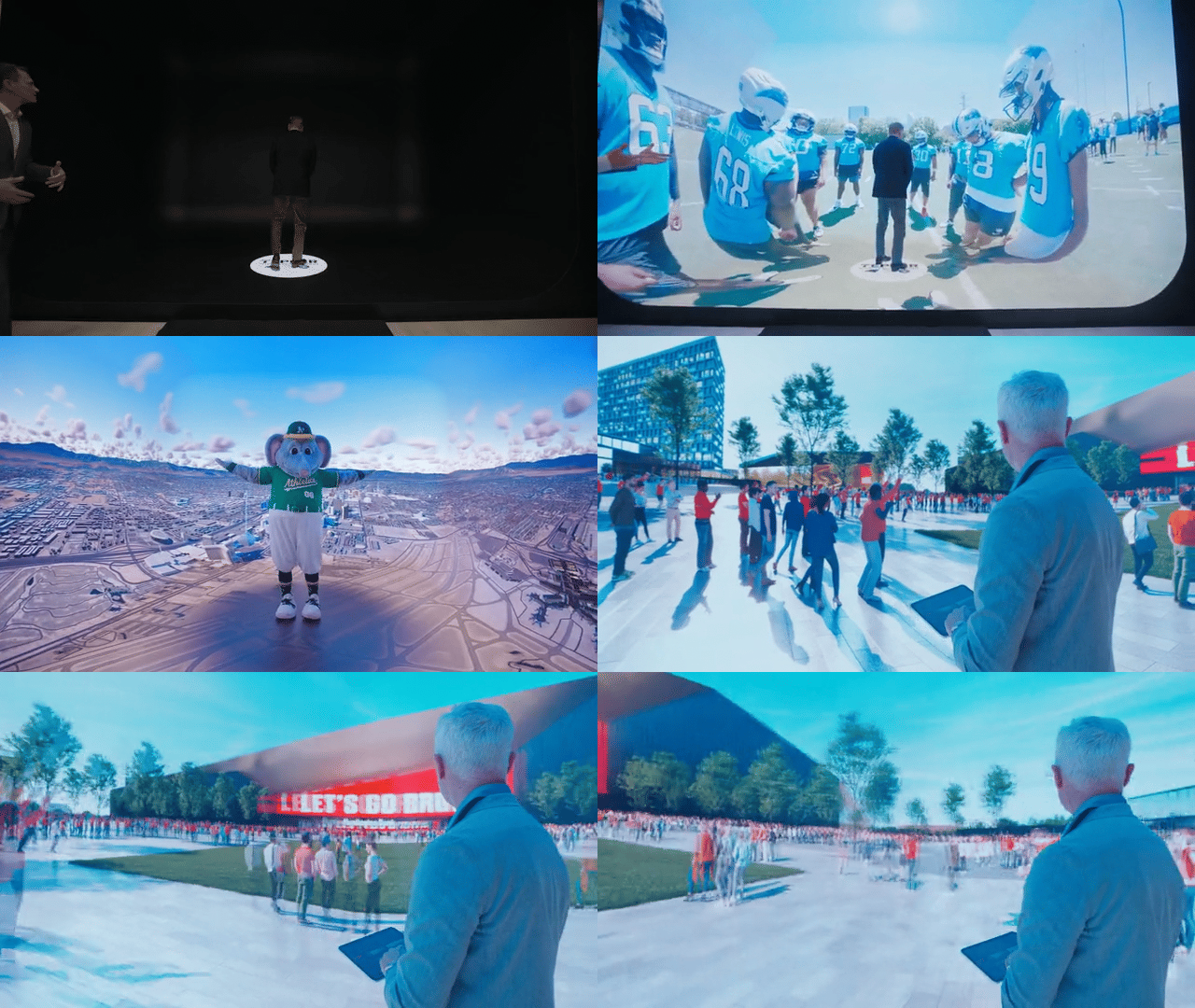
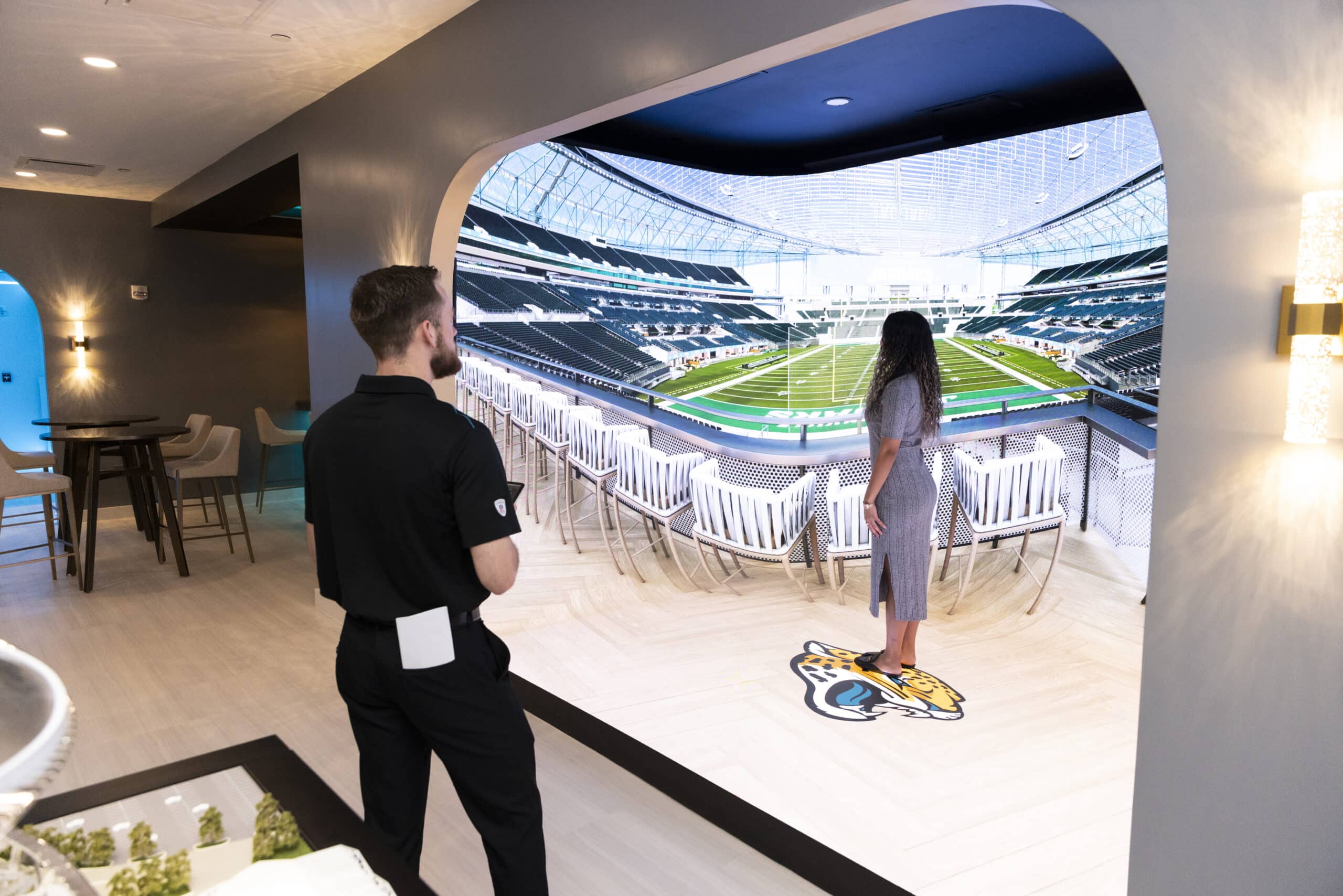
The same idea powers our other experience centers. At the Jacksonville Jaguars’ Stadium of the Future sales center, the team chooses from thousands of customized scenes and moves from the field to premium seating with the touch of a button. In the Cleveland Browns’ Immersive Cube®, sales executives navigate within a 25-square mile digital twin of the surrounding area from one screen. And at the A’s Ballpark Experience Center in Las Vegas, instant scene switching lets the space shift its story depending on who steps inside.
How Do You Keep Digital Displays Updated?
Use a content management system simple enough that your own team can make changes, with a partner ready to step in when you need an extra helping hand. With AOS, your staff can update content themselves using drag-and-drop tools, no technical expertise required. Or Advent can handle it for you. Most clients do a bit of both.
The platform is built to grow without limits. At Stanford’s Home of Champions, it powers profiles for nearly 15,000 letterwinners and our “Enchanted Table” installation. The Kansas City Chiefs’ Hall of Honor covers more than 1,400 players and 980-plus games. At the PGA of America’s Frisco headquarters, members snap a headshot that’s instantly added to a digital lobby wall that rotates through photos of thousands of their peers. New inductees, new records, and new moments go live in real time. This works for alumni recognition too.

How Do You Personalize a Sales Center Tour with Technology?
Connect your experience center to the data you already have about each guest, then let the space adapt to who’s in the room. In a world where choices are plentiful, technology that personalizes is what persuades. It says, “I know you, I see you, and you’re important to what we’re doing here.”
At MoMINTum, AOS connects to the team’s CRM data. When a guest arrives, the Memory Vault, a nod to naming-rights partner Bank of America, opens a set of digital vaults filled with the moments at the stadium that guest was actually part of. Elsewhere, adaptive modes change content based on who’s in the room, so a corporate partner, a season ticket holder, and a prospective student can each see a version of the story built for them.
How Do You Create Content for Custom Displays Like the Cube?
Work with a production team that knows how to shoot and edit specifically for that space. Shooting 360-degree video that works inside a wraparound room, or editing for a screen that wraps a hallway, is a specialized skill. Most in-house video teams, even very good ones, haven’t done it before, which can mean weeks of back-and-forth just to figure out how to shoot it correctly.
That’s why Advent and the Advent DX team work with Magic Trick Media, our official content partner. Not only is Magic Trick Media an Emmy and Peabody Award-winning team with decades of experience, they also know our people, our technology, and exactly how to shoot and edit for it. Whether it’s 360-degree footage inside The Immersive Cube® or a hype video for a gigantic wraparound theater screen, their content is built from the first frame to play perfectly inside an AOS-powered space.
When working on a deadline, that knowledge is invaluable. Clients can skip the trial and error of shooting for unfamiliar screens, and instead work hand-in-hand with our content partner, so you get to opening day with content that looks exactly the way it should.
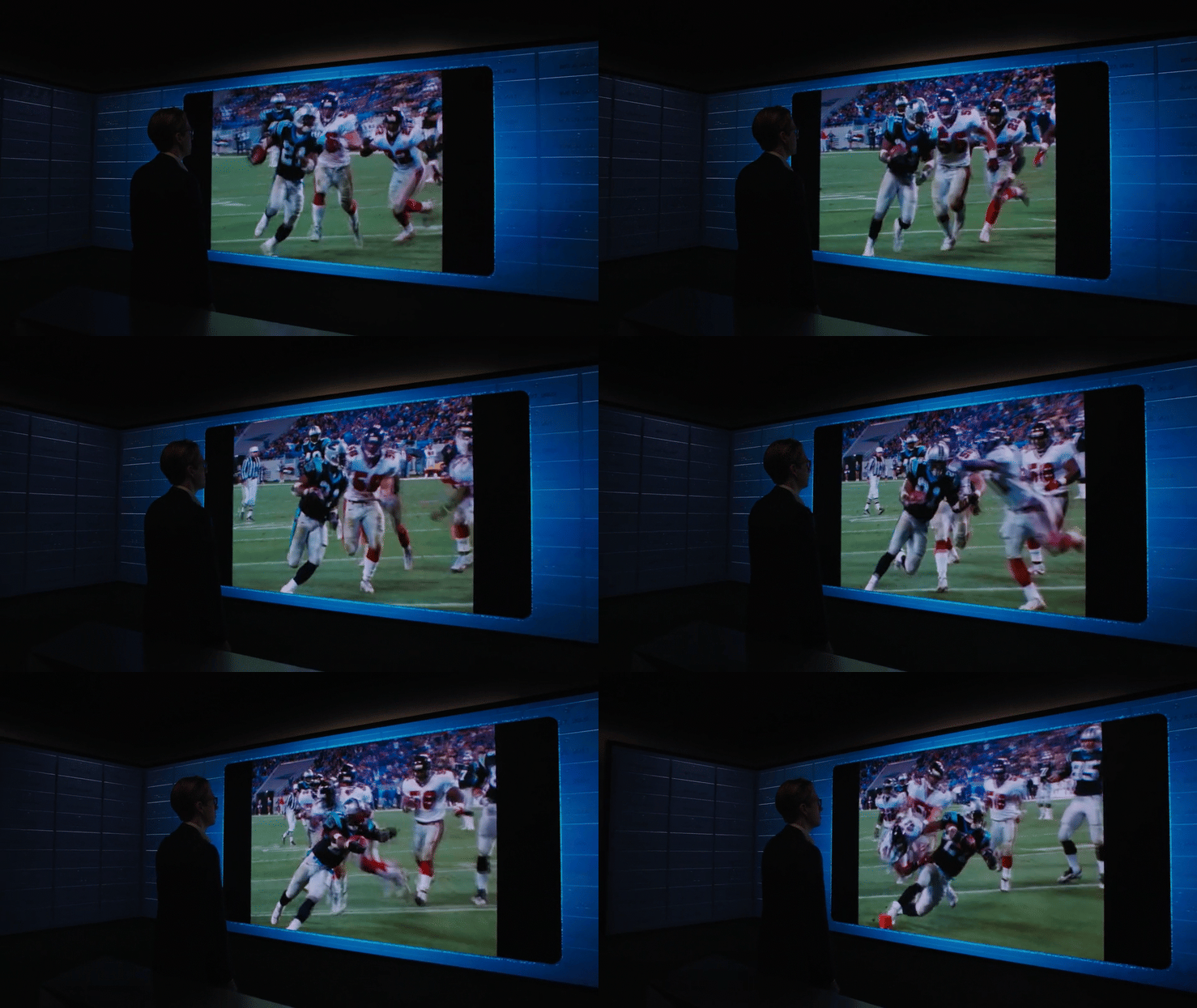
At MoMINTum, our content partnership made history. Magic Trick Media, Advent, and Tepper Sports & Entertainment went to game days and practices to capture something that had never been done inside the Cube before: real-time, full-motion, 360-degree live-action video at 60 frames per second. Every previous Cube had run on computer-generated animation. In Charlotte, a visitor can stand in the middle of the Panthers’ huddle or behind the goal at a Charlotte FC match, planted directly inside the action as it happens.

How Do You Measure Engagement in an Experience Center?
Use a system that tracks how visitors interact with every display in real time. AOS records which scenes get pulled up, which displays draw people in, how long visitors stay, and which content they explore. At the University of Arkansas, the Razorbacks’ Hall of Honor lets visitors navigate history from their own phones, and the team can see which stories resonate most. That data helps you refresh content, prove value to sponsors, and make smarter decisions about your next investment.
Can You Use the Screens You Already Have?
Yes. AOS isn’t limited to new Advent installations. It can power existing screens too, so you can bring displays from other providers into one system and run your whole space from the same iPad. At the Jacksonville Jaguars’ Stadium of the Future sales center, the screens weren’t supplied by Advent, but every one of them runs on AOS.
Spaces can evolve over time as well: at the University of Wyoming’s Gateway Center, the original 30-screen 4K video wall has since been upgraded to a seamless LED display.
How Do You Get Your IT Department on Board With New Technology?
Show them that running it doesn’t require IT at all. At a conference where we presented The Immersive Cube®, one attendee asked exactly this: how do I pitch something like this to my IT department, when getting them on board with new technology is already a challenge?
It’s a fair question, and the answer is the whole point of AOS. Day to day, the people operating the space are your sales reps, hosts, and staff – not your IT team. If you’ve ever used an iPad, you can operate AOS. The learning curve is shallow, the interface is intuitive, and every client gets hands-on training. Behind the scenes, Advent’s DX team handles the hardware, network, and functionality setup during installation, and keeps monitoring the system long after opening day. So instead of handing your IT department one more complicated system to babysit, you’re giving your team a tool they can run themselves, backed by people who have supported it for more than a decade.
Who Supports the Technology After Installation?
Every client gets hands-on training and support from the Advent DX team before, during and after installation. While your team will eventually take the reins – after all, AOS was designed to be user-friendly – our team monitors installations from afar, and can resolve any bugs that may arise.
Fortunately – with a content management system we’ve been refining for over a decade and the same team who built it originally still at the controls – issues are infrequent and quickly resolved.
Where Does an Experience Management System Make the Biggest Difference?
Anywhere a space needs to tell a story, change with its audience, and stay current in perpetuity. Here’s where AOS runs today:
Professional Sports Sales and Experience Centers
From the A’s Ballpark Experience Center in Las Vegas to MoMINTum in Charlotte, AOS lets sales teams tailor every tour to the person in the room, showing a corporate partner their future suite sightlines one minute and a family their future seats the next. These spaces also double as content studios and event venues, which only works when the whole room can change on command.
College Admissions Welcome Centers
At Belmont University’s Jack C. Massey Center, a suspended LED mesh display brings student life to the front door of the admissions experience. At the University of Wyoming’s Gateway Center, a seamless LED wall connects visitors to the spirit of Wyoming, with content that evolves as the university does.
Halls of Fame
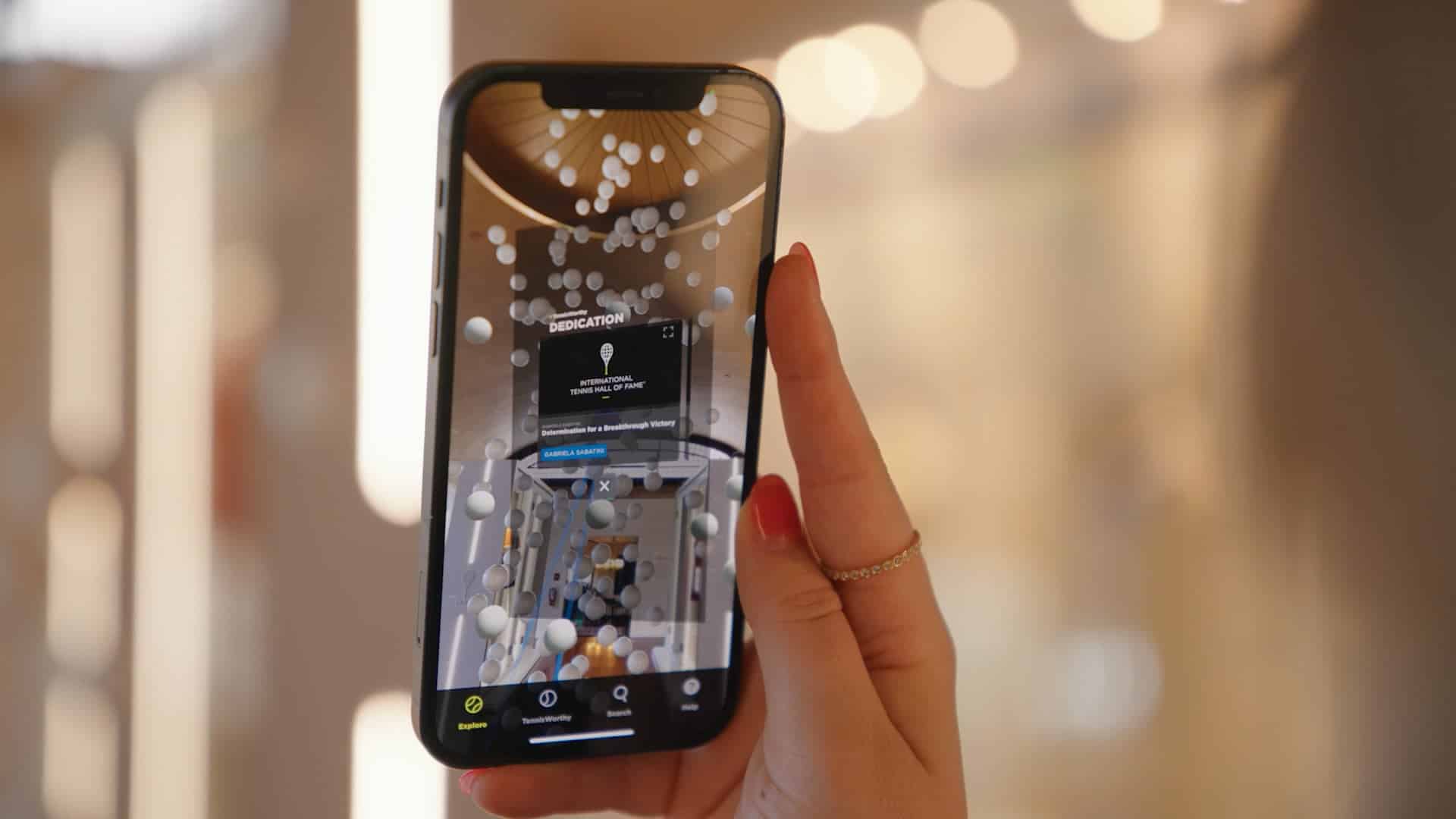
AOS powers interactive halls of fame for the International Tennis Hall of Fame, the Kansas City Chiefs, Stanford, and more. Gone are the days of limited wall space and outdated plaques. Every inductee, game, and moment can live in one searchable, updatable experience.
Donor and Alumni Recognition
At USC’s Marshall School of Business, ten touchscreens share donor stories through video, photos, and text, with new donors added in real time. At the University of North Dakota’s Nistler College of Business, a digital wall celebrates generations of alumni leaders. Learn more about StoryTech™ and our donor recognition solutions.
Fan Experiences and Sponsor Activations
AOS powers games, too. The Milliken Game Changer Pitching Experience at Fluor Field lets fans throw a pitch and get their stats instantly on a shareable digital baseball card.
Corporate Headquarters
At the PGA of America’s Frisco headquarters, AOS runs a rolling digital ticker of stats, rankings, and course content, alongside a member wall that grows with every new headshot. See more of our customized digital solutions.

FAQ
What is the Advent Operating System™ (AOS)?
The Advent Operating System™ is Advent’s experience management system. It lets staff control and update every screen, projector, touch display, and immersive room in a space from one iPad, using a simple, drag-and-drop interface.
How is AOS different from a digital signage content management system?
A typical digital signage system schedules content on screens. AOS does that too, but it also runs immersive rooms, interactive touch experiences, holograms, and games, personalizes content for individual visitors, and tracks engagement, all from the same iPad.
Can staff without technical experience run an experience center?
Yes. If you can use a smart phone or tablet, you can operate AOS. Every client receives hands-on training and ongoing support from the Advent DX team so the learning curve stays short.
Who creates video content for AOS-powered spaces?
Advent works with our official content partner, Magic Trick Media. The Emmy and Peabody Award-winning team shoots and edits content specifically for Advent installations like The Immersive Cube®, the hologram-powered StoryFrames, custom-sized LED screens and more.
Does AOS work for halls of fame and donor walls?
Yes. AOS powers interactive halls of fame, donor recognition, and alumni displays, with unlimited capacity and real-time updates as new inductees and donors are added.
What kinds of technology can AOS control?
AOS can run nearly everything in a modern experience space: immersive rooms like The Immersive Cube®, LED walls and video walls, touch tables and touchscreens, projection mapping, hologram-powered StoryFrame displays, and interactive games, all from the same iPad.
Can AOS change a space for different events or audiences?
Yes. AOS can switch an entire space between modes with a single click. At MoMINTum, the sales team flips the whole experience center between Carolina Panthers, Charlotte FC, and special event modes, so one space serves many purposes.
Can AOS integrate with other systems?
Yes. At MoMINTum, Advent integrated AOS with Tepper Sports & Entertainment’s CRM to create a custom Memory Vault experience, pairing content from 30 years of game, match, and live event data with each individual guest, so every visit begins with a highly personalized welcome powered by the guest’s own memories.
How long has AOS been in use?
AOS was first introduced more than a decade ago and has been refined through hundreds of deployments, client feedback, and real-world use. The same Advent DX team that built it still develops and supports it today.
What happens if something goes wrong?
The Advent DX team monitors installations remotely and can resolve issues quickly, often before clients notice them. Because the platform has been refined for so long, and by the same team, issues are infrequent and quickly solved.
What types of organizations use AOS?
AOS powers spaces for professional sports teams, colleges and universities, halls of fame, and corporate headquarters, including the Carolina Panthers and Charlotte FC, the Jacksonville Jaguars, the Cleveland Browns, the Vegas A’s, Stanford, the Kansas City Chiefs, and the PGA of America.
See it For Yourself
The best way to understand AOS is to see it in action. If you’re planning an experience center, welcome center, hall of fame, or any space that needs the tech inside of it to stay fresh for years to come, we’d love to talk more about a solution.

Written by John Roberson, CEO
For over 25 years, Advent has been creating emotionally resonant experiences for leading brands including AT&T, Fanatics, the Dallas Cowboys, and Stanford University. Our proprietary StoryMining methodology ensures that every project starts with the story, not the technology.