

Multi-Use Districts
Sponsorship Activation
SHOW ME THE NUMBERS: Why Modern Sponsorship Requires More Than Just a Logo on a Wall
After 22 years in this industry, I’ve watched sponsorship evolve from a simple handshake business to a high-stakes, data-driven science. There was a time when putting a company logo on a wall, a concourse, or an outfield fence was enough. The bigger the logo, the better. That doesn’t cut it anymore.
Today, sponsors want to know what their investment is actually doing. Are fans engaging with the brand? Are they spending more time in the space? Is it driving revenue? Is it creating an experience people remember and want to come back to?
But how do you actually deliver that? It starts by listening (really listening) to what the sponsor wants to achieve. Then using those insights to design an experience that makes sense for the brand, the team, and most importantly, the fans.
At Advent, we specialize in blending those three worlds together. By integrating our Digital Experience (DX) solutions directly into sponsorship activations, we create high-impact spaces that drive fan engagement and prove value in real-time.
Here’s a look at what makes a sponsor a natural fit, how you create an experience fans actually want to come back to, and why measuring the results matters just as much as creating the experience.
Which sponsors are “natural fits” with the team brand?
Before you build anything, ask the fundamental question: Which sponsors naturally elevate your team’s brand, and how does your franchise return the favor? A successful activation shouldn’t feel like a forced advertisement; it needs to feel like an authentic extension of the game-day environment. When the synergy is right, the story tells itself, and fans buy in immediately.
Think of it this way:
When was the last time you walked down a crowded concourse, glanced at a logo painted on a concrete wall, and thought, “Man, that sign makes me really thirsty for a Miller Lite?”
Probably never. A static logo can tell you who paid for the space. It doesn’t necessarily give you a reason to stop, engage or come back.
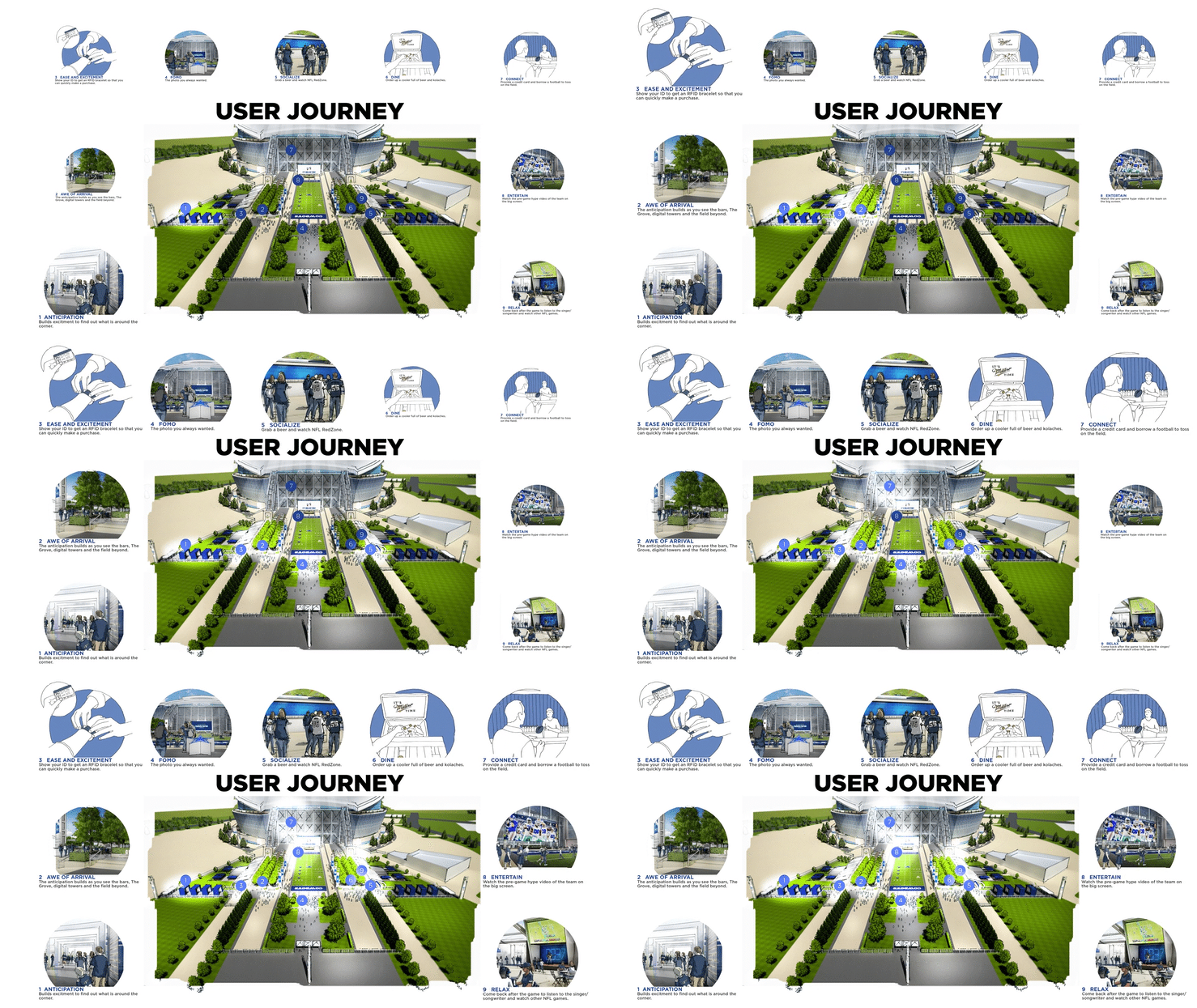
Now compare that to the Miller LiteHouse at AT&T Stadium. You’re walking into an 87,000-square-foot branded plaza with massive high-def screens, music, energetic crowds, and cold drinks flowing everywhere. You aren’t looking at an ad. You’re part of an environment built around the culture of the game. That’s the difference between buying space and creating a 365-day destination. When a sponsor takes time to understand the user’s journey, the revenue will follow.
How Do You Turn One-Time Visitors into Game-Day Regulars?
Once you nail down the brand alignment, the next step is keeping the fan experience alive over time. The key comes down to how you blend team and sponsor identities to directly elevate the fan journey—giving people a genuine reason to return game after game.
Take our work with the Greenville Drive at Milliken Plaza. Milliken wasn’t looking for another static sign; they wanted an activation that brought their corporate heritage to life while celebrating local baseball culture.
Instead of a passive display wall, Advent built an interactive pitching game that puts fans directly in a real game situation. Fans step up, throw a pitch, test their velocity, and get embedded straight into a custom digital moment alongside key Greenville Drive players and standout Milliken employees.
Most venue attractions hit peak numbers on opening day, only for engagement to drop off as the novelty wears off. How do you keep an activation relevant past Year 1?
By constantly updating the storytelling, we kept the experience fresh season after season. We gave fans a reason to dwell, engage, and make the space a non-negotiable staple of their game-day routine. Fans are constantly coming back to beat their own score from the last game, challenge their family members, or show off to their friends.
I know every time I step up to the mound, I’m just trying to beat my score from last time! (And yes, I always remember my score).
If You Don’t Have the Numbers, You Have Nothing. Fortunately, We Do.
Creating a memorable moment is great, but if you can’t back it up with hard data, you’re just guessing. You need the receipts: How many fans interacted? How long did they stay? Did engagement grow over time?
When you track actual human behavior, you stop pitching corporate partners on hypothetical eyeballs and start showing them undeniable proof. Fortunately, when it comes to the examples I just mentioned, we’ve got the numbers to back it up.
At AT&T Stadium’s Miller LiteHouse: Creating a 365 day fan destination translated into an 80% spike in beer sales and a 200% surge in liquor sales. On top of that, the plaza attracted over 10,000 fans to the stadium for away-game viewing parties. That is real revenue driven by intentional space design.
At Milliken Plaza with the Greenville Drive: While most venue attractions see participation drop off after season one, 7,500 individual fans played the pitching game in the 2026 season alone, generating higher engagement in Year 3 than in Year 1.
That is what happens when you replace static ads with dynamic, trackable environments. And those numbers can tell a much bigger story. Maybe it’s increased revenue. Maybe it’s higher participation. Maybe it’s longer dwell time or more repeat visits. Whatever the goal of the sponsorship, the right data gives teams and sponsors a way to see what’s working, what isn’t and where there’s an opportunity to do more.
The Advent Takeaway
I’ve learned that the best sponsorships don’t feel like sponsorships.
They feel like something that belongs there. They give fans a reason to engage, give the brand a meaningful role in the experience, and give the team something it can build on over time.
That’s where the right technology can make a difference. With the Advent Operating System™ (AOS), a powerful experience management platform our DX team has developed and perfected over the past decade, teams can see what’s resonating, understand how fans are engaging, and make adjustments based on what the data is telling them.
Because a successful sponsorship isn’t just about delivering what was promised. It’s about creating an experience that people remember, giving the partner something they can measure, and using what you learn to make the next activation even better.

Written by Todd Cyphers, SVP of Customer Experience
For over 25 years, Advent has been creating emotionally resonant experiences for leading brands including AT&T, Fanatics, the Dallas Cowboys, and Stanford University. Our proprietary StoryMining methodology ensures that every project starts with the story, not the technology.