

Multi-Use Districts
Pro Sports
Sponsorship Activation
30 Mixed-Use District & Facilities Ideas for Pro Sports Teams
In 2014, I stood in the parking lot at Valley Ranch, the longtime headquarters of the Dallas Cowboys. I expected to feel the weight of America’s Team. Instead, I felt a gap between the brand that lived in millions of minds and the building in front of me.
The Jones family, owners of the Cowboys since 1989, felt that gap too. So they closed it.
Today, you drive up to The Star in Frisco and you feel it immediately. It’s 91 acres of planned destination, home to the Cowboy’s world headquarters and practice facility, surrounded by restaurants, retail, hotel, office space and public plazas. Every element is designed to close the gap between what people expect from the Cowboys and what they actually experience.
The Star is now one of the most copied ideas in professional sports. Teams across every league are planning districts around new stadiums, arenas, headquarters and practice facilities. We covered the why in Beyond the Final Whistle. This post is all about the how.
Here’s what nearly 30 years and more than 2,500 projects have taught us: the buildings are the easy part. The hard part is giving people a reason to show up on a Tuesday in March. That’s what these 30 ideas are for.
What Makes a Mixed-Use District Feel Alive:
Before the planning begins, four principles. Every idea below passes through at least one of them:
- Invitation, not control: The Star isn’t about control, it’s about invitation. Come see, come feel, come take part. A district that tells fans to look but not touch will feel like a museum
- The space between things matters most: the most valuable real estate in any experience is the space between things. Walkways, plazas and pauses are where people decide to stay
- Personal meaning inside a shared experience: fans want their own chapter in a bigger story. Design one experience that each visitor can interpret their own way, then talk about together
- Every day, not just game day: an NFL team plays a handful of home games a year. A district has to earn its traffic the other 350+ days
For the business case behind these districts, including how they open new sponsorship categories, see Building Energy 365 Days a Year and our recap of The New Home Field Advantage panel from the 2026 National Sports Forum.
Arrival & Identity Ideas
1. Brand the Front Door
The district should announce itself before anyone parks. Gateway monuments, branded entry plazas and lit signage at every major approach tell visitors they’ve arrived at their destination.
2. Build One Icon Worth the Trip
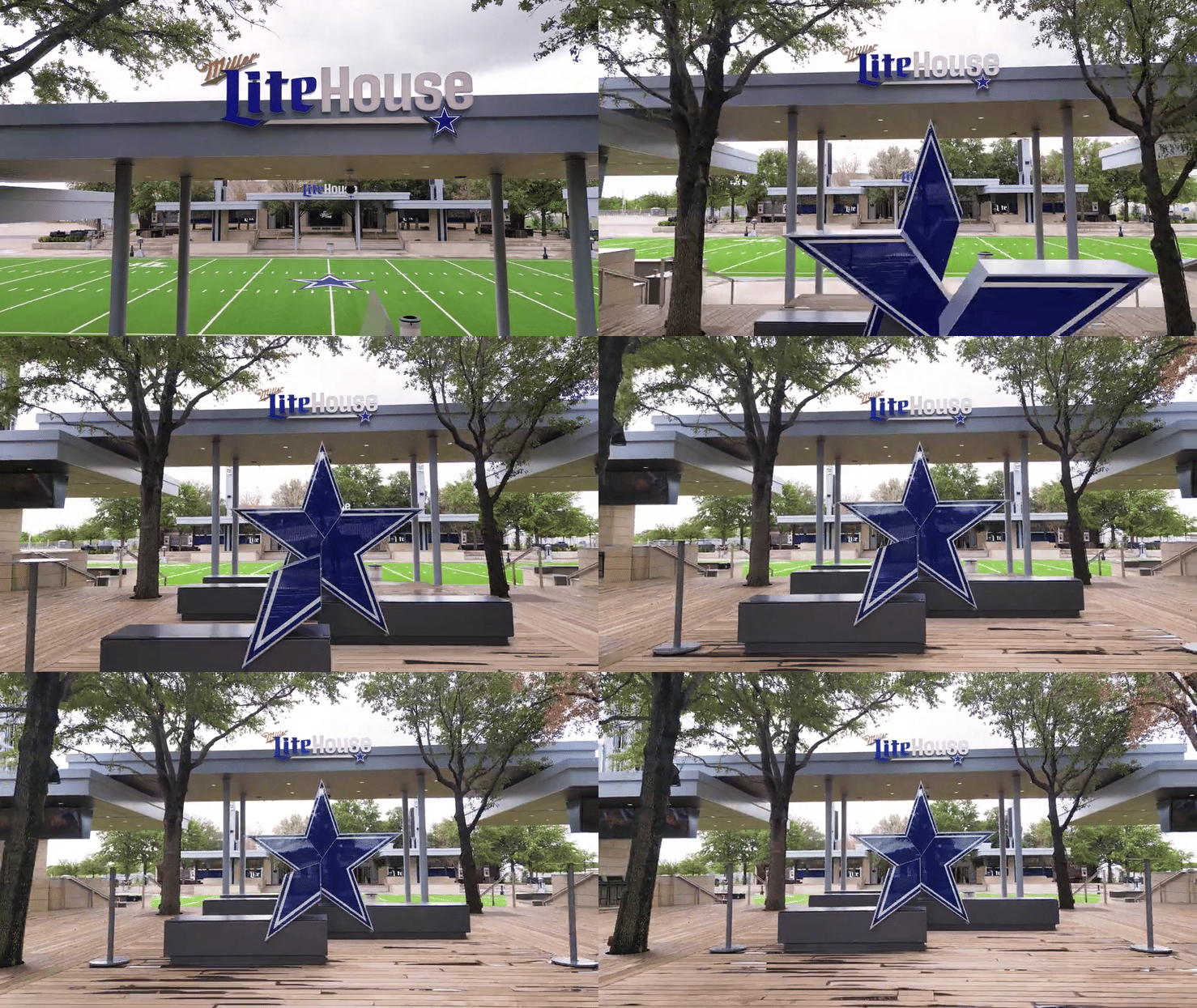
At The Star, we broke the Cowboys’ blue star apart geometrically so fans could stand inside it. Taking the most sacred symbol in the franchise and letting fans occupy it could have been vetoed. It wasn’t. The first weekend generated thousands of photos, and after the first year we stopped counting. People now plan their visits around that photo and come back each year in different jerseys, with different people. That’s not a photo-op. That’s a ritual. And nobody needs a sign to know what to do there. The moment you tell people how to post, they stop wanting to.
3. Create One Visual Language Across Every Tenant
A district with ten tenants and ten visual identities feels like a strip mall. Shared brand guidelines for signage, materials and graphics keep it cohesive while letting each space keep its own character. We built this kind of system for Fanatics across more than five of its corporate locations worldwide.
Anchor Building Ideas: Team HQs, Practice Facilities & More
A district doesn’t have to have a stadium or a ballpark at its center. The Star proved a team headquarters and practice facility can anchor one just as well, and because a headquarters is active every weekday, it may anchor it better.
4. Open the Headquarters to the Public
The Star opened for public tours soon after it debuted, giving fans access to a building that used to be reserved for players and staff. A public lobby, guided tours and viewable team spaces can turn a corporate office into the district’s main attraction.
5. Turn the Back of House Into the Front of House
Fans are hungry for what happens behind closed doors. When we designed the U.S. Tennis Association’s new players’ spaces at the U.S. Open, Netflix’s “Break Point” had just placed cameras in the players’ tunnel and locker rooms, capturing moments fans rarely get to see. Spaces that were once private, the back of house, were suddenly seen by millions of viewers. We designed the players’ tunnel with this in mind – first, to reflect the gravity of that final walk out to Arthur Ashe Stadium, then to give fans a glimpse behind the curtain during that epic moment.
6. Put the Team’s Mantras Where Everyone Can See Them
At the Tennessee Titans’ Saint Thomas Sports Park, we placed the coaching staff’s mantras through the headquarters and locker room so the last words players saw before practice reflected the culture the team was building. One of those phrases made its way onto local sports talk radio. When the team’s values are visible inside the building, they travel outside it.
7. Build the Anchor to Be Updated
Rosters change, sponsors change and seasons end. Design graphics, displays and digital content so they can be refreshed without a renovation. At The Star, an updatable facility was one of the core goals from day one. Opening day gets the attention, but year three decides whether the district works.
Partner & Sponsor Zone Ideas
A district multiplies the places a partner can live. For a deeper list, see our 50 sponsorship activation ideas. These four are built for districts specifically.
8. Find Where the Sponsor’s Story Meets the Team’s Story
The best partner spaces don’t feel like ads. On The Star’s Ring of Honor Walk, Dr Pepper’s “one of a kind” message fits naturally into a space honoring the individual legends who define Cowboys excellence. Look for that overlap first, then design around it.
9. Give a Partner a Whole Place, Not Just a Sign
The Miller Lite House at AT&T Stadium is an 87,000-square-foot outdoor property with two beer gardens, six bars, a 70-yard turf field, more than 60 screens and the biggest walk-in beer cooler in Texas. Fans don’t walk past the brand. They spend the afternoon inside it. Local artists even created displays like a hand-painted Miller Lite beer can wall, which roots the space in its city and gives fans something worth photographing.
10. Create Premium Partner Decks
At the AT&T Stadium Ford Deck, we designed a VIP standing-room experience with King Ranch seating, personal TVs, kinetic lighting and live game streams. It blends two strong brands without compromising either, and its lightweight, removable components support the stadium’s other events.
11. Design for Every Kind of Visitor
Some visitors stride through, some stroll and some stop to study every detail. Plan partner touchpoints for all three. We broke down this approach in Striders, Strollers and Studiers.
Plaza & Non-Game Day Ideas
12. Throw Watch Parties for Away Games
Away games are home games for the district. Big screens, team-branded seating and food and drink specials turn road weekends into some of the busiest days of the year. Miller Lite built away-game watch parties into its Cowboys activation for exactly this reason.
13. Give Fans a Field to Play On
The 70-yard turf field at the Miller Lite House invites fans to throw a ball, play tailgate games and let kids run. A playable surface turns spectators into participants on days when there’s nothing to spectate.
14. Give People Reasons to Linger
Shade, seating and comfortable gathering spots keep people in a district long after they’ve done what they came for. Test materials for your climate too. At the Miller Lite House, we tested surfaces to make sure displays could stand up to Dallas summers.
Heritage & Storytelling Ideas
15. Build a Walk of Legends
The Cowboys have honored their greatest players in the Ring of Honor for more than 40 years. At The Star, we gave each of 21 legends an individual display with career stats, anchored by their number in bright metal and Cowboys blue. From Bob Lilly to Darren Woodson, every honoree gets a moment fans can stand next to.
16. Let Fans Touch Greatness
People don’t just want to see greatness. They want to pose with it. At USC, we left the Heisman trophies exposed and touchable, and visitors have taken hundreds of thousands of stiff-arm photos since. Physical interaction changes emotional connection. When fans can touch something, they own a piece of it.
17. Tell the City’s Story, Not Just the Team’s
A district becomes part of a community when it reflects that community. When the PGA of America moved its headquarters from Palm Beach to PGA Frisco, CEO Seth Waugh said Advent “turned our building into our home.” Local history, landmarks and people give fans who aren’t diehards a reason to care.
18. Start With the Story Before the First Shovel
The districts that feel like community hubs, rather than empty developments, have a clear story behind them. Our StoryMining process interviews the people closest to an organization to find the authentic story worth telling. It works best before design begins, not after the walls go up.
Youth Sports & Community Ideas
20. Make a Fieldhouse the District’s Front Porch
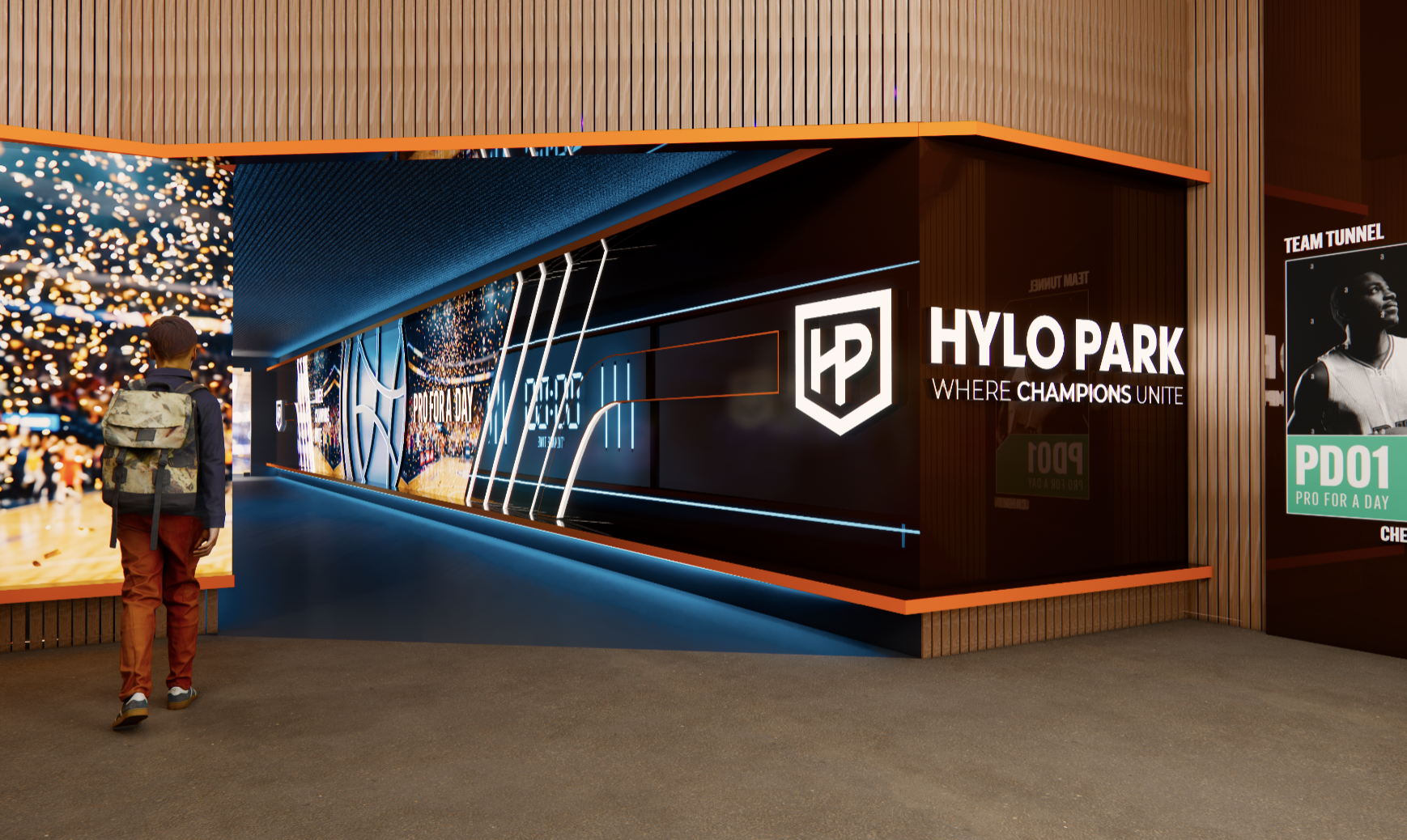
Youth sports bring families back every weekend, in and out of season. At Hylo Park, Agora Realty’s 73-acre mixed-use community in North Las Vegas, a 250,000-square-foot fieldhouse anchors the district. Every athlete, family and fan who visits passes through it.
21. Give Young Athletes the Pro Walk-In
Most young athletes never feel what the pros feel when they walk into their building. Pro-level graphics, lighting and digital experiences in youth facilities change that. At Hylo Park, the goal is simple: whether a kid lives down the street or flew in for a tournament, they should walk in and know it was built for them.
22. Host Tournaments That Pull From the Whole Region
Tournaments fill hotels, restaurants and shops on weekends that would otherwise be quiet. At the WYO Sports Ranch in Casper, Wyoming, LED screens, interactive kiosks and donor displays help a 10-court facility attract teams and tournaments from across the region.
23. Share the Anchor With Local Teams
When the community plays where the pros practice, the district becomes theirs too. The Star hosted the Texas Tech spring football game shortly after opening. High school games, college events and community leagues build loyalty that no ad campaign can buy.
24. Recognize the People Who Made It Possible
Founders, donors, community partners and local heroes deserve visible recognition. Done well, it gives the district a sense of shared ownership. Our Donor Recognition Guide covers 30 ways to approach it.
Digital Content and Technology Ideas
25. Run Every Screen From One Place
A district can have hundreds of screens across dozens of spaces. The Advent Operating System™ (AOS) lets your team run all of them from a single iPad. If you can use a phone or tablet, you can update every piece of tech in the space, and AOS can power the screens you already have.
26. Add Interactive Exhibits That Reward Curiosity
Touchscreens, interactive tables and motion-activated games give studiers a reason to stay and dig in. At The Star, interactive displays let visitors explore the franchise’s history and iconic players up close.
27. Keep the Content Fresh All Year
Screens showing last season’s highlights in August tell fans nobody’s paying attention. Plan a content calendar, and partner with a team that can produce at the pro level. Magic Trick Media, Advent’s official content partner and an Emmy and Peabody Award-winning production team, brings decades of experience, even for clients with in-house video teams.
Ideas for Before the District Opens
A district’s experience starts years before opening day, when tenants, partners and fans first try to picture it.
28. Build a Preview Center Inside the Venue You Already Have
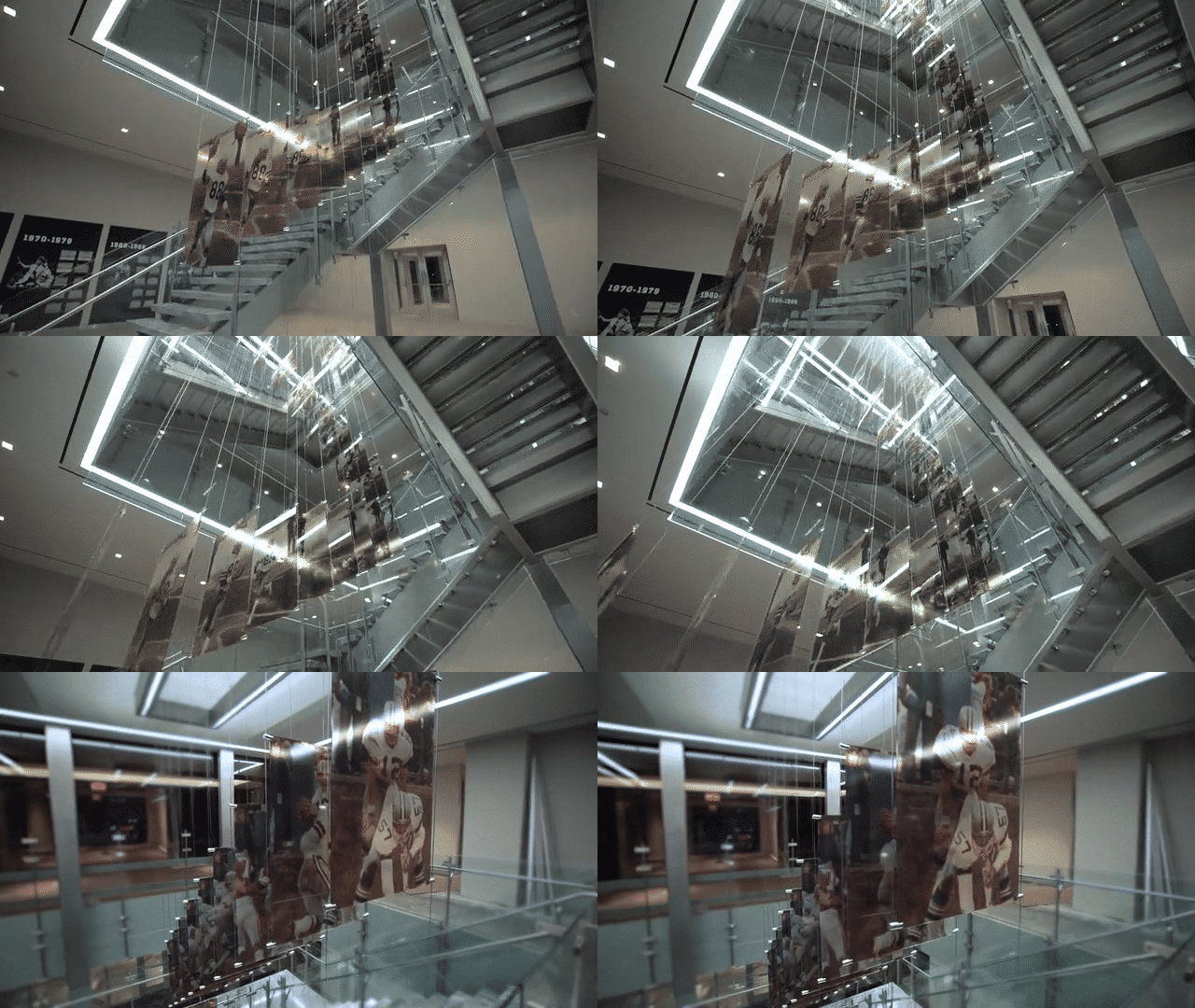
Before The Star opened in 2016, the Cowboys asked Advent to create a preview center inside AT&T Stadium. Oversized renderings, dynamic graphics and exhibits showed visitors and potential partners what The Star would mean for the organization and for Frisco. Fans already coming to games got a first look without a separate trip.
29. Let Partners Step Inside Before It’s Built
Renderings ask people to imagine. Immersive environments let them experience. The Immersive Cube® puts decision-makers inside a live digital model of a future district so they can explore it together in real time. We explain why that matters for developers in Beyond Architectural Visualization.
30. Show the Community What’s Coming
Neighbors, local leaders and future season ticket holders all want to know what the district will mean for them. Public previews, construction-site graphics and community open houses build excitement and goodwill before the doors open.
The Advent Takeaway: Close the Gap Before You Break Ground
Every organization has a Valley Ranch moment, when it realizes the experience it delivers may not match the brand living in people’s heads. A mixed-use district is a huge opportunity to close that gap.
The Jones family didn’t just build a facility. They built a three-dimensional version of the Dallas Cowboys brand that already existed in fans’ minds, and then they invited everyone in to celebrate the brand together.
If you’re planning a district, a headquarters or a practice facility, we’d love to hear what you’re building. Let’s connect.
Frequently Asked Questions
What is a sports-anchored mixed-use district?
It’s a development built around a sports facility, such as a stadium, arena, team headquarters or practice facility, that also includes restaurants, retail, hotels, offices, residences and public gathering spaces. The goal is to keep the area active every day, not just on game days.
Does a mixed-use district need a stadium to anchor it?
No. The Star in Frisco is anchored by the Dallas Cowboys’ headquarters and practice facility, not their stadium. Headquarters, practice facilities and youth sports fieldhouses can all anchor a district, and because they’re active on weekdays, they can generate steadier traffic than a stadium alone.
How is a sports district different from just building a new stadium?
A standalone stadium is busy on event days and quiet the rest of the year. A district surrounds the venue with places people want to be every day, like restaurants, shops, hotels, offices, homes and public plazas. The difference is bigger than real estate, though. Teams don’t build buildings for square footage. We build buildings to tell a story about ourselves. A district tells that story at the scale of a neighborhood, and it gives the team a relationship with fans that doesn’t depend on the schedule.
What are some of the best-known sports-anchored districts?
Each of these takes a different approach, but all of them give fans reasons to visit beyond the game itself.
- The Star (Frisco, Texas): the Dallas Cowboys’ 91-acre district built around the team’s headquarters and practice facility, proof that a district doesn’t need a stadium at its center
- Hollywood Park (Inglewood, California): the nearly 300-acre district around SoFi Stadium, where Advent created the SoFi Stadium Experience Center to bring the vision to life years before opening day
- The Battery Atlanta (Cobb County, Georgia): the mixed-use district that opened with Truist Park, home of the Atlanta Braves, in 2017
- L.A. Live (Los Angeles): the downtown entertainment district across from Crypto.com Arena, developed by AEG
- Titletown (Ashwaubenon, Wisconsin): the Green Bay Packers’ district beside Lambeau Field, with a public park that adds winter draws like a tubing hill and skating
- Deer District (Milwaukee): the 30-acre neighborhood around Fiserv Forum whose plaza watch parties made it a national model during the Bucks’ 2021 title run
- Ballpark Village (St. Louis): the St. Louis Cardinals’ district next to Busch Stadium, built in phases on the site of the old ballpark
How do sponsors fit into a mixed-use district?
Districts give partners far more places to live than a stadium bowl does. Branded plazas, partner-owned spaces like the Miller Lite House, premium decks and integrated storytelling moments let sponsors become part of how fans spend their time, year-round.
How do teams generate revenue from a district beyond tickets and media rights?
A district adds revenue streams a stadium alone can’t, including real estate leases, hospitality, dining and retail, year-round events, tours and sponsorship inventory spread across plazas, buildings and digital screens. But don’t lead with the receipts. Lead with the mechanism. Every fan experience zone we’ve designed has followed the same pattern: dwell time goes up, then concessions, merchandise and sponsor renewals follow. A district is the biggest fan experience zone a team will ever build. When people stay longer and come back more often, every other line item benefits.
When should experience design start on a district?
As early as possible, ideally before architectural design is final. The story should shape the spaces, not decorate them afterward. Early planning also makes it easier to build in the power, structure and digital infrastructure that experiences need.
What are the key components of a successful sports district?
Most successful districts share a strong anchor (a stadium, arena, headquarters or practice facility), public gathering space, dining and retail, hospitality, and offices or residences that bring people in on weekdays. What separates the great ones is the experience layer that ties it all together: a clear story, a consistent visual identity, programming that changes with the calendar and technology that keeps content fresh. Sequence matters too. Most venues think about moments. We think about journeys, meaning how a person moves through a place emotionally, not just physically, from the parking lot to the plaza to the front door.
How do you keep a district busy on non-game days?
Layer reasons to visit: dining, retail, youth sports, public tours, watch parties, off-season events and content that changes regularly. The districts that thrive are the ones people visit as part of their routine, not just for special occasions.
Can a smaller-market team build a district like The Star in Frisco?
Yes, and many of the best-known districts didn’t start big. Ballpark Village opened its first phase in 2014, eight years after the new Busch Stadium, and added a second phase later. Titletown gave Green Bay, one of the NFL’s smallest markets, a year-round draw with a public park, a plaza and a handful of anchor tenants. A smaller district can start with an arena, practice facility or youth fieldhouse, then add a plaza, a team store and a few restaurants over time. At the WYO Sports Ranch in Casper, Wyoming, the digital pieces we built created event recognition, photo moments, sponsor inventory and storytelling that could evolve from day one to day three hundred. Scale matters less than giving people a consistent reason to come back.

Written by John Roberson, CEO & ‘Chief Cheerleader’
For over 25 years, Advent has been creating emotionally resonant experiences for leading brands including AT&T, Fanatics, the Dallas Cowboys, and Stanford University. Our proprietary StoryMining methodology ensures that every project starts with the story, not the technology.