

Design
Digital Experiences
Experience Design
Thought Leadership
Why Story-First Facility Design Beats Technology-First Projects Every Time
I’ve been designing experiences for 25+ years now. Over 2,500 projects across athletics, academia, and corporate spaces. And in that time, the one key takeaway I’d like to deep dive with you today that separates forgettable projects from transformational ones?
The projects people remember don’t start with what we build.
They start with why it matters.
And believe me, we have created some simply incredible projects. Too many organizations approach facility design backwards. They start with the shiny objects. The technology, the materials… the aesthetic trends. The benchmark? What competitors have built. They create mood boards and concept renderings.
And then they wonder why their beautiful new space feels hollow.
The Hidden Costs of Starting Facility Design with Solutions Instead of Story
Beautiful spaces that fail to connect. I’ve seen it happen more times than we’d care to admit. Impressive technology that doesn’t engage. Expensive renovations that simply don’t move people.
The pattern is the same. Organizations start with design solutions before understanding the actual problem. They select technology before knowing what emotion they want to evoke. They build monuments to facility design trends rather than reflections of their organizational identity.
I get it. It’s an easy trap to fall into. The pressure to move quickly is real. Funding is secured. Timelines are tight. Stakeholders want to see progress. Go go go! So teams jump straight to the visible elements; the aesthetics, the features, the wow factors.
Skipping the discovery phase doesn’t save time. It shifts problems to later in the process, when they’re exponentially more expensive and painful to fix.
What Story-First Facility Design Looks Like: The University of Texas Hall of Fame Example
That culture is defined by stories that are repeated… this is what I told Chris Del Conte when we began working on the University of Texas Athletics Hall of Fame. Chris had been brought in as a change agent to restore the culture for UT’s athletic program during a period of significant transition.
Restoring culture isn’t about installing new displays or upgrading technology. It’s about identifying the stories that define who you are and creating experiences that make those stories visible, tangible, and emotionally resonant. It’s what Advent stands for. Moving people.
For Texas, that meant asking questions they hadn’t be asked before:
- What stories have we been telling?
- What stories have we stopped telling?
- What stories do we need to start telling?
- What do recruits, fans, and student-athletes need to understand about what it means to be a Longhorn?
At the time of the Hall of Fame project, Texas Athletics was in a period of transition with a new athletic director and both men’s and women’s departments merged under one umbrella. This was a key time to reinforce a culture of winning with integrity, one of the core values uncovered during initial meetings.
That phrase “winning with integrity” didn’t come from a branding agency or a marketing committee. It emerged organically from conversations with coaches, administrators, former athletes, and staff. Different people, different roles, different perspectives… but the same values kept surfacing.
That’s how you know you’ve found something authentic.
The StoryMining Difference: How Our Discovery Process Uncovers Your Authentic Story
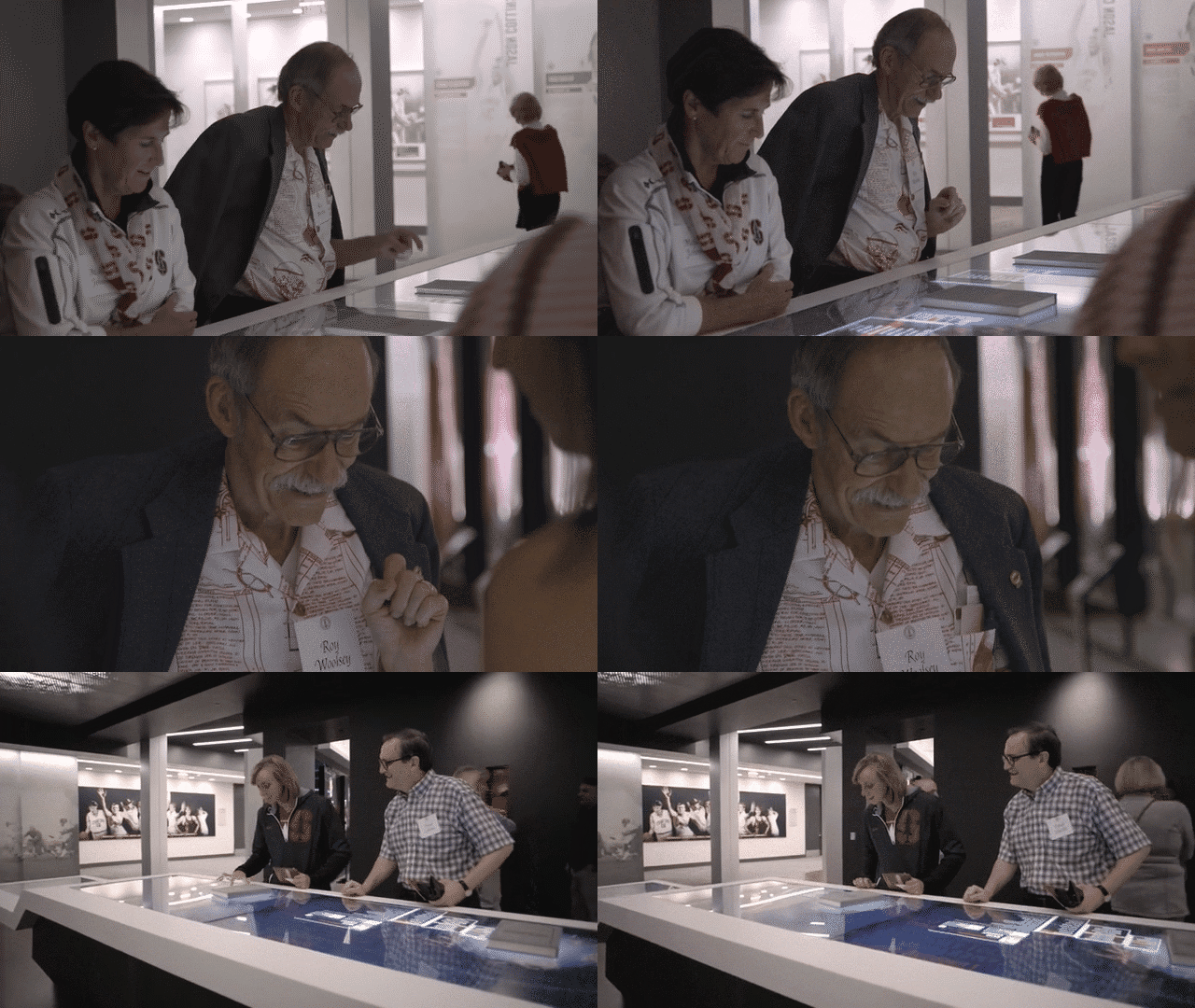
Through thoughtful, engaging conversations with key stakeholders, we uncover the stories, values, and emotional touchpoints that define your organization. This discovery phase helps us internalize your brand’s essence, allowing us to create experiences that resonate deeply with your audiences.
This is what we call StoryMining. It’s our proprietary process for discovering what makes each organization unique. It’s not a checkbox questionnaire. It’s not a branding workshop. It’s systematic discovery work designed to surface the authentic stories that should inform every design decision.
How StoryMining Works: Our Four-Phase Discovery Process from Research to Stakeholder Alignment
Phase 1: Pre-Interview Research on Your Stakeholders
We will research each person’s background and role with the program and tailor each interview session to that information. This isn’t professional courtesy, it transforms conversations from generic to deeply personal.
When I interview a longtime coach, I know their career arc, their championship moments, what they’re known for among alumni. When I talk with a recent addition to the staff, I understand what drew them to the organization and what fresh perspective they bring.
This preparation makes people feel valued. And when people feel valued, they share more authentic insights.
Phase 2: Conversational Interviews That Follow Stakeholder Energy
StoryMining is a casual, low-pressure experience built on conversation rather than a scripted interview using our trained story team. We’ve done thousands of interviews and we do our best to make sure you enjoy the process too.
We don’t work through predetermined questions. We follow the threads that generate passion and engagement. When someone’s eyes light up talking about a particular moment or tradition, we lean into that. When multiple people independently return to the same values or stories, we pay attention.
The best insights rarely come from asking direct questions. They emerge when you create space for people to talk about what matters to them.

Phase 3: Identifying Shared Stories, Values, and Emotional Patterns
After dozens of conversations, patterns emerge. Certain phrases appear repeatedly. Specific moments get referenced independently by different stakeholders. Core values surface across different departments and roles.
This is how we learn the memories, the core values (explicit or implicit) and the key emotional touchpoints that will resonate with your audiences. We use what we learn; your stories, messages and emotions to inform everything from individual exhibits and displays to design language and materials.
Phase 4: Aligning Stakeholders Around a Shared Story Foundation
Perhaps the most valuable outcome of StoryMining is that it allows you to ground the early stage of a major project on a solid foundation that all the key players in your organization agree on.
When everyone has contributed to the discovery process and sees their insights reflected in the project foundation, you start from a place of shared understanding. This dramatically reduces the “that’s not us” moments that can derail projects during design reviews.

Real Results: How Story-First Design Transformed Facilities for PGA, Texas, Oregon, and UNC
The PGA of America: Designing a Headquarters Around ‘Growers of the Game’
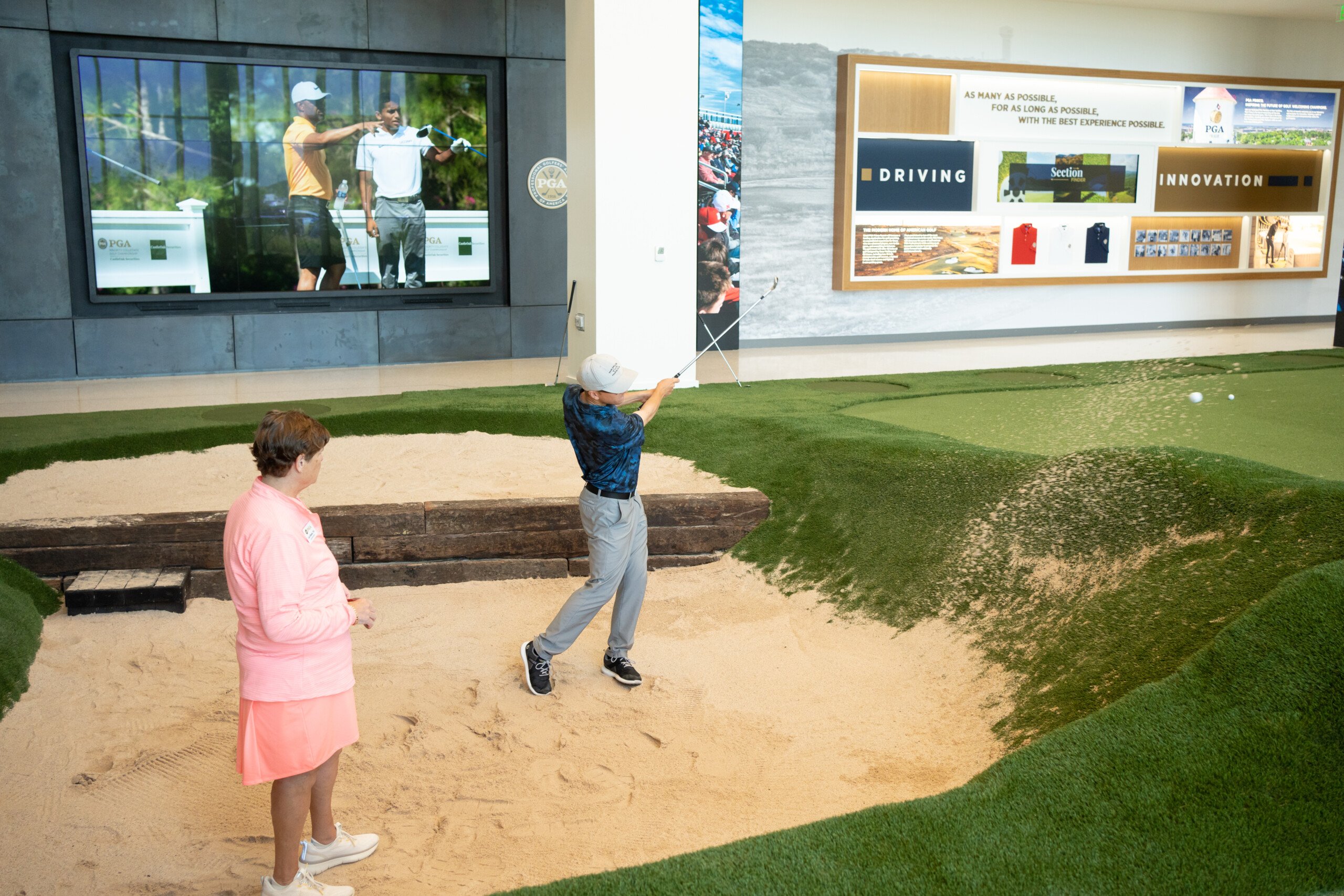
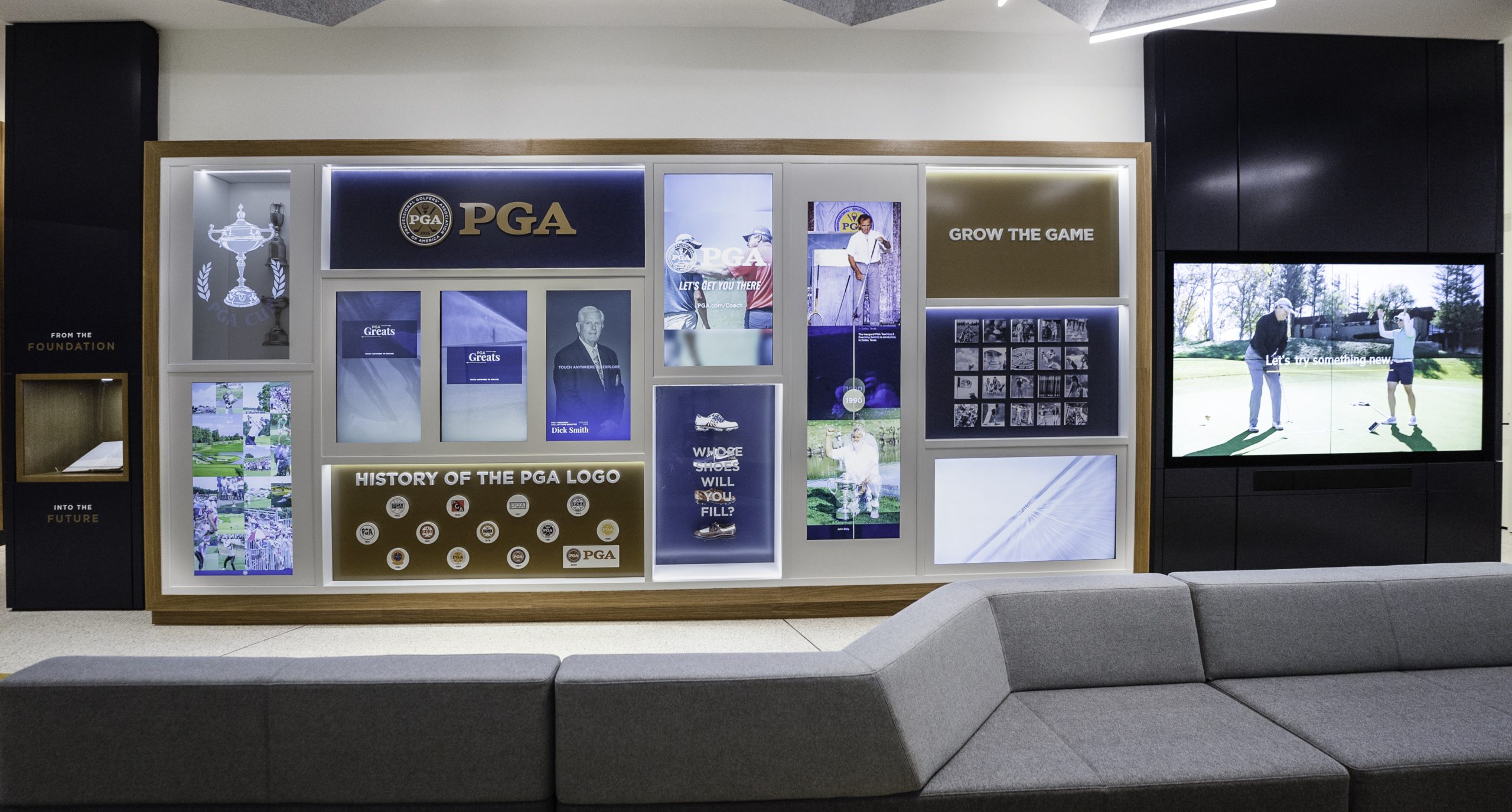
When the PGA of America was planning their new headquarters in Frisco, Texas (a $550 million, 600-acre campus serving 28,000 professionals worldwide) they needed more than impressive architecture. They needed a space that reflected who PGA professionals are and where the organization was headed.
In 2 days, across 2 cities, through 48 engaging interviews with stakeholders, Advent identified key emotional touchpoints such as the pride in their roles as growers of the game and community builders. By internalizing these values, the design was tailored to create an inspiring and supportive environment.
That phrase “growers of the game” changed everything. PGA professionals didn’t see themselves primarily as golf instructors or club managers. They saw themselves as educators, mentors, and community builders who make golf accessible and meaningful.
This insight shaped fundamental design decisions. PGA leadership did not want the space to function as a museum, but as a dynamic hub for education and innovation, vital for the future of golf.
So instead of traditional exhibit galleries celebrating past achievements, the facility features interactive learning spaces, professional development resources, and state-of-the-art training technology. It’s a headquarters built for the future of golf, not a monument to its past.
The impact has been significant. The PGA Frisco campus is generating substantial economic impact with 26 championship tournaments scheduled over 13 years, and the facility functions exactly as intended as an educational innovation hub where PGA professionals feel valued and empowered in their careers.
The University of Texas Hall of Fame: Designing Around ‘Winning with Integrity’
For the Frank Denius Family University of Texas Athletics Hall of Fame, the story discovery process revealed something critical about timing and culture.
Each exhibit and display celebrates the history and people of Texas in a way that enhances the culture.
More importantly, the Hall of Fame needed to do something that traditional halls of fame don’t: inspire current student-athletes about what they’re being prepared for, not just what others accomplished before them.
As Chris Plonsky, Chief of Staff and Executive Senior Associate Athletics Director, explained: “It’s not just an archive. It needs to be an endless reflection that has the ability to change what the experience of student-athlete life is, and what we’re really preparing them to do. Somehow you want to convey, ‘You can be next.'”
Telling those stories required our team to pull together the school’s trophies and other memorabilia that were scattered all over the place. For example, a Wheaties box that featured UT’s 2005 national championship football team and its legendary coach Mack Brown was found in someone’s garage. Trophies won by the school’s baseball team were located in crates in the basement of the team’s fieldhouse.
It’s not just the trophies that matter, our StoryMining work enabled us to identify the heroes and the narratives about individuals, teams, and special moments.
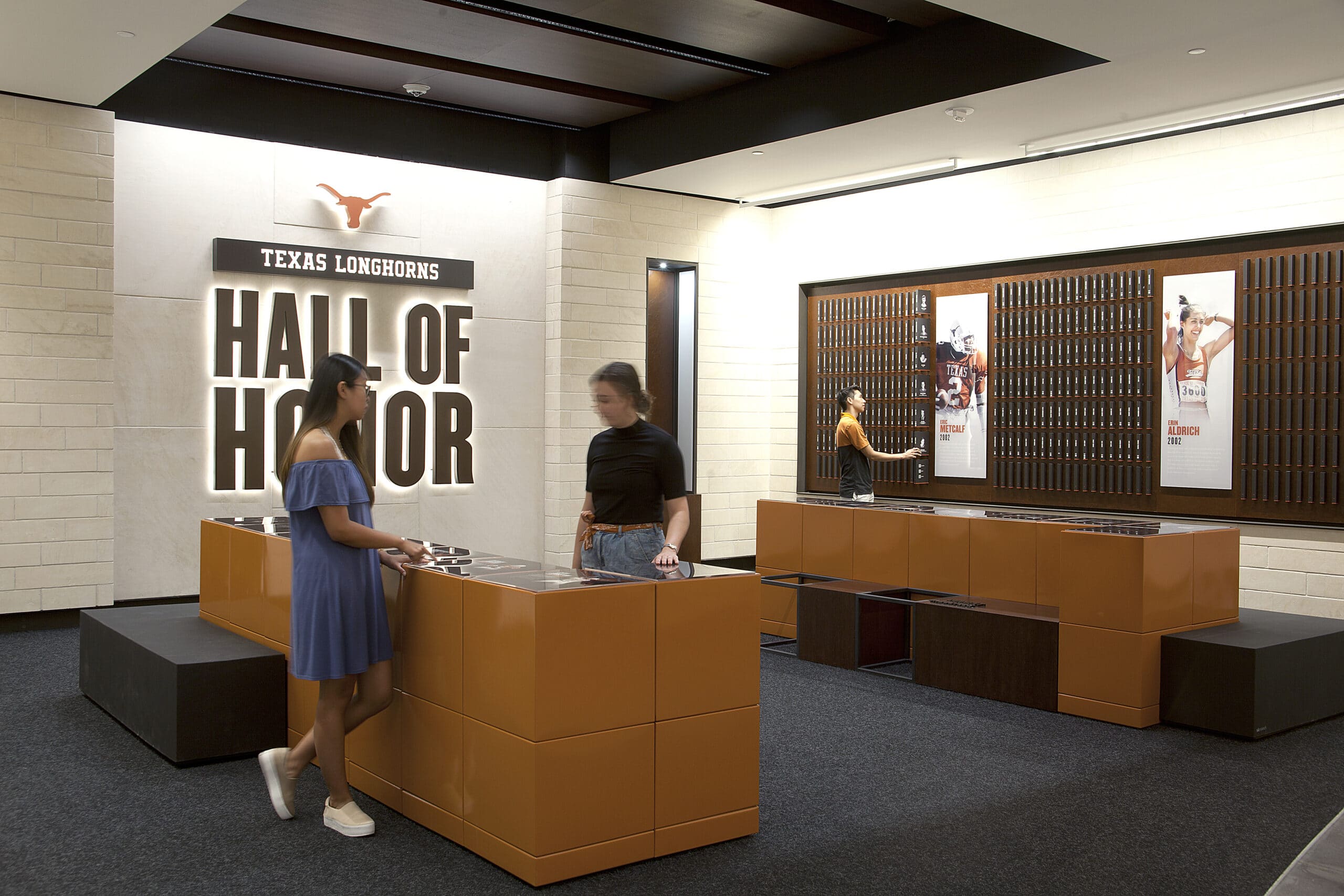
The result? The Hall of Fame features themed storytelling spaces for championships, coaches, academic standouts, Olympians, traditions and more. Meanwhile, digital displays and selfie-friendly experiences allow fans an entry point into the tradition of Longhorns Athletics.
One of the hall of fame’s signature features is that almost every trophy on display can be touched by visitors. “The reason that’s important is because if you’re a fan, or you’re a recruit, or you’re a current student-athlete, that’s your trophy,” I explained to media when the facility opened.
This wasn’t a design gimmick. It emerged from understanding the emotional connection Texas Athletics wanted to create; a sense of shared ownership and continuing legacy.

The University of Oregon Welcome Center: Creating a Sense of ‘Home’
For the University of Oregon’s Student Welcome Center, the story that emerged was deceptively simple: home.
We conducted StoryMining and creative exercises with a cross-section of Oregon staff in marketing, student life, and housing as well as UO students. We then applied overarching story themes and story attributes throughout the physical space.
“Home” meant something specific at Oregon. Home is a place where young people are comfortable being themselves. For the University of Oregon, home is a place where students are encouraged and supported no matter their identity, background or interests. Home is a place where people might feel cozy, but it’s also a place where they’re comfortable being quirky or silly.
This understanding informed every design decision. Oregon values curiosity and rewards discovery. Through digital storytelling experiences and interactive elements, UO creates spaces that invite exploration. Open a locker in the gear display or pull a book off the shelf…you never know what you’ll uncover.
The space isn’t about ‘looking welcoming’, to me that’s the ordinary, instead it actively encourages the kind of curiosity and exploration that defines the Oregon student experience. That’s the story of the UO student welcome center experience, an illuminating moment can happen anywhere.
The University of North Carolina: How StoryMining Led to the Iconic Jordan Shoe Wall
Sometimes the most powerful design elements emerge from simple conversations during StoryMining interviews.
During our work with the University of North Carolina Tar Heels, our StoryMining interview process uncovered the idea for the now-iconic Jordan Shoe Wall. Through in-depth conversations with legendary coaches and former UNC basketball players, a consistent theme emerged: there needed to be a powerful way to honor Michael Jordan’s lasting legacy at Chapel Hill.
That insight wasn’t discovered during a creative brainstorm, but from listening to stakeholders, led to the Jordan Shoe Wall featuring 31 Air Jordan sneakers in signature Carolina blue.
Now featured in what has become “the most photographed location on UNC’s campus,” the Jordan Shoe Wall showcases 31 Air Jordan sneakers in signature Carolina blue. A display that has quickly become a favorite backdrop for top-level recruit photo shoots during campus visits.
The wall serves both as a tribute to one of basketball’s greatest players and as a tangible symbol of the excellence UNC basketball represents.

Why Story-First Discovery Matters: Avoiding Hollow, Generic, and Misaligned Facilities
If you’re planning a facility renovation, a new welcome center, or a brand experience space, the temptation is to start with the visible elements. Tour similar facilities. Research technology options. Create design concepts.
My big takeaway from 2,500+ projects?
The organizations that skip discovery work end up with predictable problems:
Beautiful but Hollow
Spaces that look impressive but don’t resonate emotionally. Recruits tour them without reacting. Donors feel underwhelmed. Staff avoid using them.
Generic and Forgettable
Spaces that could belong to any organization. There’s nothing distinctly yours about them. They tell no story, or they tell someone else’s story.
Misaligned and Divisive
Spaces that some stakeholders love and others resent because different groups had conflicting visions that were never reconciled before construction began.
All three are expensive mistakes that proper discovery work prevents.
Key Discovery Questions to Ask Before You Start Designing a Space
Considering a major facility project? Start by raising questions around these 4 foundations in your internal discussions;
1.) Questions About Your Audiences’ Emotions and Experiences
- Who will experience this space, and what do we want them to think, feel, remember, and do?
- How do different audience segments (recruits vs. donors vs. fans vs. students) experience our brand differently?
- What emotional journey should they go through when they’re in our space?
2.) Questions to Clarify Your Authentic Organizational Story and Values
- What makes us unique? not in our marketing materials, but in the lived experience of our people?
- What stories do we tell ourselves about who we are? Are those the stories we should be telling?
- What values do we want this space to reinforce?
3.) Questions to Understand and Align Your Internal Culture Before Design
Different departments often have conflicting ideas about priorities. Our StoryMining process aligns stakeholders around shared institutional values before design begins
- Who needs to be part of the discovery conversation, and what unique perspective does each person bring?
- Where are the points of disagreement, and what do those disagreements reveal about our organizational identity?
4.) Questions to Plan for an Adaptable, Future-Ready Storytelling Space
Static displays quickly become outdated. We design with adaptability in mind, creating systems that can evolve as your institution grows and changes.
- How will this space need to evolve over time?
- What stories aren’t being told yet that might need to be told five years from now?
The Real Cost of Skipping Discovery: Delays, Endless Revisions, and Misaligned Spaces
I understand the pressure to move quickly. Funding is secured. Timelines are tight. Stakeholders want to see progress.
The reality? Every hour invested in discovery work saves multiple days of design revisions. Every uncomfortable question asked early prevents expensive surprises during construction. Every stakeholder included in the process is one less potential objection during final reviews.
The organizations that skip this step don’t save time or money. They just shift the problems to later in the process when they’re more expensive and painful to fix.
For the PGA America project, those two intensive days of interviews prevented what could have been months of design revisions and realignment. Because we built on a foundation all stakeholders agreed on from day one, the design process moved forward with clarity and confidence.

How to Let Story Lead Experience Design and Technology Choices (Sequencing Story, Design, and Tech Decisions)
Don’t misunderstand me. I love technology. We integrate cutting-edge digital experiences into almost every project we design. LED video walls, interactive displays, updatable content systems.These tools are powerful when used correctly. Did you see our latest work with the A’s Experience Center in Las Vegas? We’re writing the playbook on how venues can make best use of today’s technology.
Technology is only powerful when it serves a story.
“While speaking with Chris Del Conte, University of Texas Vice President and Director of Athletics, he explained that the University needed a place where people could experience what it truly means to be a Longhorn,” said John Downie, our Vice President of Experience. “The design was really all about finding the stories that most embodied the Longhorns’ culture.”
The massive 16-foot by 9-foot LED video wall in the Texas Hall of Fame exists because the story demanded it. There was a need to showcase championship moments in a way that captured their emotional impact and scale. The technology serves the story of Texas Athletics’ legacy of excellence.

At Oregon, interactive discovery elements exist because the story is about curiosity and exploration. The technology enables visitors to experience Oregon’s values, not just read about them.

The sequence matters: Story first. Experience design second. Technology selection third.
Why You Need Outside Discovery to Uncover the Story Behind Your Experience Design
You might not know your own story as well as you think you do.
I’ve sat in countless planning meetings where leadership describes their organizational culture one way, and then our stakeholder interviews reveal something completely different. Not because leadership is lying, but because the story you’re trying to tell isn’t always the story your people are experiencing.
What we learn challenges our assumptions and makes our work more inclusive.
This is why external discovery matters. We don’t have a vested interest in confirming your assumptions. We’re looking for the authentic stories that emerge from your people, even when those stories complicate your brand narrative or reveal uncomfortable truths.
When PGA professionals consistently described themselves as “growers of the game” rather than golf instructors, that revealed something important about identity and purpose that might not have surfaced in internal strategic planning sessions. That authentic self-perception became the foundation for design decisions that truly resonated with the organization’s members.
How to Move Forward: Practical Next Steps for a Story-First Discovery Process
If you’re planning a facility project and you’re ready to start with story instead of solutions, here’s what I recommend:
- Pause Before You Design
Resist the urge to jump into design concepts. Give yourself permission to spend time in discovery understanding your audiences, clarifying your story, aligning your stakeholders. - Include Diverse Voices
Don’t just interview leadership. Talk to longtime staff and recent hires. Talk to people who love your organization and people who have critical perspectives. Talk to the people who will actually use the space.
For the Texas project, gathering trophies from garages and basement crates wasn’t just about finding objects, it was about finding the people who cared enough to preserve those pieces of history. Those conversations revealed what mattered to your organization.
- Follow the Patterns
Individual stories are interesting. Patterns across multiple stakeholders are powerful. When different people independently highlight the same values or return to the same moments, pay attention. - Create Alignment Before Design
Use the discovery process to surface disagreements and build consensus, not just gather information. Our StoryMining process allows you to ground the early stage of a major project on a solid foundation that all the key players in your organization agree on. - Let Story Drive Everything Else
Once you know your story, every other decision becomes clearer. Which technology to use. What materials to select. How to organize the space. What content to feature. It all flows from understanding why the space exists and what it should make people feel.
The Ultimate Goal: Designing Facilities as Experiences That Truly Move People
“The things that the fans remember and hold in their hearts are moments and memories and great plays or iconic games or iconic players,” I’ve said. “And so, we want to create the set of circumstances that rekindles those moments that are worth connecting with. If we can get the right story, if we can capture the right emotion, we can create an experience that moves people.”
That’s what this work is really about:
- Not impressive spaces; moving experiences.
- Not cutting-edge technology; emotional connections.
- Not beautiful design; stories that matter.
When a recruit walks into a facility and suddenly understands what the program values?
A donor sees their contribution honored in a way that reinforces why they give?
A student-athlete finds inspiration in the stories of those who came before them?
These moments don’t happen by accident. They don’t happen because you benchmarked what competitors built or selected the latest technology. They happen because you invested time understanding your authentic story and then designed experiences that bring that story to life.
The Question That Matters Most Before You Start Designing: Do You Know Your Story?
Before you start your next facility project, before you tour comparable spaces or request design proposals, ask yourself this:
Do we know our story well enough to tell it powerfully?
If the answer is no (or the more likely even where different stakeholders answer that question differently) then you’re not ready to design yet.
Are you willing to invest in understanding your authentic story first? You won’t just build an impressive space. You’ll create an experience that truly moves people.
And those are the projects people remember.
The University of Texas Hall of Fame now welcomes hundreds of thousands of visitors during football season, functioning as both a recruitment tool and an event space. The PGA headquarters has become a hub for education and innovation, hosting championship tournaments and generating billions in economic impact. The Oregon Welcome Center creates the kind of comfortable, curious environment that defines the Oregon student experience.
These aren’t just attractive facilities. They’re physical manifestations of organizational identity. They’re spaces where stories come alive. They’re experiences that genuinely move people.
That’s what happens when you start with story instead of solutions.
At Advent, we’ve spent 25+ years helping organizations discover and tell their authentic stories through physical and digital experiences. Our proprietary StoryMining methodology has informed over 2,500 projects for clients including the University of Texas, PGA of America, University of Oregon, University of North Carolina, and hundreds of other athletic programs, universities, and organizations. If you’re planning a facility project and want to start with story, not solutions.
About the Author

John Roberson is CEO and “Chief Cheerleader” at Advent, a Nashville-based research-driven storytelling design agency. A thought leader in customer experience and brand marketing, John regularly speaks at industry events about the power of authentic storytelling in creating experiences that move people. Under his leadership, Advent has completed over 2,500 projects for more than 260 clients globally, including major athletic programs, universities, professional sports organizations, and corporate brands.
Advent is a Nashville-based experience creation firm specializing in digital storytelling for sports venues, universities, and athletic facilities. Get in contract to learn more about the Immersive Cube and how similar technology could transform your facility sales process.