

Digital Experiences
Experience Design
Technology
How Can Pharmaceutical Businesses Create Captivating Sales Presentations with Immersive Technology?
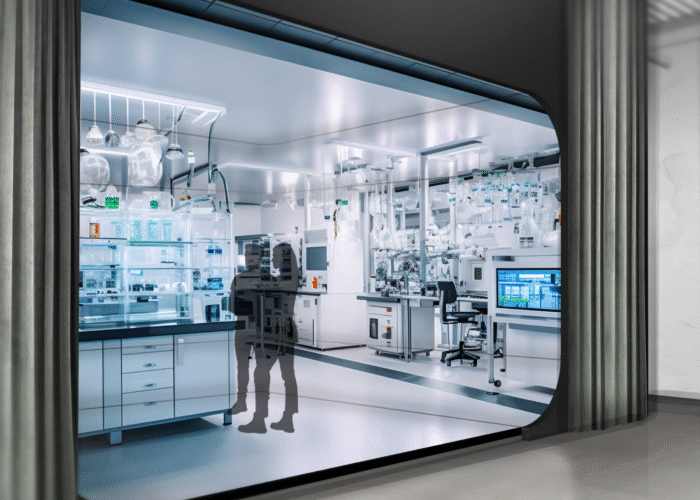
The pharmaceutical industry faces a unique challenge: How do you make complex scientific data emotionally resonant? How do you transform a clinical trial result into a story that moves physicians, hospital administrators, and healthcare decision-makers to action?
After spending 25+ years creating experiences for brands like AT&T, Syngenta, and the Dallas Cowboys, I’ve learned something fundamental: The most powerful presentations don’t just inform, they transport. And that principle applies whether you’re selling season tickets or a breakthrough oncology treatment.
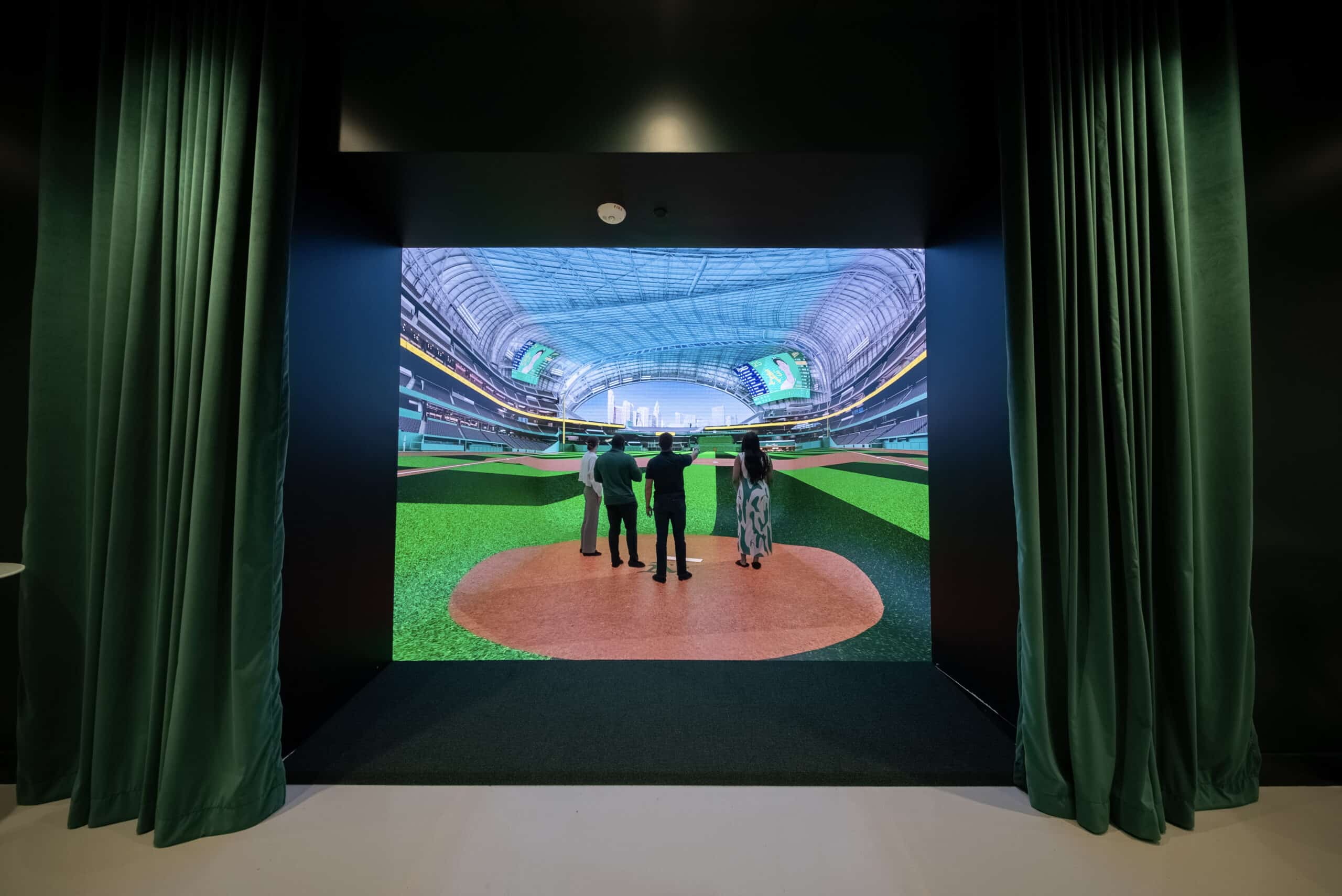
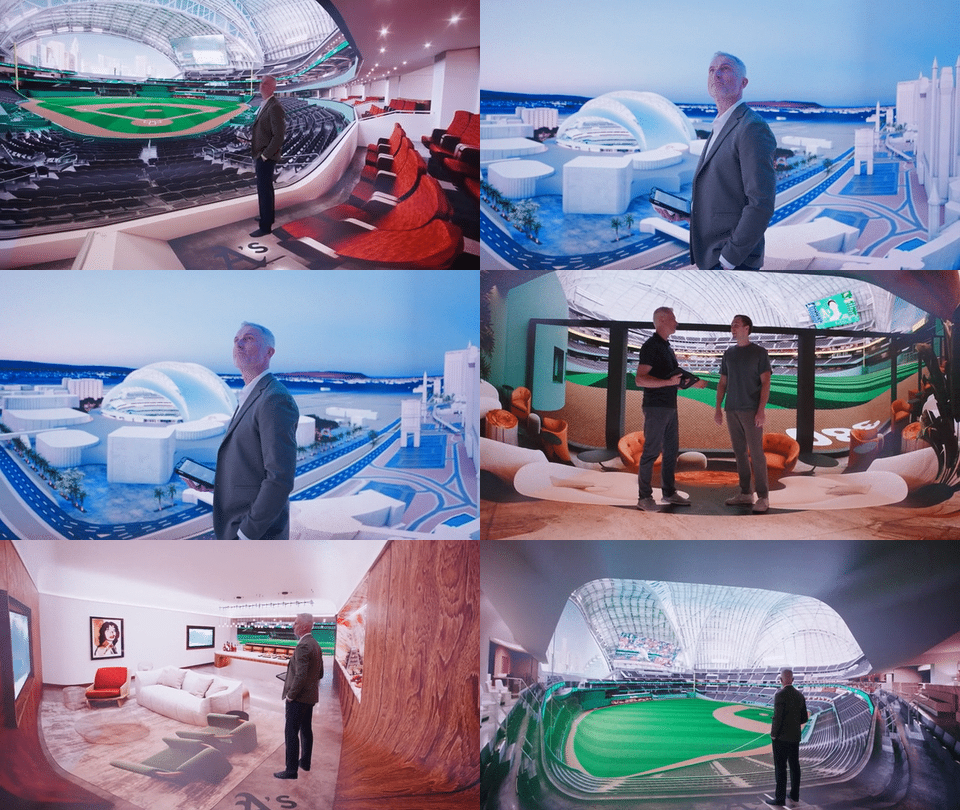
At Advent, we recently launched the Immersive Cube™ for the Athletics Ballpark Experience Center, a revolutionary 12-foot structure that uses customized high-res LED paneling to sell an experience that doesn’t exist yet: a baseball stadium still under construction. The response has been overwhelming, but what excites me most isn’t the technology itself. It’s what this breakthrough reveals about how humans make high-stakes decisions.
Pharmaceutical sales reps face a remarkably similar challenge: selling the promise of better patient outcomes before those outcomes can be experienced.
Working in Passive, Low-Engagement Environments for High-Stakes. Is This The Problem with Traditional Pharma Sales Presentations?
Walk into any major hospital system or physician group meeting, and you’ll see the same pattern repeated: Sales representatives armed with tablets, standing beside monitors, clicking through slides filled with efficacy data, safety profiles, and mechanism-of-action diagrams.
The information is scientifically rigorous. The presentation is professionally executed. And yet, something critical is missing.
Working with Fortune 500 companies on their sales environments has taught me a lot about how we engage with investors, sales teams and stakeholders: Static presentations create passive audiences. When your prospect is passively receiving information on a flat screen, you’re competing with every distraction in their environment; the email notification, the upcoming surgery, the budget meeting in thirty minutes.
Pharmaceutical companies invest billions in drug development and clinical trials, then entrust that investment to presentation methods that haven’t fundamentally changed in twenty years. The disconnect is striking.
Consider what’s actually at stake in these presentations:
- Hospital formulary decisions affecting thousands of patients
- Physician prescribing behaviors that shape treatment protocols
- Payer coverage determinations that determine market access
- Specialty pharmacy partnerships worth millions in revenue
These aren’t impulse purchases. They’re complex decisions involving multiple stakeholders, competing priorities, and genuine concerns about patient outcomes. The presentation environment should match the gravity of what’s being decided.

Boosting Attention, Emotional Connection, and Information Retention. Why Does Immersion Matter in Healthcare Decision-Making?
Our research partnership with Samford University has revealed something fascinating: Physical environments directly influence how people process information and make decisions. This isn’t about aesthetics or creating a “wow moment” it’s about cognitive psychology and how the human brain evaluates complex information.
When someone steps inside an immersive environment, several things happen simultaneously:
Attention becomes focused. The synchronized LED panels on all four walls eliminate peripheral distractions. There’s nowhere else to look, nothing else demanding attention. In our testing with the Athletics’ Cube, we found prospects spent significantly more time engaged with the presentation content compared to traditional formats.
Emotional connection deepens. When you’re surrounded by imagery, whether it’s a baseball stadium coming to life or a 3D visualization of how a molecule binds to a receptor, the experience moves from intellectual understanding to visceral comprehension. You’re not just learning about something; you’re experiencing it.
Information retention improves. Spatial memory is one of the most powerful forms of human memory. When information is presented in a three-dimensional, immersive context, our brains encode it differently than information on a flat screen. The presentation becomes an experience you remember, not just data you reviewed.
Shared presence replaces isolation. Immersion doesn’t have to be a solo experience mediated by bulky VR headsets. Instead, groups share the same environment at the same time, pointing things out, reacting together, and building understanding collectively. Everyone sees the same moment, from the same perspective.
For pharmaceutical companies, this translates directly to business outcomes: More engaged decision-makers. Deeper understanding of complex mechanisms. Greater confidence in prescribing or formulary decisions. Stronger differentiation from competitors still using conventional presentation methods.

How Will the Immersive Cube™ Work for Pharmaceutical Use Cases and Scientific Storytelling?
The Immersive Cube™ is a customized structure with 5 walls of customized LED panels creating a 270-degree immersive environment. But technology is only the enabler, what matters is what you do with it.
Here’s how pharmaceutical companies are beginning to explore this platform:
Mechanism of Action Visualization. Instead of showing a static diagram of how your drug works, prospects step inside a three-dimensional representation of the biological process. Watch as the molecule travels through the body, binds to specific receptors, and triggers the therapeutic cascade. See competing mechanisms side-by-side, making differentiation immediate and visceral.
One pharmaceutical client is developing content showing their targeted therapy at the cellular level, prospects literally stand inside a cancer cell as the drug identifies and disrupts specific pathways. The complexity that would require thirty PowerPoint slides becomes a two-minute immersive experience.
Clinical Trial Journey. The real story in pharmaceutical innovation isn’t just the endpoint data, it’s the patient journey. Show decision-makers what your trial participants experienced: baseline symptoms, treatment initiation, progressive improvement, quality of life restoration. Use patient testimonials (complying with all regulatory requirements, of course) displayed across multiple surfaces, creating emotional resonance with the human impact of your therapy.
Competitive Landscape Context. Rather than talking about how your drug compares to alternatives, create immersive environments that demonstrate the differences. Show disease progression with standard of care versus your intervention. Display real-world evidence from multiple angles simultaneously. Give healthcare decision-makers the context they need to understand not just efficacy percentages, but meaningful clinical differentiation.
Safety Profile Communication. One of the biggest barriers to adoption of new therapies is safety concerns. The Immersive Cube™ allows you to transparently address safety data in context showing not just adverse event rates, but helping decision-makers understand risk-benefit profiles through immersive data visualization that makes complex statistics accessible and comprehensible.
The Real Strategic Advantage of Immersive Storytelling? Differentiating Your Therapy in a Crowded Market
In many therapeutic categories, clinical differentiation is becoming increasingly difficult to demonstrate. When multiple drugs show similar efficacy in clinical trials, what actually drives prescribing decisions?
The answer is often: whichever company tells the most compelling story.
I’m not suggesting you can storytell your way past inferior efficacy data. But when you have solid clinical evidence, the question becomes how you communicate that evidence in a way that cuts through the noise, engages decision-makers, and drives action.
The Immersive Cube™ creates competitive separation before you ever discuss a single data point. You’ve demonstrated innovation, invested in meaningful engagement, and shown that you understand modern decision-makers need more than PDFs and slide decks.
Think about it from the perspective of a busy physician. They see pharmaceutical representatives every week, often multiple times per week. The presentations blur together; similar formats, similar claims, similar requests for their limited attention.
Then you invite them to step inside the Immersive Cube™.
Suddenly, the experience is different. They’re not passively receiving another sales pitch, they’re actively participating in an immersive exploration of your therapy. The novelty creates engagement. The technology demonstrates seriousness. The content delivery enhances comprehension and retention.
You’ve differentiated yourself before the clinical conversation even begins.
Beyond Sales: Why Create Immersive Centers of Excellence with Hospital Systems for Ongoing Education?
Imagine this: You identify the top ten hospital systems in your most important markets. Rather than just increasing sales representative frequency, you partner with these institutions to create permanent Immersive Cube™ installations within their facilities branded educational centers where physicians can come experience your full portfolio, continuing medical education content, and disease state education.
You’ve transformed from vendor to strategic partner. The Cube becomes a shared resource that benefits both parties, the hospital gets access to cutting-edge educational technology, and you get a permanent presence that continuously reinforces your therapeutic positioning.
These Centers of Excellence also create natural reasons for engagement beyond product launches. When you have new clinical data, new indications, or updated treatment guidelines, you have a venue for bringing stakeholders together. The Immersive Cube™ becomes the platform for ongoing scientific dialogue, not just transactional sales presentations.

Regulatory Considerations and Compliance: How Will Immersive Environments Improve Control, Fair Balance, and Auditability?
I know what you’re thinking: This sounds compelling, but pharmaceutical marketing is heavily regulated. How do we ensure everything stays compliant?
This is where the Immersive Cube™ actually offers advantages over traditional presentation methods.
Complete Content Control. Unlike a sales representative who might improvise or go off-script, the Immersive Cube™ delivers precisely the message you’ve approved through medical, legal, and regulatory review. Every visual, every claim, every piece of data is locked in and consistent across every presentation.
Audit Trail Capability. You can track exactly which content was shown, to whom, and when. The presentation becomes documentable and reproducible which is critical for regulatory inspections or adverse event reporting requirements.
Fair Balance Integration. The multi-surface projection format actually makes it easier to present fair balance effectively. Rather than burying safety information in small print or rushing through it at the end, you can design presentations where efficacy and safety information are literally displayed side-by-side, making genuine fair balance not just compliant but visually integrated.
Proactive Claim Substantiation. When a healthcare provider asks about a specific claim, you can immediately pull up the underlying data (study design, patient populations, statistical analyses) displayed immersively so they understand not just the conclusion but the evidence supporting it.
The key is building regulatory compliance into the content development process from the beginning, not treating it as an afterthought. At Advent, we work to ensure every immersive experience meets industry standards while maximizing engagement and impact.
The Investment Question: Cost, ROI, and How Will the Immersive Cube™ Compare to Traditional Conference Spend?
I’m often asked about the financial investment required for immersive technology, and I understand the skepticism. Pharmaceutical companies are under intense pressure to control costs while maximizing sales effectiveness.
Here’s how I think about the value proposition:
Consider what you currently spend on a single major medical conference. Booth space, design and construction, travel for your team, promotional materials, hospitality events you’re easily into six figures for one conference. And at the end, what do you have? Some business cards collected, a few follow-up meetings scheduled, and the hope that someone remembers your booth three months later.
The Immersive Cube™ is a capital investment that creates the ultimate sales environment that can be shown to hundreds of key account presentations, and thousands of individual physician interactions. The cost per engagement drops dramatically when you’re using the same platform across your entire sales and marketing strategy.
More importantly, think about the value of winning a single major formulary decision or changing prescribing behavior in a high-value specialty practice. If the Immersive Cube™ helps you convert one major health system faster or more definitively than conventional presentations, the ROI justifies the investment many times over.
The right model depends on your specific needs, but the underlying principle is the same: This is an investment in sales effectiveness, not a marketing expense.

From Concept to Implementation with Discovery, Immersive Content, Training, and Measurement. How Do You Get Started?
If you’re intrigued by the possibilities but unsure how to move from concept to execution, here’s how pharmaceutical companies typically engage with us:
Discovery and Strategy Session. We start by understanding your specific business challenges. What’s the therapeutic area? Who are the key decision-makers? What’s the competitive landscape? What are your current presentation methods, and where are the gaps? This isn’t about technology first, it’s about understanding your story and how immersive presentation can amplify it.
Content Development Workshop. Once we understand your strategy, we work with your medical affairs, marketing, and sales leadership to develop content specifically designed for immersive delivery. This isn’t just taking existing slides and projecting them bigger, it’s reimagining how you communicate complex information in a three-dimensional space.
Training and Enablement. Your sales team needs to understand not just what the Immersive Cube™ does, but how to integrate it effectively into their sales process. We provide comprehensive training so your representatives can confidently leverage this tool to maximum effect.
Measurement and Optimization. After initial deployment, we work with you to measure impact. Are key account engagement metrics improving? Is prescribing behavior changing? Are you winning formulary decisions more frequently? We use this data to continuously optimize content and presentation strategy.

Is This The Future of Pharmaceutical Sales Engagement? Story-First Immersive Environments?
I’ve been in the experience design business for over 25 years, and I’ve seen countless technology trends come and go. What makes the Immersive Cube™ different isn’t the technology itself, it’s that we’ve finally reached the point where the technology serves the story rather than overwhelming it.
The pharmaceutical industry is entering a new era. Clinical differentiation is getting harder. Decision-makers are more overwhelmed than ever. Traditional presentation methods are losing effectiveness. The companies that thrive will be those that find new ways to cut through the noise, create genuine engagement, and help healthcare professionals make confident decisions about patient care.
The Immersive Cube™ isn’t magic. It won’t turn a mediocre drug into a blockbuster or compensate for weak clinical data. But if you have strong science and an important story to tell, it gives you a platform that matches the significance of what you’re trying to communicate.
We built this for the A’s to sell the promise of a baseball stadium that doesn’t exist yet. But the underlying principle applies across industries: When you’re selling something complex, intangible, or future-oriented, immersion transforms how people evaluate and decide.
Pharmaceutical therapies are all three; scientifically complex, clinically intangible until prescribed, and promising future patient outcomes. The Immersive Cube™ gives you a way to make that promise visceral, immediate, and impossible to ignore.
If you’re ready to transform how you engage with healthcare decision-makers, let’s talk. Because the future of pharmaceutical sales isn’t about better slides it’s about creating experiences that move people to action.

John Roberson is CEO of Advent, a Nashville-based experience design agency that has created storytelling environments for professional sports organizations, academic institutions, and Fortune 500 companies for over 25 years.