

Digital Experiences
Technology
How Immersive Technology Accelerates Pre-Leasing for Commercial Real Estate Developments

Every commercial real estate developer faces the same fundamental challenge: You need tenants to commit before you can show them the actual space.
Traditional pre-leasing tools try to bridge this gap. You create architectural renderings. You build detailed floor plans. You assemble specification books with finish samples and mechanical systems documentation. For anchor tenants, you might invest in expensive fly-through animations or virtual reality experiences.
These materials communicate information. But they don’t answer the question that drives every leasing decision: What will it actually be like to operate our business in this space?
After 25+ years creating branded environments for companies like AT&T, Fanatics, and the Dallas Cowboys, I’ve learned that the gap between understanding a space intellectually and experiencing it emotionally is where deals stall. Tenants need confidence that this location will support their business objectives, enhance their brand, and justify the long-term commitment they’re making.
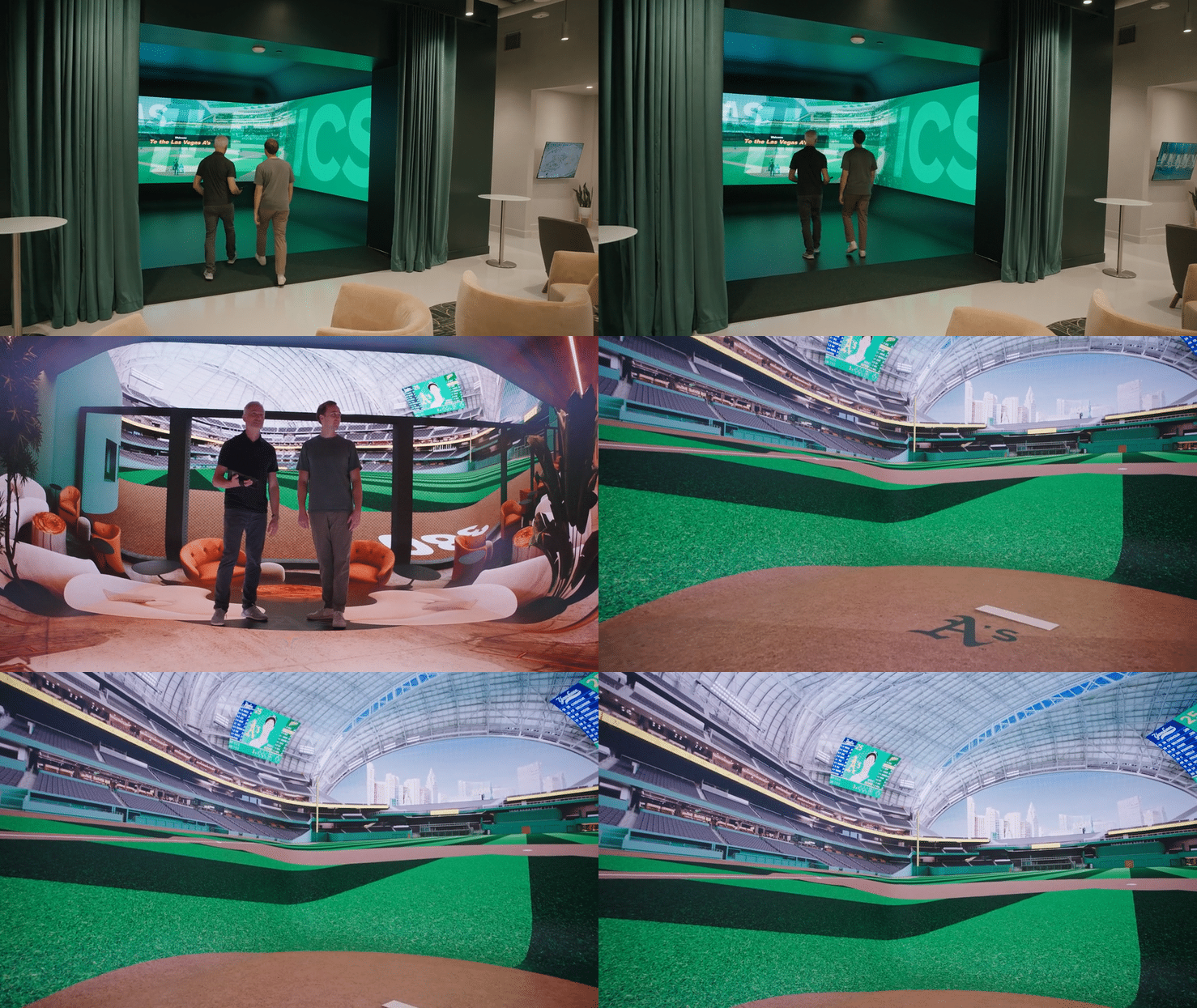
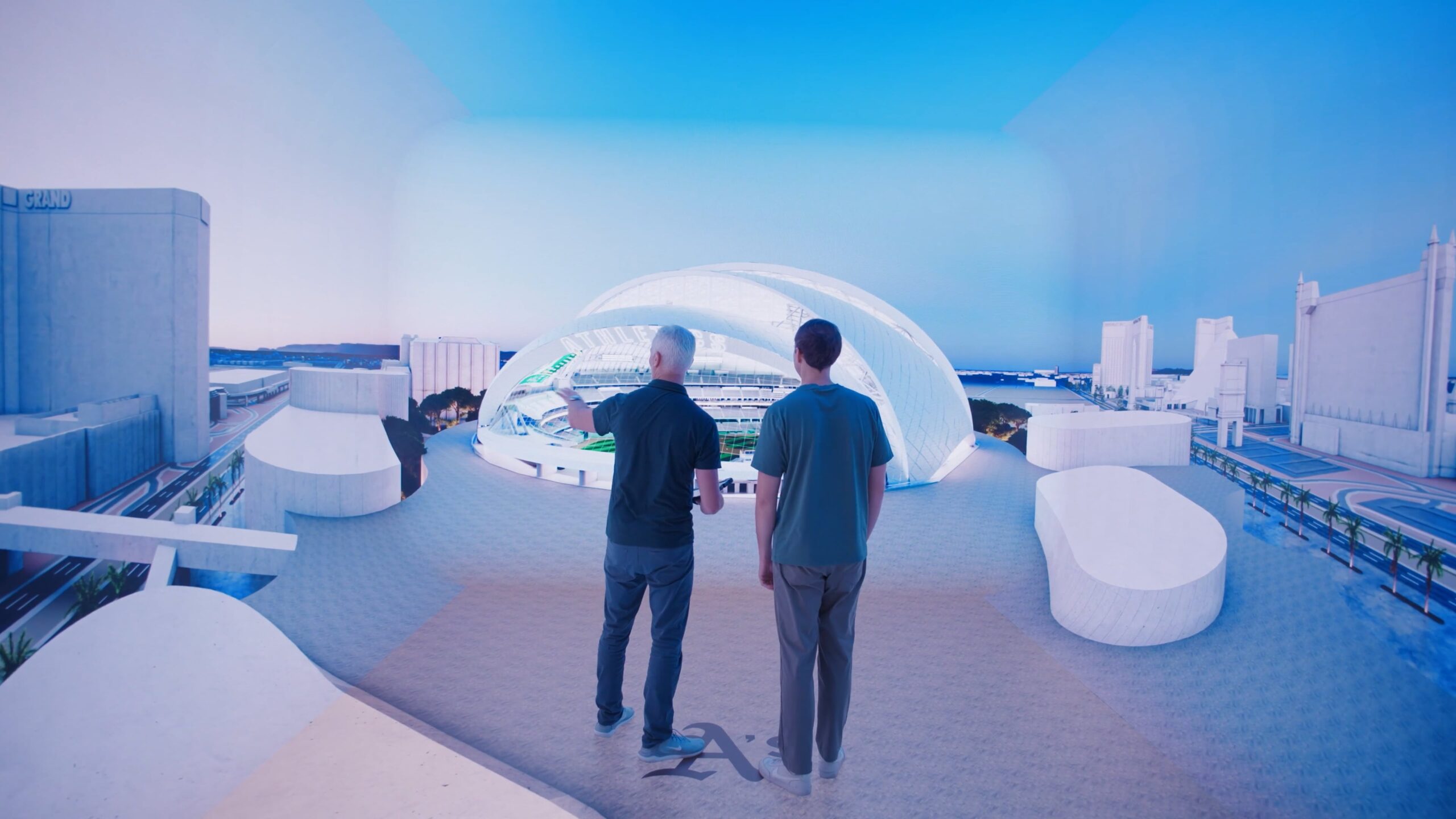
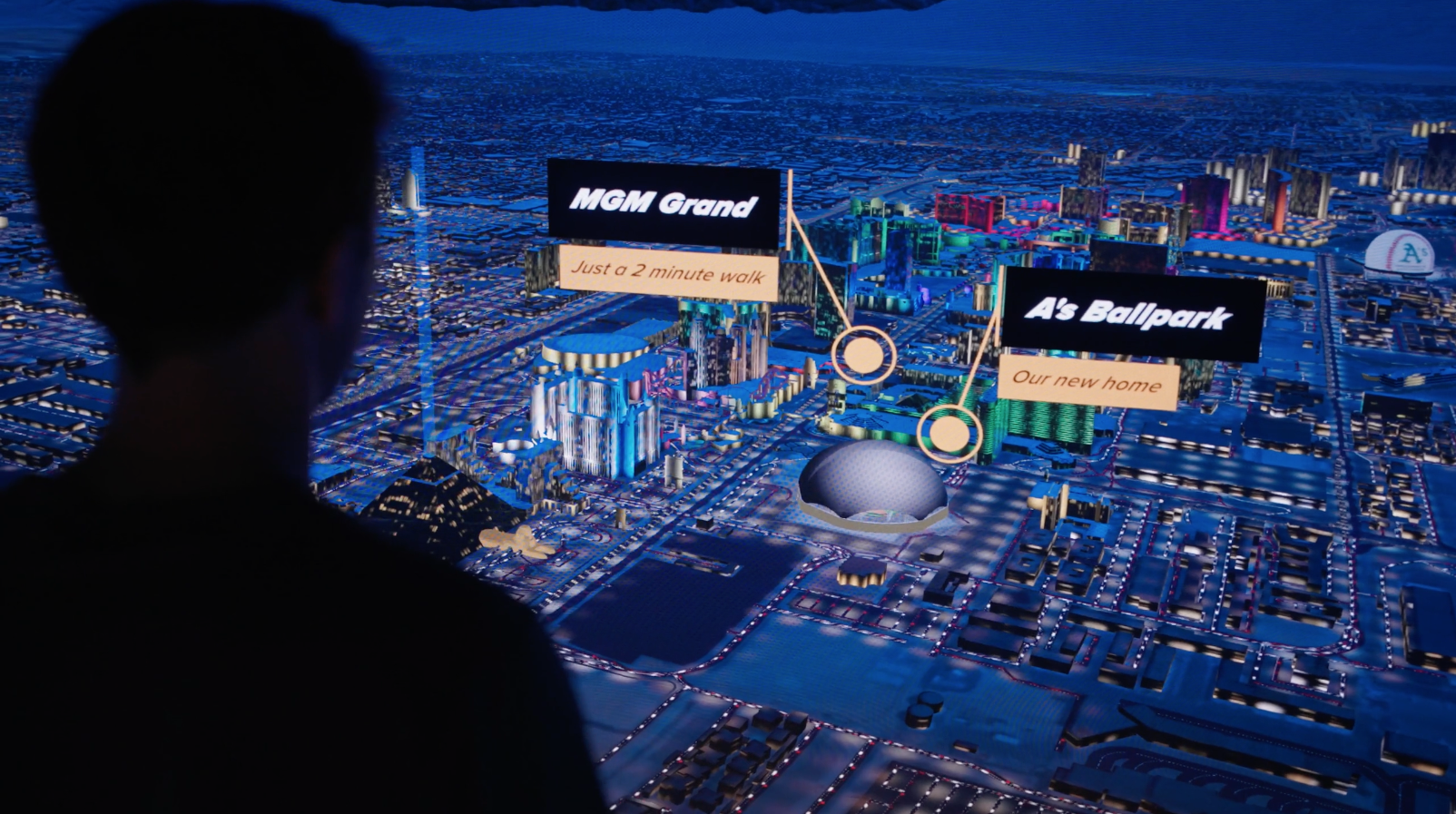
At Advent, we recently built the Immersive Cube™ for the A’s Ballpark Experience Center, who needed to pre-sell luxury suites and corporate sponsorships for a baseball stadium in Las Vegas that won’t open until 2028. They weren’t asking sponsors to imagine what game day might be like. They were asking for multi-year, seven-figure commitments based entirely on architectural drawings and promises.
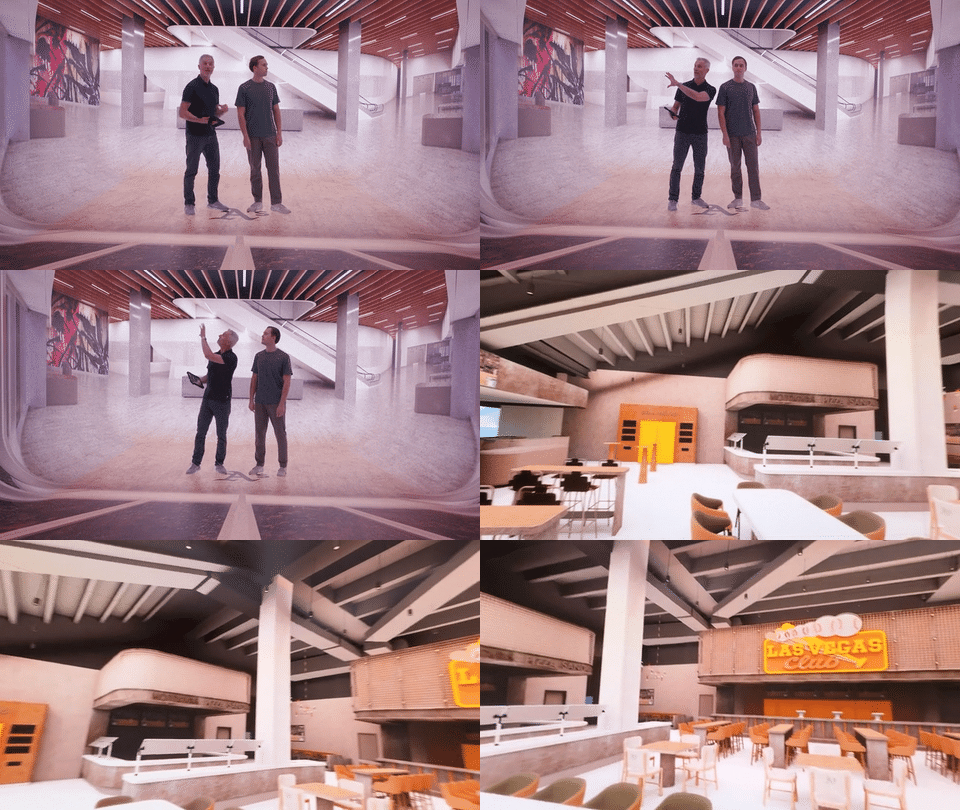
The Immersive Cube™ solved this by creating a 270-degree immersive environment where prospects experience the future stadium before construction begins. They stand in their suite. They see the field perspective. They understand the hospitality flow and guest experience. The emotional connection drives commitment in ways that renderings simply cannot.
The same principle applies directly to commercial real estate pre-leasing. When you’re asking a retail tenant to commit to a 10-year lease, a restaurant group to invest $2 million in buildout, or a corporate tenant to relocate 200 employees, they need more than floor plans. They need to experience what success looks like in your space.
The Pre-Leasing Problem: Why Anchor Tenants Wait
Walk into most commercial leasing presentations, and the pattern is consistent. You show floor plans. You discuss column spacing and ceiling heights. You present building amenities and parking ratios. You explain demographics and traffic counts.
The information is comprehensive. The presentation is professional. But the prospective tenant is still making a leap of faith.
Consider what’s actually at stake in pre-leasing decisions:
Retail tenants are evaluating whether your location will drive the foot traffic and sales volumes that justify their rent commitment. They’re imagining customer flow, merchandise display opportunities, and how their brand will present in your environment.
Restaurant groups need confidence that the space will support their operational model. Kitchen placement, customer circulation, outdoor seating potential, visibility from surrounding areas. These aren’t abstract concerns; they’re make-or-break factors that determine whether their investment succeeds.
Office tenants are assessing whether this space will attract and retain talent, support their company culture, and project the right brand image to clients and partners. They’re making decisions that affect employee satisfaction, recruitment costs, and their competitive positioning.
Medical and professional service tenants need to understand patient or client flow, privacy considerations, accessibility, and whether the environment aligns with the experience they want to create.
Flex and industrial tenants are evaluating operational efficiency, loading dock access, ceiling clearances, power capacity, and how the space will support their specific logistics and production needs.
These decisions involve significant capital investment, long-term lease obligations, and business risk. Yet most leasing presentations ask tenants to make these commitments based on two-dimensional floor plans and static renderings.
The gap between what you’re showing and what tenants need to feel confident is where deals delay, negotiations drag out, and prospects choose competitors with existing inventory they can physically tour.
Why Immersion Transforms Pre-Leasing Decisions
Our research partnership with Samford University has revealed something critical about how physical environments influence decision-making. When people evaluate spaces immersively (surrounded by the experience rather than observing it on a screen), several cognitive shifts occur that directly impact leasing decisions.
Risk perception decreases. The biggest barrier to pre-leasing isn’t rent negotiation. It’s fear that the finished space won’t support the tenant’s business model. When prospects experience the space immersively, that fear dissipates. They’re making decisions based on experiential confidence, not blind faith in your promises.
Operational visualization becomes intuitive. Floor plans require mental translation. Tenants have to imagine how customers will move through retail space, how employees will collaborate in office layouts, how kitchen operations will flow in restaurant spaces. In an immersive environment, these questions answer themselves. They’re not calculating clearances; they’re experiencing the operational flow.
Emotional commitment accelerates the timeline. Intellectual evaluation can continue indefinitely. There’s always another comparable property to visit, another round of internal discussions, another reason to wait until construction progresses. Emotional connection drives action. When tenants experience your space and can envision their business thriving there, decision cycles compress.
Stakeholder alignment improves. Commercial leasing decisions typically involve multiple stakeholders: ownership, operations, finance, design teams, franchisors. Getting alignment when everyone is reviewing different documents and imagining different things is challenging. When stakeholders experience the space together in the Immersive Cube™, they’re literally seeing the same thing. Alignment becomes easier because you’ve created shared experiential understanding.
For commercial developers, this translates directly to business outcomes: Higher conversion rates from prospect meetings to lease executions. Shorter time from initial inquiry to signed letter of intent. Greater confidence in buildout investments from tenants. Stronger pre-leasing velocity that supports construction financing and project timelines.
The Immersive Cube™: How It Works for Commercial Pre-Leasing
The Immersive Cube™ is a 13-foot permanent installation with four synchronized projection surfaces creating a 270-degree immersive environment. For commercial real estate, the power lies in how you deploy it to answer the specific questions that drive leasing decisions.
Here’s how commercial developers use this platform:
Space Experience at Actual Scale. Instead of showing prospects a floor plan with dimensions noted, they step inside their future space at actual scale. A 5,000 square foot retail tenant sees their full footprint with accurate ceiling heights, column locations, and spatial proportions. They understand immediately whether the space supports their merchandising strategy or operational requirements.
Multiple Configuration Options. Most commercial spaces can be configured multiple ways depending on tenant needs. The Immersive Cube™ lets you show prospects several layout options in rapid succession. A restaurant tenant sees the space with the kitchen in the back corner versus along the side wall. An office tenant experiences open floor plan versus a mix of private offices and collaborative areas. They make informed decisions about which configuration best serves their needs.
Customer and Employee Journey Visualization. For retail, restaurant, and office tenants, the experience of their customers or employees is paramount. Use the Immersive Cube™ to show the complete journey: arrival and parking, entry and reception, movement through the space, key touchpoints and destinations. This shifts the conversation from lease terms to business outcomes.
Tenant Improvement Visualization. When tenants are evaluating significant buildout investments, seeing finish options in context is critical. Show them their space with different flooring materials, various lighting schemes, alternative storefront treatments, or different millwork packages. They understand the visual and functional impact of these investments before committing capital.
Visibility and Location Context. Especially important for retail and restaurant tenants who depend on visibility and foot traffic. Show prospects the view from the street, the pedestrian approach, the relationship to anchor tenants, the parking and drop-off experience. Give them confidence in the location before construction reveals these factors.
Building Amenity Integration. If your project includes shared amenities (conference centers, fitness facilities, outdoor spaces, loading areas), show how tenants will access and use these resources. For office tenants, this might mean experiencing the ground-floor café or rooftop terrace. For industrial tenants, it’s understanding loading dock operations and truck access.
Time-of-Day and Seasonal Variations. Commercial tenants need to understand how spaces perform throughout the day and year. Show a retail space during peak lunch hours versus quiet morning periods. Display an office space with morning eastern light versus afternoon western exposure. Demonstrate how outdoor dining areas function in different seasons.
When to Build Your Immersive Experience: Timeline Considerations
One of the most common questions from developers is: How early in our development cycle can we create an immersive pre-leasing experience?
The answer: Earlier than you think, and earlier than you should wait.
Concept and Feasibility Stage. Even before you finalize architectural plans, you can create immersive experiences based on preliminary massing studies and conceptual designs. This is particularly valuable when you’re testing market response or seeking anchor tenant commitments that will inform your final design.
We can build immersive content from schematic designs that shows the general character, scale, and positioning of spaces. You’re not committing to every detail, but you’re giving prospects enough experiential information to evaluate whether the project aligns with their needs.
Design Development Phase. This is the optimal time for most developers to begin building immersive content. Your architectural plans are sufficiently detailed to create accurate spatial experiences, but you retain flexibility to adjust based on tenant feedback and pre-leasing negotiations.
Tenants who experience your space during design development can provide input that influences final design decisions. This collaborative approach increases their investment in the project and their commitment to leasing.
Construction Document Stage. If you wait until construction documents are complete, you’ve missed the opportunity to use tenant feedback to inform design decisions. However, this stage provides the most accurate immersive representations since all details are finalized.
During Construction. Even after construction begins, immersive experiences remain valuable for pre-leasing remaining space. As the building takes shape, you can update immersive content to reflect actual construction progress, building tenant confidence that what they’re experiencing matches what’s being built.
The Strategic Advantage of Early Investment. Developers who build immersive experiences early in their development cycle gain several advantages:
They can validate market demand and tenant interest before committing to final designs. They can use anchor tenant commitments secured through immersive pre-leasing to improve construction financing terms. They can make design adjustments based on tenant feedback rather than discovering issues after construction is complete. They can compress their overall development timeline by accelerating pre-leasing while construction proceeds.
The cost of creating immersive content is minimal compared to the carrying costs of a building that sits vacant because you waited until construction was complete to begin serious leasing efforts.
Integration Into Your Leasing Strategy
The Immersive Cube™ doesn’t replace your existing leasing process. It becomes a strategic tool deployed at critical decision points.
Initial Prospect Qualification. Not every prospect inquiry warrants an immersive experience. Use traditional materials (site plans, demographic reports, preliminary floor plans) for initial outreach and qualification. Reserve the Immersive Cube™ for serious prospects who are actively evaluating your project against alternatives.
Anchor Tenant Pursuit. When you’re pursuing anchor tenants whose commitments are critical to your project’s success and financing, the Immersive Cube™ becomes your primary presentation tool. These are high-stakes negotiations where experiential differentiation matters most.
Bring anchor tenant decision-makers into the Cube and let them experience how your development supports their business strategy. Show them customer flow, operational efficiency, and brand presentation in ways that floor plans simply cannot communicate.
Broker Presentations. Your leasing success depends on how effectively brokers understand and advocate for your project. Host broker events where commercial real estate professionals experience your development through the Immersive Cube™.
When brokers have personally experienced your space, they can speak authentically about its advantages with their tenant clients. They become advocates rather than just intermediaries passing along information.
Tenant Advisory Boards and Focus Groups. Some developers use the Immersive Cube™ for tenant advisory sessions during the design phase. Invite representatives from target tenant categories to experience preliminary designs and provide feedback. This market intelligence informs design decisions while building relationships with prospects who may ultimately lease space.
Lender and Investor Presentations. Pre-leasing velocity directly impacts construction financing terms and investor returns. When presenting to lenders or equity partners, bring them into the Immersive Cube™ to experience why tenants are committing to your project. This builds confidence in your leasing assumptions and project feasibility.
Creating Effective Content: What Tenants Need to Experience
The effectiveness of your immersive pre-leasing center depends entirely on creating content that answers the specific questions driving tenant decisions.
Start With Tenant Perspective, Not Building Features. The Immersive Cube™ is not a platform for showcasing your building’s impressive architecture (though that can be a component). It’s a tool for helping tenants envision their business success in your space.
Before developing content, research your target tenant categories. What operational concerns do they have? What drives their location decisions? What buildout investments are they evaluating? Your immersive content should address these specific concerns.
Show Business Operations, Not Just Empty Space. The most effective commercial immersive experiences don’t just show vacant spaces. They show spaces in operation.
For retail tenants, show merchandise displays, customer flow, and transaction areas populated with people. For restaurants, show kitchen operations, dining areas during service, and outdoor seating with guests. For office tenants, show employees collaborating, meeting spaces in use, and daily workplace rhythms.
This operational context helps tenants evaluate whether the space supports their business model. Empty spaces require imagination; operational visualizations provide clarity.
Create Modular Content for Different Tenant Types. Most commercial developments target multiple tenant categories. Rather than creating one generic presentation, develop modular content that addresses specific tenant needs.
Retail-focused modules emphasize storefront visibility, customer circulation, and merchandising flexibility. Restaurant modules show kitchen operations, dining atmosphere, and outdoor spaces. Office modules demonstrate workplace efficiency, amenity access, and commute convenience.
Your leasing team can then assemble these modules based on each prospect’s priorities, creating personalized experiences without requiring unique content development for every prospect.
Address Objections and Concerns Proactively. Every commercial property has potential concerns that tenants will raise. Location challenges, access limitations, competitive properties, parking constraints, or configuration restrictions.
Use immersive content to address these concerns directly. If parking is perceived as limited, show the actual parking experience and proximity to tenant spaces. If access routes are complex, walk prospects through the actual arrival and entry sequence. If competing properties claim visibility advantages, show your property’s exposure and traffic patterns.
Addressing concerns experientially is more effective than defending against them verbally.
Update Content as Design Evolves. Commercial development involves iteration. Tenant feedback influences design decisions. Construction realities require adjustments. Market conditions shift priorities.
The Immersive Cube™‘s digital nature makes updates feasible throughout your development timeline. As designs evolve, update your immersive content to reflect current plans. This keeps your pre-leasing presentations accurate and builds tenant confidence that you’re responsive to market needs.
The Investment Question: What Does This Cost?
When commercial developers evaluate immersive pre-leasing technology, the financial analysis typically focuses on three factors: upfront investment, impact on leasing velocity, and effect on lease terms.
Upfront Investment Components. The total investment includes the Immersive Cube™ installation (hardware, projection systems, audio integration, installation, and calibration) plus content development (3D modeling, rendering, experience design, audio production, and programming).
For a typical commercial development, content development costs vary based on project complexity, number of tenant spaces to visualize, and level of detail required. A single-building office or retail project is less complex than a mixed-use development with multiple tenant types and extensive shared amenities.
Our discovery process helps scope the appropriate level of investment based on your project size, target tenants, and leasing timeline. We’re creating content that serves a multi-year pre-leasing effort, not a one-time presentation.
ROI Through Accelerated Leasing. The real financial impact comes from how immersive pre-leasing affects your timeline and lease terms.
Consider your carrying costs during the lease-up period. Every month of vacancy represents lost rental income, continued debt service, operating expenses, and opportunity cost. If immersive pre-leasing helps you achieve stabilized occupancy 90 days faster, what’s that worth in your financial model?
For a 100,000 square foot office building leasing at $35 per square foot, three months of accelerated stabilization represents $875,000 in rental income, plus the compounding effect on your property valuation and refinancing opportunities.
Impact on Lease Terms. Tenants who experience your space and develop emotional confidence negotiate differently than tenants making decisions based on plans and promises.
Confident tenants are more likely to accept market lease rates without aggressive concessions. They’re more willing to commit to longer lease terms because they trust the space will support their business. They invest more in tenant improvements because they’ve experienced how those improvements will enhance their operations.
Even modest improvements in average lease terms across your tenant mix can generate returns that far exceed the immersive technology investment.
Competitive Positioning Value. In markets where multiple developments compete for the same tenant pool, the pre-leasing experience becomes a critical differentiator.
When a prospective tenant visits three competing developments, two with traditional presentations and one with an immersive experience, which property do they remember? Which one gave them confidence to commit? Which developer demonstrated the sophistication and financial strength that signals a successful project?
This intangible competitive advantage is difficult to quantify but influences tenant decisions before lease negotiations even begin.
Long-Term Asset Value. The Immersive Cube™ is a permanent installation that serves your project throughout the entire leasing cycle and beyond. After initial lease-up, it continues providing value for lease renewals, showcasing available spaces as tenants turn over, and demonstrating renovation or expansion opportunities to existing tenants.
For developers with multiple projects, the Cube becomes a strategic asset that can be referenced in future developments, building your reputation for innovation and tenant-focused development.
Addressing Common Implementation Questions
When commercial developers evaluate the Immersive Cube™ for their projects, several practical questions consistently arise:
Can you create immersive experiences from architectural plans alone? Yes. We regularly build immersive content from architectural drawings, renderings, and design specifications. You don’t need a completed building to create accurate, compelling immersive experiences.
The key is having sufficient design detail to represent spaces accurately. Schematic designs provide enough information for early-stage immersive content. Design development documents allow for more detailed and polished experiences. Construction documents enable the highest level of accuracy and finish detail.
How early should we start building these experiences? The optimal timing depends on your leasing strategy, but earlier is generally better than you might expect.
If you need anchor tenant commitments to secure financing, build immersive content during design development so you can begin serious pre-leasing conversations. If you’re confident in your financing and focused on optimal lease terms, you might wait until construction documents are complete.
However, remember that content development takes 8-12 weeks. Plan accordingly so your immersive pre-leasing center is ready when you need to begin serious tenant conversations, not three months after you’ve already started leasing efforts.
What if our plans change during development? This is expected in commercial real estate. Tenant feedback influences design decisions. Construction realities require adjustments. Market conditions shift priorities.
The Immersive Cube™‘s digital nature makes updates far more manageable than reprinting marketing materials or rebuilding physical models. We can revise layouts, update finishes, modify shared amenities, or adjust spatial configurations as your plans evolve. Most developers budget for periodic content updates throughout their leasing cycle.
How does this integrate with our existing marketing? The Immersive Cube™ is designed for in-person prospect presentations, but we can create companion digital content for your website and marketing outreach. This might include video excerpts from immersive experiences, virtual tour elements, or interactive visualizations.
The goal is consistency: prospects should see the same story in your marketing materials that they experience in your leasing presentation. The Immersive Cube™ becomes the definitive, highest-quality representation of your project.
What’s required in our leasing office? The Cube itself is 13 feet tall and occupies approximately 300 square feet including circulation space. Ceiling height needs to accommodate the 13-foot structure. Electrical requirements are standard commercial power. We handle all installation, projection calibration, audio integration, and technical setup. Most installations take about 5-6 weeks from delivery to operational readiness.
Can our leasing team operate it independently? Absolutely. We provide comprehensive training so your leasing professionals can operate the Cube, customize presentations for different prospects, and troubleshoot basic technical issues. You’re not dependent on us for daily operations.
For content updates or significant technical support, we remain available, but day-to-day use is designed to be managed entirely by your team.
What happens after we achieve stabilized occupancy? The Immersive Cube™ continues providing value beyond initial lease-up. Use it to showcase available spaces as tenants turn over. Demonstrate renovation or expansion opportunities to existing tenants considering growth. Present future phases of multi-building developments.
Some developers have repurposed their Immersive Cube™ for tenant events, community programming, or as a unique amenity that differentiates their property in the market.

Case Applications Across Commercial Property Types
While the core technology remains consistent, how you deploy immersive pre-leasing varies significantly across different commercial property types.
Office Developments. Office tenants evaluate workspace efficiency, employee attraction and retention, client impression, and operational cost. Immersive experiences should show collaborative work environments, amenity access, commute and parking convenience, and how the space projects professional credibility.
Show the typical employee journey: arrival and parking, entry and security, elevator ride to the floor, movement through workplace zones, access to shared amenities, lunch and break experiences. Help tenants envision their company culture thriving in your space.
Retail Centers. Retail tenants care about visibility, foot traffic, customer flow, and co-tenancy. Immersive experiences should demonstrate storefront exposure from different approach angles, pedestrian circulation patterns, parking proximity, and the overall shopping environment.
Show the customer journey from parking to store entry. Display the retail environment during different times of day and days of week. Demonstrate how anchor tenants drive traffic to smaller tenants. Give prospects confidence in the location’s ability to generate sales.
Restaurant and Hospitality Spaces. Restaurant tenants need to understand operational flow, dining atmosphere, outdoor space potential, and visibility. Immersive experiences should show kitchen operations, front-of-house service flow, customer entry and seating, bar and waiting areas, and outdoor dining.
Show the space during different dayparts: breakfast service, lunch rush, dinner atmosphere, late-night bar crowd. Help restaurant groups evaluate whether your space supports their concept and operational model.
Medical and Professional Services. Medical tenants prioritize patient flow, privacy, accessibility, and clinical efficiency. Immersive experiences should demonstrate patient entry and reception, movement through clinical areas, exam room functionality, and staff work zones.
Show the patient journey from parking to check-in to exam to check-out. Demonstrate accessibility features and parking convenience. Help medical groups evaluate operational efficiency and patient experience.
Flex and Industrial Spaces. Industrial tenants focus on operational efficiency, loading access, ceiling clearance, power capacity, and logistics flow. Immersive experiences should show truck access and loading operations, warehouse and production layouts, office and administrative areas, and employee amenities.
Demonstrate how goods flow through the space. Show trailer maneuvering and dock operations. Help tenants evaluate whether your facility supports their operational requirements and future growth.
The Competitive Landscape is Shifting
The commercial real estate market is experiencing a fundamental shift in how properties are leased, and developers who recognize this early are gaining significant competitive advantages.
Tenant expectations are evolving. Today’s commercial tenants, particularly in office and retail sectors, grew up with immersive digital experiences. They expect sophisticated presentations that match the quality of the spaces they’re evaluating. Traditional leasing presentations with floor plans and static renderings feel dated and insufficient.
Pre-leasing velocity increasingly determines success. In most commercial developments, the time from construction start to stabilized occupancy directly impacts project returns. Developers who can pre-lease space faster secure better financing terms, achieve higher valuations sooner, and reduce market risk.
The Immersive Cube™ gives you a tool to accelerate pre-leasing by providing the experiential confidence tenants need to commit early in your development timeline.
Experience differentiation matters more than ever. In many markets, multiple commercial developments compete with similar locations, comparable specifications, and competitive lease rates. When product features are similar, tenant decisions come down to which developer creates the most confidence and connection.
The Immersive Cube™ differentiates your project before lease negotiations begin. You’ve demonstrated innovation, invested in tenant success, and shown that you understand modern tenants need more than plans and promises.
The Future of Commercial Pre-Leasing
I’ve been creating branded environments for over 25 years, and I’ve watched countless technology trends emerge and fade. What makes the Immersive Cube™ different isn’t the technology itself. It’s that we’ve finally reached the point where the technology serves the story effectively without overwhelming it.
You’re not asking tenants to commit to your development because of impressive technology. You’re using technology to help them experience their future business success in your space in ways that build confidence and emotional connection.
The commercial developers who are adopting immersive pre-leasing aren’t technology enthusiasts. They’re pragmatic business people who recognize that in a competitive market where product differentiation is difficult, experience differentiation becomes the determining factor.
The A’s understood this when they came to us. They’re selling luxury suites and sponsorships for a stadium that won’t open until 2028. They needed corporate decision-makers to commit millions based on drawings and promises. The Immersive Cube™ gave them a way to make those promises experiential and tangible.
Your challenge as a commercial developer is parallel. You’re asking retail tenants to commit to locations they can’t tour. You’re asking office tenants to relocate employees to spaces that don’t exist. You’re asking restaurant groups to invest millions in buildouts based on architectural plans.
The Immersive Cube™ gives you a way to bridge that gap. It transforms “here’s what we’re planning to build” into “here’s what your business will be like in our space.”
This is a strategic investment in your leasing infrastructure, not a temporary marketing expense. It’s a permanent installation that serves your entire leasing cycle, accelerates pre-leasing commitments, and positions your development as forward-thinking and tenant-focused.
If you’re ready to transform how you pre-lease commercial space, let’s talk. Because the future of commercial leasing isn’t about better floor plans or more detailed renderings. It’s about creating experiences that move prospects from intellectual evaluation to emotional commitment.

For over 25 years, Advent has been creating emotionally resonant experiences for leading brands including AT&T, Fanatics, the Dallas Cowboys, and Stanford University. Our proprietary StoryMining methodology ensures that every project starts with the story, not the technology.