

Digital Experiences
Experience Centers
Premium Experiences
Technology
Thought Leadership
A First Peek Inside the Las Vegas A’s Ballpark Experience Center
When Marc Badain, President of the Las Vegas Athletics, described our Immersive Cube as “the greatest piece of technology ever seen to promote a ballpark,” he captured something we’ve known for years: the traditional model of selling season tickets from architectural renderings and PowerPoint presentations is fundamentally broken.
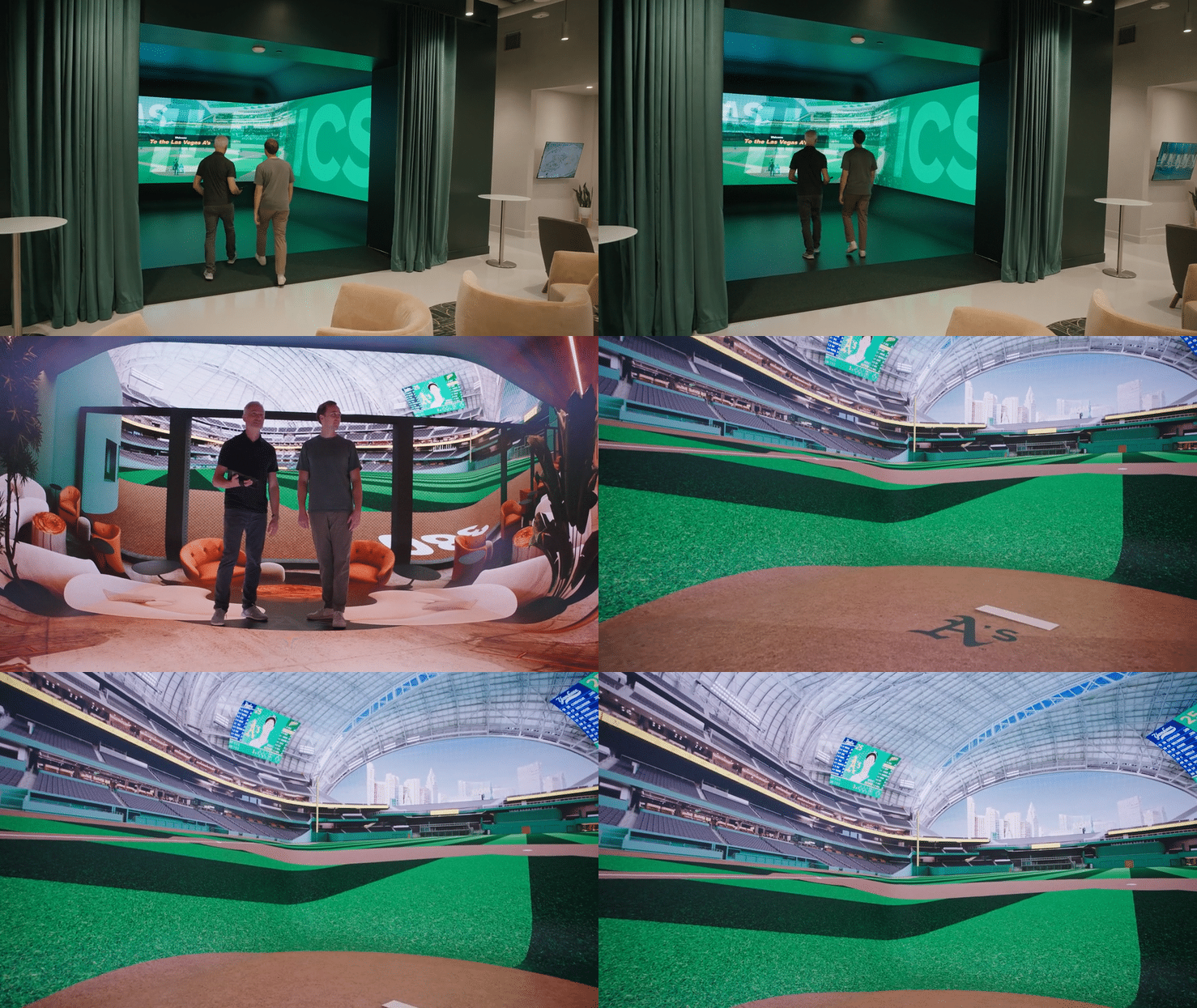
I’m watching this unfold in real-time at the A’s Ballpark Experience Center in Las Vegas, where our team at Advent has created something that’s generating headlines from Sports Illustrated to FOX Sports. This isn’t just about impressive technology. It’s about solving a challenge every sports organization faces when building a new venue: how do you sell the future when the future doesn’t exist yet?
The Challenge of Selling What Doesn’t Exist
Professional sports teams investing billions in new facilities face an uncomfortable reality. You’re asking fans to commit thousands of dollars to season tickets for a building that won’t open for years. You’re pitching premium suites to corporate sponsors based on architectural drawings. You’re competing against established venues that people can actually walk through and experience today.
The traditional approach (architectural models, computer renderings, virtual reality headsets) all create the same fundamental problem. They ask people to imagine what it will feel like. And imagination has a conversion problem.
Why the A’s Needed Something Different
The Las Vegas A’s came to us with a specific challenge. They weren’t just selling tickets; they were selling an entire vision. Moving from Oakland to Las Vegas meant building a new fan base in a market already saturated with entertainment options. They needed potential season ticket holders to feel what it’s like to stand on the field, to experience views from premium seating areas, to understand the energy of game day before a single beam is erected on the Las Vegas Strip.
That’s why we designed the Immersive Cube around a principle we’ve refined across projects for organizations like the Dallas Cowboys and Stanford University: don’t ask people to imagine the experience. Put them inside it.
The Numbers Tell Part of the Story
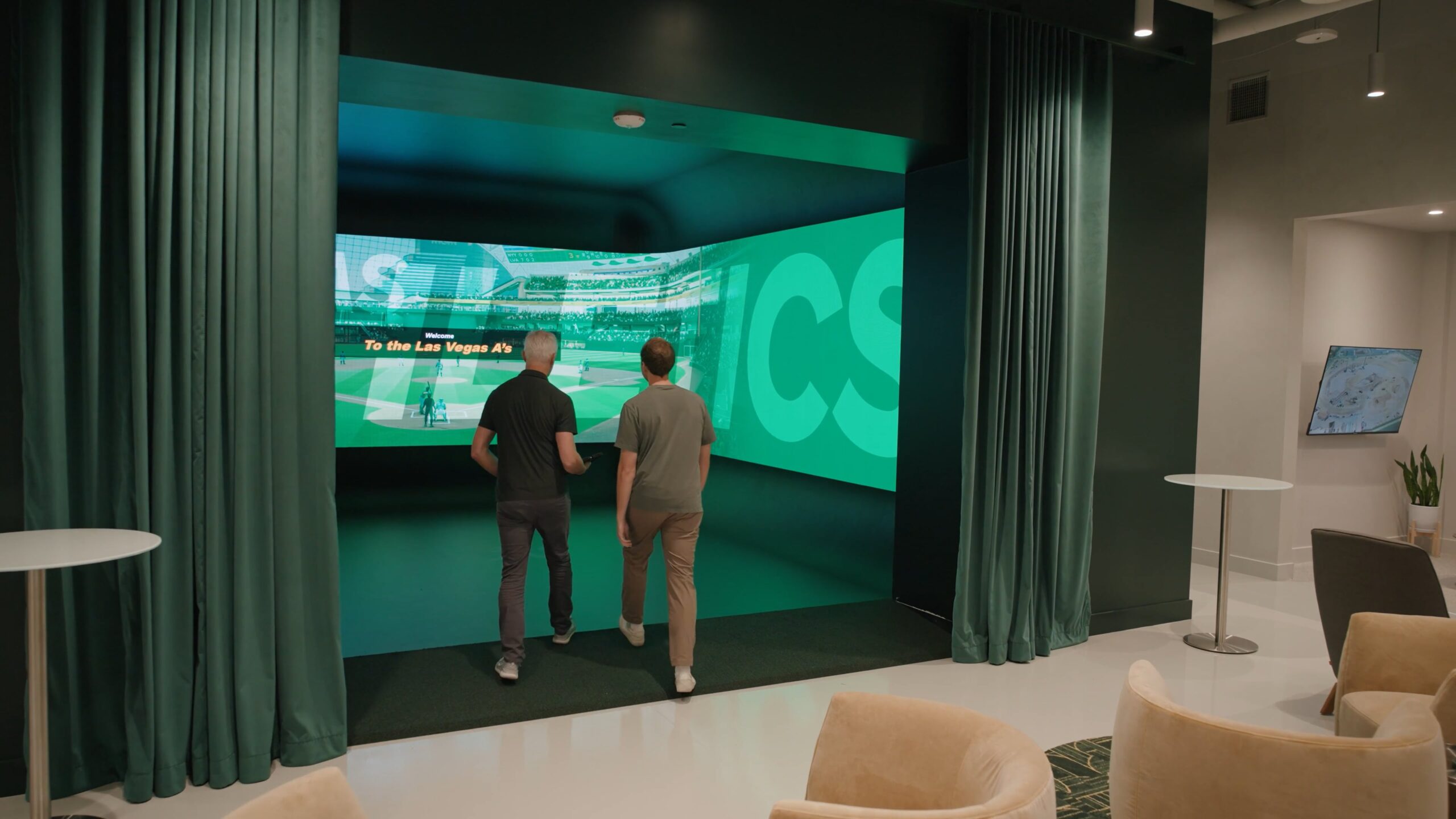
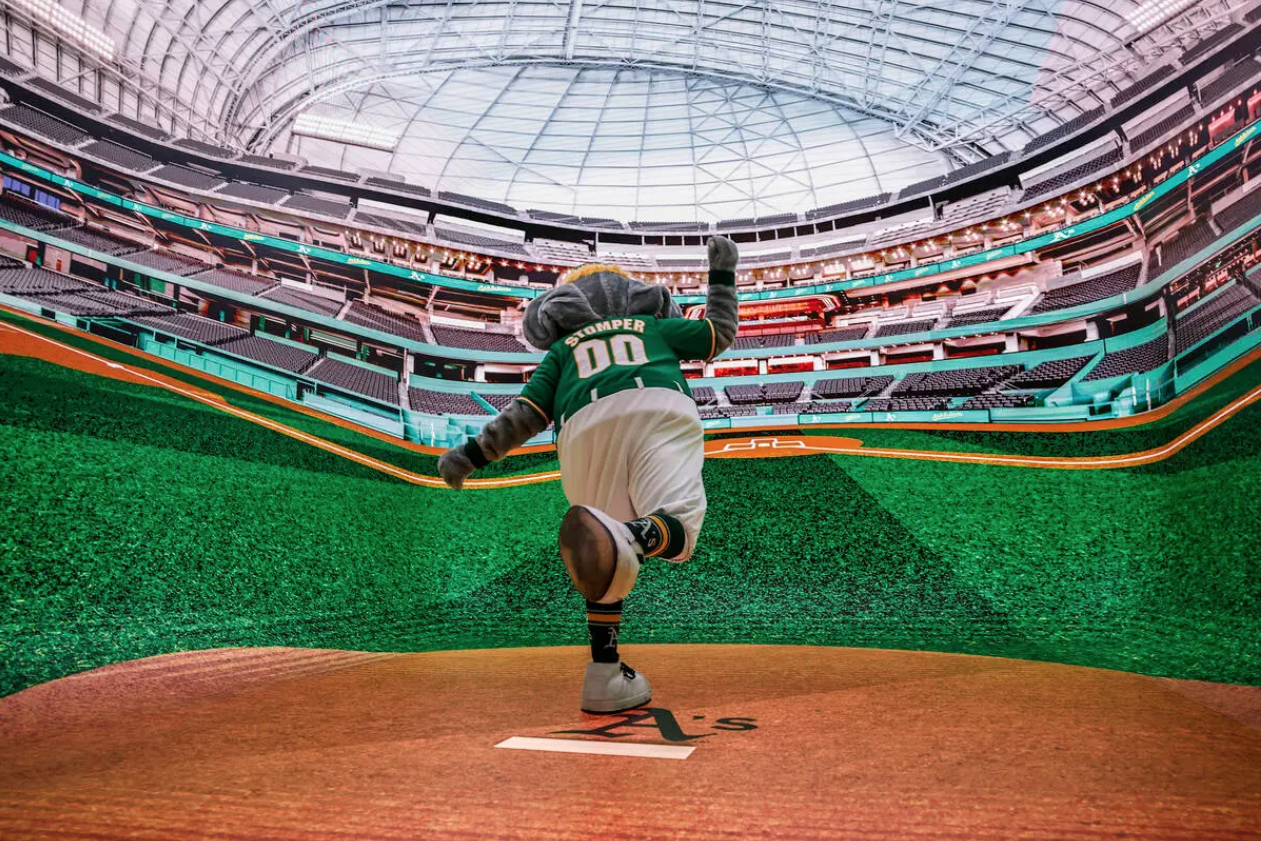
The Immersive Cube™ measures over 13 feet tall, 19 feet wide, and nearly 20 feet deep, creating a 270-degree visual environment powered by our proprietary Experiential Management System. With 26.5 million pixels transforming walls, floor, and ceiling into living canvases, visitors don’t watch a presentation about the ballpark, they step into it.
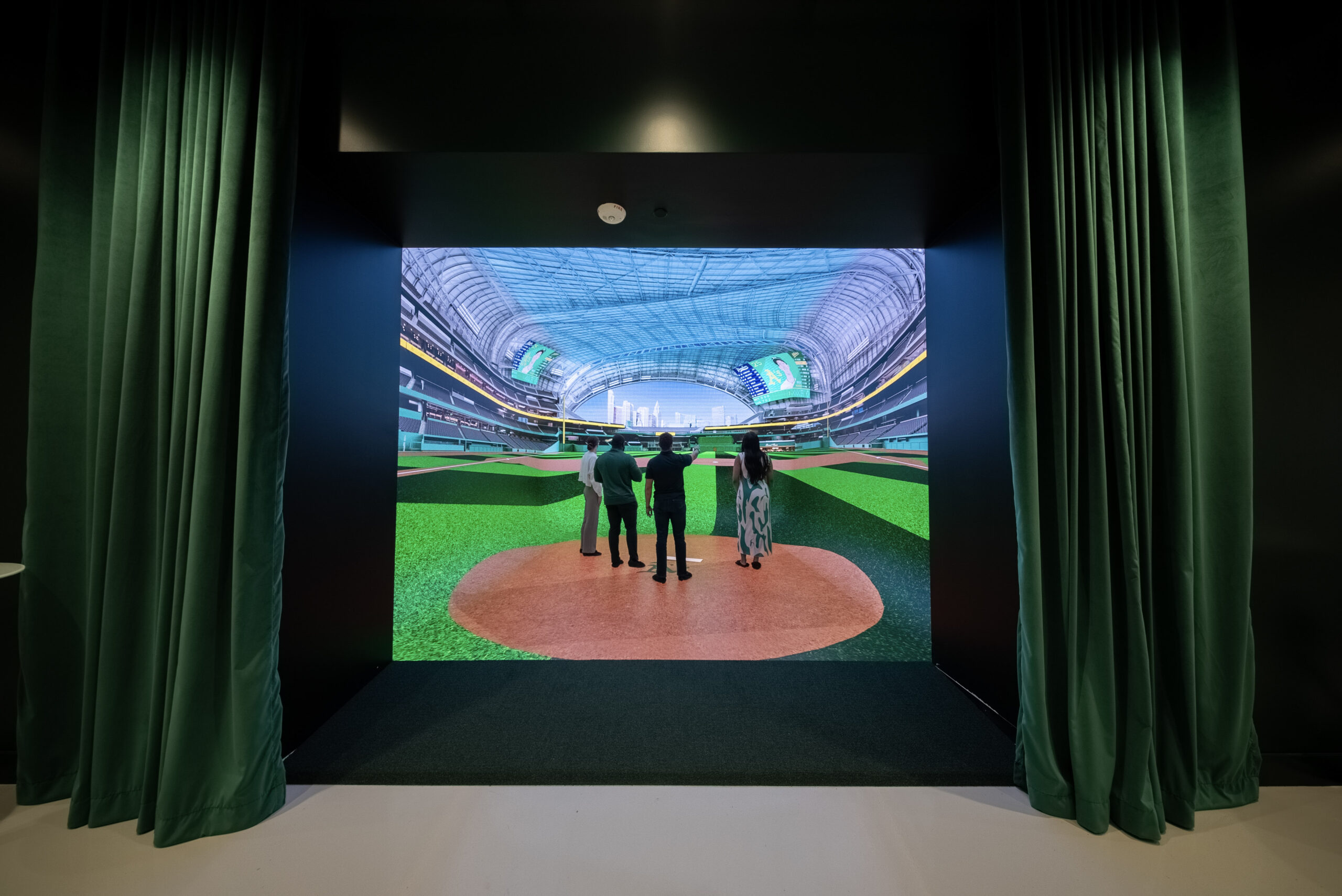
Beyond the technical specifications, the space can accommodate up to 12 people at once for shared experiences. As Sports Illustrated outlined the Cube is an immersive experience, ‘where more than 26 million pixels transform the room into a 270° canvas of motion and energy. Visitors don’t just see the A’s future; they step into it, exploring the new ballpark in vivid, dynamic 3D.’ … no headsets required. This isn’t isolated virtual reality. It’s a communal experience that mirrors what attending a game actually feels like, being part of something bigger than yourself, sharing excitement with the people around you.
What the Press Coverage Reveals About Market Response
When Sports Illustrated covered the Experience Center opening, they noted that the space offers potential season ticket holders a preview designed to entice and prepare them for the A’s in Las Vegas. The Las Vegas Review-Journal captured A’s owner John Fisher’s perspective on why this approach matters: traditional methods of showing ballpark plans on small computer screens simply don’t convey the scale and impact of these spaces. Meanwhile, John Lemire from Sports Business Journal notes it as a flexible, first-of-its-kind, no-headset VR-style space tailed to their own story and seat-buying decisions.
Travel and Tour World positioned the Cube as transforming fan engagement itself, describing how the technology serves as both a stadium sales tool and brand-building platform. Local Las Vegas stations KSNV and KTNV emphasized the practical sales function. This is where the organization will conduct appointments with potential season ticket holders, walking them through seating options and premium experiences while they’re literally standing inside a digital recreation of those spaces.
The Strategic Advantage Beyond Technology
What’s generating this coverage isn’t just that we’ve created an impressive display. It’s that we’ve solved a real business problem for sports organizations.
Consider the sales conversation that happens inside the Cube. Instead of pointing at a rendering and saying “your suite will have this view,” the sales representative can surround prospects with that exact view. They can show sunrise over the Las Vegas skyline from a club level, transition to the energy of a packed stadium during a crucial at-bat, then shift to post-game celebrations… all while the potential buyer is physically present in the space.
The adaptive storytelling component matters here. This isn’t a static presentation that plays the same way for every visitor. Our system allows sales teams to customize journeys based on what each prospect cares about. Corporate sponsors interested in hospitality spaces see detailed suite tours. Individual season ticket holders explore their sight lines from specific sections. Out-of-town visitors checking flight information for game weekends see that integrated into the experience.
What This Means for Stadium Development
Every major sports facility project now faces similar challenges. You’re competing for corporate sponsorship dollars against established venues. You’re asking families to commit to multi-year ticket packages during economic uncertainty. You’re pitching premium experiences to buyers who’ve been burned by oversold renderings that don’t match reality.
The organizations that will succeed aren’t the ones with the most impressive architectural drawings. They’re the ones that can make the future feel real before it exists.
That’s what we’ve learned across our work with professional sports teams and collegiate athletic programs. The technology, whether it’s 26.5 million pixels or something else entirely, is just infrastructure. What matters is whether you’re creating an experience that moves people from skeptical observers to committed believers.
The Questions This Raises for Your Organization
If you’re planning a new facility or major renovation, consider what’s happening at the A’s Experience Center. They’re not hoping people will imagine what the ballpark could be like. They’re showing them. They’re not asking corporate sponsors to take a leap of faith. They’re giving them certainty.
Which raises uncomfortable questions for any organization in the planning phase:
- Are you selling your vision, or asking prospects to construct it themselves?
- How many potential season ticket holders are you losing because they can’t visualize the experience?
- What’s the cost difference between traditional sales approaches and creating genuine certainty for your buyers?
The press coverage of the Immersive Cube is interesting. But what keeps me up at night is knowing how many sports organizations are still trying to sell billion-dollar visions from PowerPoint slides, wondering why conversion rates stay stubbornly low.
The future of stadium sales isn’t about having better renderings. It’s about collapsing the gap between promise and experience. That’s what we’ve helped to build out in Las Vegas. And based on the response from both the media and the A’s sales team, I suspect this approach is about to become the standard for how professional sports organizations launch new facilities.

Will Roberson
Director of Client Engagement | “Client Champion”
Advent is a Nashville-based experience creation firm specializing in digital storytelling for sports venues, universities, and athletic facilities. Get in contract to learn more about the Immersive Cube and how similar technology could transform your facility sales process.