

Digital Experiences
Experience Design
Halls of Fame
Technology
Thought Leadership
The Complete Guide to Hall of Fame Design: Creating Spaces That Honor Legacy and Inspire Greatness
The majority of Hall of Fame spaces fail their purpose. I should know. I’ve made it my mission to travel the depth and breadth of our country to see for myself how great institutions honor their legacies.
Walk through the typical athletic Hall of Fame, and you’ll see the same tired approach, rows of plaques on walls, dusty trophy cases, and static displays that audiences glance at for thirty seconds before moving on. These spaces were designed with one question in mind: “How do we display our achievements?”
That’s the wrong question to be asking.
After completing over 2,500 projects for more than 260 clients worldwide, from the University of Texas Athletics Hall of Fame to professional venues for the Dallas Cowboys, we’ve learned that successful Hall of Fame design starts with a fundamentally different question: “How do we make people feel something?”
That shift in perspective changes everything.

What Makes Hall of Fame Design Unique from Museums and Venues?
Hall of Fame spaces occupy unique territory in the world of experiential design.
- They’re not museums, though they preserve history.
- They’re not entertainment venues, though they must engage audiences.
- They’re not purely educational spaces, though they teach and inspire.
The best Hall of Fame environments serve multiple constituencies with competing needs:
For inductees and their families, these spaces represent the ultimate recognition, a permanent testament to years of sacrifice, dedication, and achievement. The experience must feel sacred, respectful, and worthy of the honor.
For current athletes and recruits, Hall of Fame spaces set the standard. They communicate, “This is what greatness looks like here. This is what you’re working toward.” The most effective designs create “productive inspiriation”, that motivating feeling that makes someone think, “I can do this. I want my story told here someday.”
For fans and visitors, these environments build emotional connection to the program’s legacy. Done right, they transform casual supporters into passionate advocates who understand they’re part of something bigger than any single game or season.
For administrators and development teams, Hall of Fame spaces serve as powerful fundraising and recruiting tools. They provide evidence of program excellence, create premium experiences for donors, and offer tangible proof of institutional commitment to honoring achievement.
The challenge? Creating an environment that serves all these audiences simultaneously without compromising the experience for any of them.
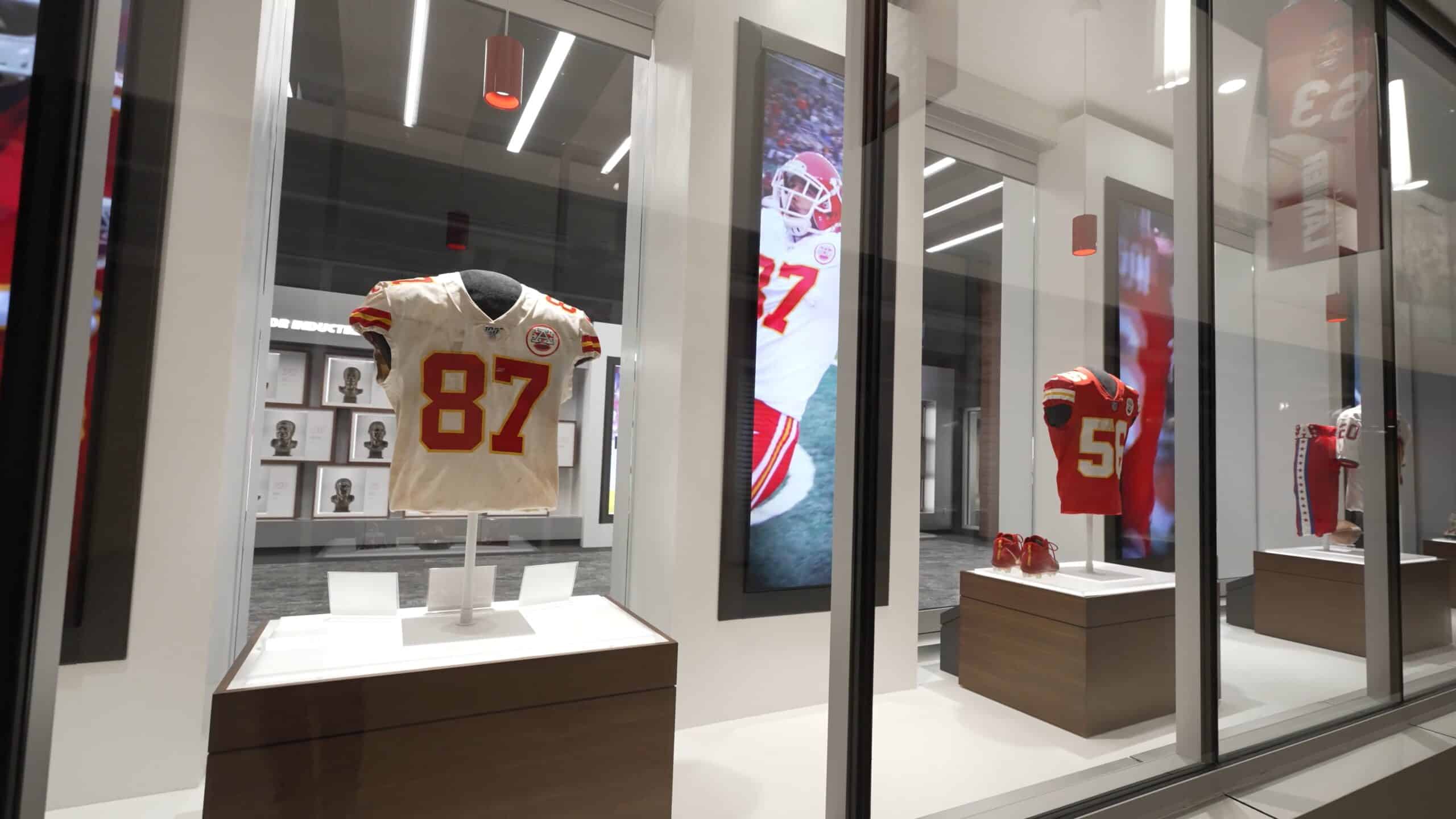
How Hall of Fame Recognition Spaces Evolved from Static Displays to Immersive Experiences
Hall of Fame design has evolved dramatically over my career. Twenty years ago, the standard approach was straightforward: commissioned plaques mounted on walls in chronological order, maybe some trophy cases, perhaps a few framed jerseys. Job done.
That model worked in an era when simply having a dedicated recognition space set you apart. But audience expectations have fundamentally changed.
Today’s visitors (whether they’re 18-year-old recruits or 65-year-old boosters) have been shaped by immersive experiences at museums, theme parks, and retail environments. They’ve learned to expect interactivity, personalization, and technology integration. Static displays feel dated because audiences have been trained to expect more.
This evolution has forced us to rethink everything about how we approach sports legacy and recognition. The fundamental purpose hasn’t changed, these spaces still honor achievement and preserve history, but the methods for accomplishing those goals have transformed entirely.
The shift isn’t about adding technology for technology’s sake. It’s about recognizing that the medium through which we tell stories shapes how audiences receive and internalize those stories. A well-designed interactive experience doesn’t replace traditional recognition; it amplifies it, creating emotional resonance that static displays simply cannot achieve.
The Five Visitor-Focused Dimensions of Effective Hall of Fame Design
Through our work with universities and professional organizations, we’ve identified five critical dimensions that separate exceptional Hall of Fame spaces from mediocre ones. Each dimension addresses specific aspects of the visitor experience while contributing to the overall environment’s impact.
1. Strategic Storytelling
Before we consider what goes on walls or which technology to deploy, we need to answer fundamental questions about the stories you’re telling:
- What makes your program’s legacy unique?
- Which values and achievements deserve emphasis?
- How do you handle the uncomfortable parts of organizational history?
- What do you want visitors to think, feel, and do after experiencing this space?
These aren’t easy questions, and many organizations resist engaging with them deeply. It’s tempting to default to chronological timelines or “greatest hits” approaches that avoid difficult choices.
Strategic storytelling requires making hard decisions about what to include, what to emphasize, and what to leave out. Not every achievement deserves equal space. Not every story serves your current strategic objectives.
Our StoryMining methodology helps organizations identify the narratives that will create the deepest emotional connections with target audiences. This research-driven approach uncovers the themes, characters, and moments that resonate most powerfully… often revealing stories that leadership teams hadn’t considered featuring prominently.
The experiential design approach we’ve developed emphasizes creating journeys through space rather than simply presenting information. Every decision, from entry sequences to sight lines to revelation moments, should serve the overarching narrative.
2. Psychological Impact
It’s rare to work with a client that has already considered how the physical environment of a Hall of Fame space profoundly influences the way visitors process and retain the stories you’re telling.
We’ve partnered with researchers at Samford University to study how spatial design affects emotional response and decision-making. The findings have direct implications for Hall of Fame design:
Ceiling height matters. Higher ceilings create feelings of inspiration and aspiration. Lower, more intimate spaces encourage reflection and personal connection. The best Hall of Fame designs vary ceiling heights strategically to create different emotional moments throughout the visitor journey.
Lighting fundamentally shapes mood. Bright, even lighting feels clinical and institutional. Dramatic lighting with focused spots creates gravitas and directs attention. The interplay between light and shadow can make the difference between a space that feels sacred and one that feels like a hallway.
Physical path influences narrative comprehension. When we force visitors through predetermined routes, we control pacing and ensure they encounter stories in the intended sequence. When we allow open exploration, we create opportunities for personal discovery but risk losing narrative coherence.
Understanding the psychology behind Hall of Fame spaces helps us design environments that move beyond simply displaying information to creating transformative experiences that visitors remember and talk about.

3. Strategic Technology Integration That Serves the Story
Let me be clear about something: technology should never be the starting point for Hall of Fame design. The story comes first. Always.
That said, technology (big caveat here… when deployed strategically) can create experiences impossible to achieve through static displays alone.
At the University of Texas Athletics Hall of Fame, we integrated projection mapping, interactive touchscreens, and environmental audio to allow visitors to explore over a century of athletic achievement at their own pace. The technology serves the story, revealing layers of content based on visitor interest and engagement level.
For the University of Oregon Student Welcome Center, we created personalized digital experiences that help prospective students see themselves as part of the institution’s legacy. The same space tells different stories to different audiences based on their interests and stage in the decision journey.
The key is ensuring technology enhances rather than distracts from the core experience. Poor technology integration is worse than no technology at all. Nothing kills the sacred feeling of a Hall of Fame space faster than a crashed touchscreen or a dated interface.
Modern Hall of Fame technology should be intuitive, reliable, and scalable. Systems need to accommodate easy content updates as new inductees are honored and stories evolve. The worst technology decisions are those that look impressive at launch but become maintenance nightmares or content bottlenecks within a year.
4. Designing Physical Space and Architecture Within Real-World Constraints
Hall of Fame spaces face unique architectural challenges. Most organizations are working within existing buildings, often retrofitting spaces that were designed for different purposes. Even new construction projects face constraints around budget, location, and integration with surrounding facilities.
We approach every project by asking: how do we maximize impact within real-world constraints?
Sometimes that means creating a dramatic entrance sequence that prepares visitors emotionally before they encounter any content. Sometimes it means using vertical space creatively when floor space is limited. Sometimes it means designing modular systems that can expand as programs grow and budgets allow.
The best Hall of Fame spaces feel inevitable. What do I mean? It’s like they belong exactly where they are and couldn’t exist anywhere else. Achieving that feeling requires deep integration with architectural context, whether you’re working in a historic building or a modern athletic facility.
Combining technology with thoughtful design creates environments that feel both timeless and contemporary—spaces that honor tradition while embracing innovation.

5. Designing Hall of Fame Spaces for Long-Term Maintenance and Evolution
Another question we challenge our clients on… how will this space function five years from now?
Hall of Fame spaces are living environments that must evolve as new achievements are recognized and organizational priorities shift. Design decisions that seem clever during initial planning can create significant operational challenges over time.
Questions to consider:
- How easily can you add new inductees without disrupting the entire space?
- Who will maintain and update technology systems?
- How will you keep content fresh for repeat visitors?
- What’s the plan for physical materials that degrade or become dated?
- How do you balance preservation of historical elements with need for evolution?
The most successful Hall of Fame projects include comprehensive planning for long-term operations, including content management systems, maintenance protocols, and phased expansion strategies.

Common Hall of Fame Design Pitfalls to Avoid
After working on hundreds of recognition spaces, I can predict with alarming accuracy which decisions will create problems down the road. Let me save you from some common mistakes:
Trying to include everything. More content does not equal more impact. The spaces that resonate most deeply are often highly selective about what they feature. Curation matters.
Defaulting to chronological organization. Timelines have their place, but organizing content solely by date often fails to reveal the themes and patterns that create emotional resonance. Consider thematic or narrative-based organization instead.
Underestimating the power of artifacts. Yes, technology enables incredible experiences. But don’t overlook the visceral impact of physical objects; actual equipment, uniforms, handwritten letters, that carry emotional weight technology cannot replicate.
Ignoring accessibility. If portions of your Hall of Fame aren’t accessible to visitors with mobility challenges, vision impairments, or other disabilities, you’re failing a significant portion of your audience. Accessibility should be integrated from the beginning, not retrofitted later.
Treating the project as one-and-done. Hall of Fame spaces require ongoing investment in content, technology maintenance, and physical upkeep. Budget and plan accordingly.
Making the Business Case for Investing in Hall of Fame Spaces
Far too many Hall of Fame projects stall because stakeholders view them as expense rather than investment. Let me give you the business case we use with clients:
Recruiting impact: Top recruits visit multiple programs. The quality of your Hall of Fame space directly influences how they perceive program commitment to excellence and athlete recognition. Can you afford to lose elite talent because your recognition space feels dated?
Donor development: Major gifts often come from alumni who feel deep emotional connection to program legacy. Hall of Fame spaces serve as powerful cultivation tools, providing immersive experiences that reinforce philanthropic relationships.
Sponsor activation: Premium partners want association with winning programs and access to unique experiences. Modern Hall of Fame spaces create sponsor hospitality opportunities that generate incremental revenue.
Brand differentiation: In competitive athletic conferences, facilities arms races extend beyond locker rooms and training centers. Recognition spaces signal institutional priorities to everyone who visits; recruits, media, opponents, and donors.
The return on investment for well-executed Hall of Fame projects extends far beyond direct revenue generation. These spaces influence perception, reinforce culture, and create emotional connections that drive behavior across multiple stakeholder groups.
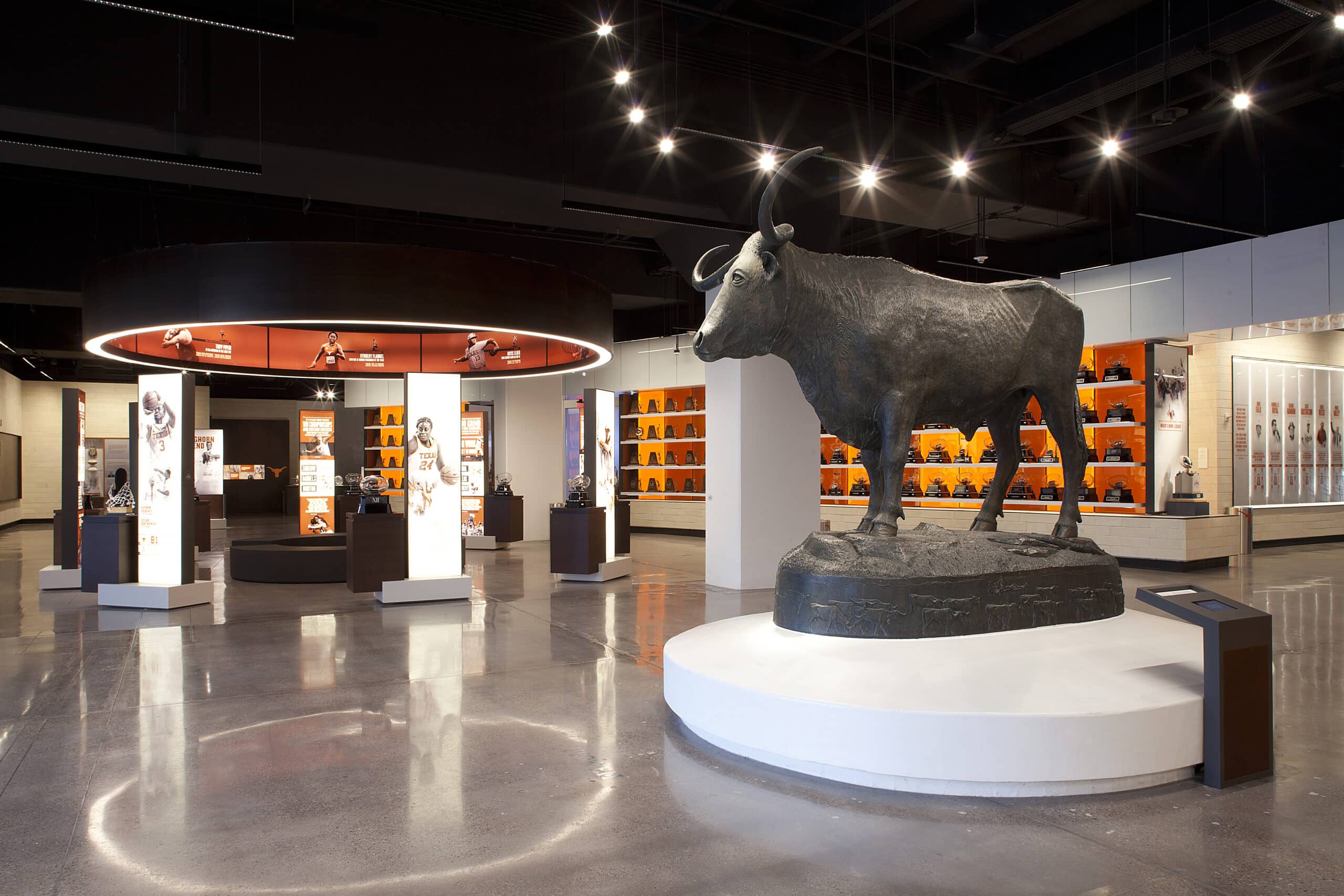
Getting Started: Strategic Questions to Answer Before Hall of Fame Design Begins
If you’re considering a Hall of Fame project, start by addressing these fundamental questions with your leadership team:
What are we really trying to accomplish? Beyond “honoring our legacy,” what specific outcomes do you want this space to drive? Be honest about whether this is primarily a recruiting tool, donor cultivation vehicle, fan experience enhancement, or some combination.
Who is our primary audience? You can’t design effectively for everyone simultaneously. Identify your primary constituency and design for them first, then layer in considerations for secondary audiences.
What makes us different? Every program has history. What’s unique about yours? What stories do only you get to tell?
What are we willing to spend… really? Establish realistic budget parameters early. Transformative Hall of Fame spaces require significant investment. Trying to achieve premium results with insufficient budget guarantees disappointment.
Who owns this long-term? Identify the person or department responsible for ongoing content management, technology maintenance, and space evolution before you design anything.
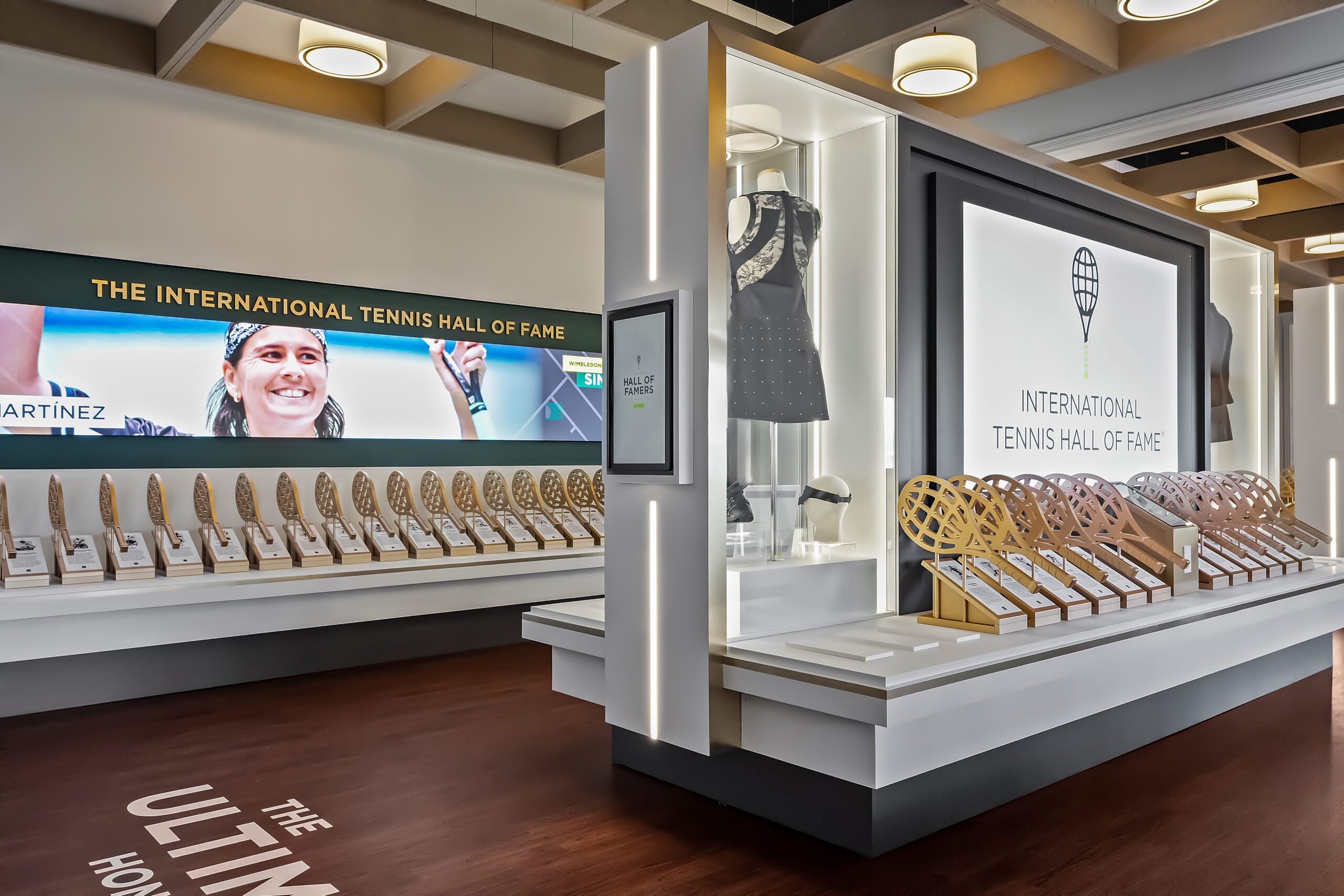
Why Hall of Fame Spaces Matter for Culture, Values and Inspiration
Hall of Fame spaces represent more than institutional ego or nostalgic preservation. When designed effectively, these environments serve as powerful connective tissue between past achievement and future aspiration.
They remind current athletes why excellence matters. They show recruits what’s possible when talent meets commitment. They give alumni tangible evidence that their contributions to program legacy haven’t been forgotten.
Most importantly, Hall of Fame spaces declare organizational values. The stories you choose to tell and how you choose to tell them communicate what you believe matters most.
In an era when audiences increasingly expect personalized, immersive experiences, recognition spaces that rely on dated approaches fail to create the emotional connections that drive behavior and build loyalty.
The opportunity and both our’s and your challenge is creating environments that honor tradition while embracing innovation, that feel sacred while remaining accessible, that celebrate individual achievement while building collective identity.
That’s the work we do at Advent. We help organizations understand their stories, identify their audiences, and create physical environments that move people; emotionally, intellectually, and quite literally through space.
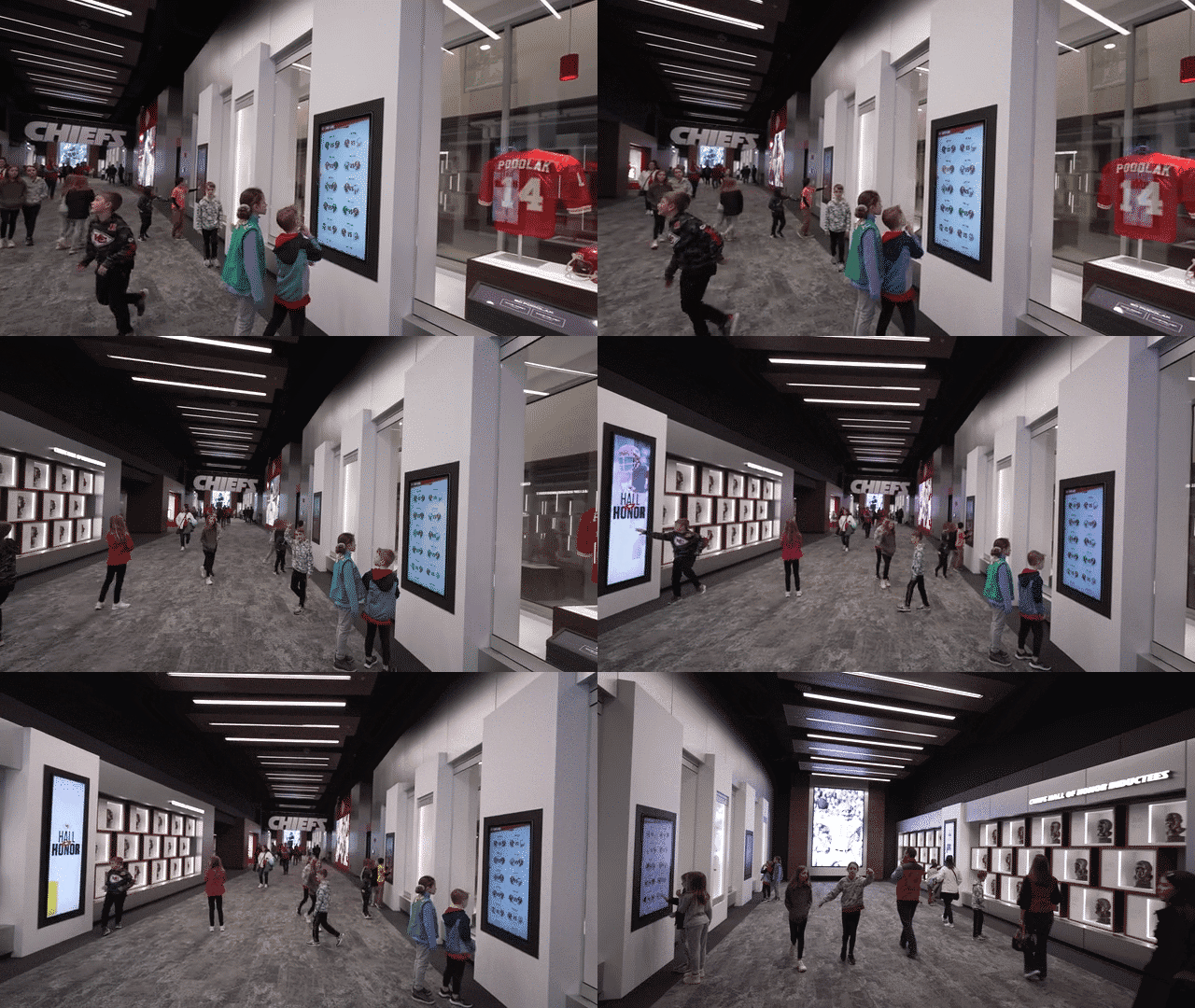
Your Next Step: Assessing Your Hall of Fame Needs and Potential Partnership
We’ve learned these lessons by doing the work. Where we’re succeeding brilliantly in some cases, learning hard lessons in others, and continuously refining our approach based on real-world results.
If your organization is considering a Hall of Fame project or looking to modernize an existing recognition space, the most valuable thing you can do is start asking the right questions now, before you commit to specific design directions or technology platforms.
Want to explore how these principles apply to your specific situation? Reach out directly. We’re happy to discuss your challenges, share relevant case studies, and help you determine whether we’re the right partner for your project.
Creating Hall of Fame spaces that genuinely move people requires more than design expertise or technology capability. It requires strategic thinking, psychological understanding, and operational planning that most firms simply don’t provide.
That’s why organizations from the University of Texas to professional sports teams trust Advent to transform their recognition spaces into environments that inspire greatness, build emotional connection, and honor legacy in ways that static displays never could.
Should you invest in creating a powerful Hall of Fame experience? Your competitors already are. Are you willing to ask the hard questions and make the strategic commitments required to do it right?

Will Roberson
Director of Client Engagement | “Client Champion”
Advent is a Nashville-based experience creation firm specializing in digital storytelling for sports venues, universities, and athletic facilities. Get in contract to learn more about the Immersive Cube and how similar technology could transform your facility sales process.